
When Revant Himatsingka, better known as FoodPharmer, began calling out misleading food labels, few expected it to grow into a national movement. What started as simple, phone-shot videos questioning sugar, protein claims and ingredient lists soon evolved into one of India’s most influential consumer health conversations. By 2025, his work had moved beyond social media, reaching classrooms, courtrooms, boardrooms and policy tables. Leaving behind a high-paying Wall Street career, Revant chose to decode packaged food, often facing legal notices from major FMCG brands alongside widespread public support. His impact was formally recognised in 2025 with the Indian of the Year – Influencer Award by CNN-News18, the Creator for Good honour at The Better India Showcase, and the Economic Times 40 Under 40 award.
Here’s a look at five FoodPharmer campaigns in 2025 that didn’t just go viral, but changed behaviour.
1. Label Padhega India
“There is marketing on the front of the pack, but trust lies in the ingredients list.” This single line became the backbone of FoodPharmer’s Label Padhega India campaign.
Through clear, jargon-free videos, Revant urged consumers to look beyond attractive packaging and buzzwords like “natural” or “no added sugar”. He broke down how hidden sugars, refined carbohydrates, misleading serving sizes and unhealthy fats often escape attention when people rely only on front-of-pack claims.
The campaign made reading ingredient lists feel less intimidating and more empowering, especially for first-time label readers trying to make healthier choices for their families.
2. Terms and Conditions Samjhega India
Most people tick “I have read the terms and conditions” without a second thought. FoodPharmer turned that habit into a public conversation.
The Terms and Conditions Samjhega India campaign highlighted how fine print can affect everything from food subscriptions and health insurance to data privacy. Revant collaborated with lawyers and subject experts to explain complex clauses in plain language, showing how exclusions and hidden conditions can later lead to denied claims or a lack of accountability.
By connecting food, healthcare and consumer rights, the campaign widened its influence beyond nutrition into everyday decision-making.
3. Protein Consumption Awareness
India suffers from widespread protein deficiency, yet supermarket shelves are filled with products claiming to be “high-protein”. FoodPharmer’s Protein Consumption Awareness campaign tackled this contradiction head-on.
He explained how most Indians fall short of recommended protein intake and why front-of-pack claims often exaggerate actual nutritional value. Instead of pushing expensive supplements, he highlighted affordable, accessible protein sources like dals, pulses, curd and eggs.
The campaign also exposed how many protein products rely on fillers such as xanthan gum and carrageenan for thickness rather than real nutritional density, helping consumers separate marketing from substance.
4. Canteen Sudharega India!
With children and working professionals consuming at least one major meal outside their homes daily, FoodPharmer turned his attention to institutional food.
The Canteen Sudharega India! The campaign spotlighted the poor nutritional quality of food served in school and office canteens. In schools, it raised concerns about children being exposed to ultra-processed foods during crucial growth years. In offices, it linked limited healthy options to rising lifestyle and digestive disorders.

Rather than demanding drastic overhauls, the campaign focused on small, realistic changes, such as replacing soft drinks with coconut water, nimbu pani or chaas, proving that incremental shifts can have a lasting impact.
5. Sugar Board Movement
Perhaps the most visible policy win of 2025 came through the Sugar Board Movement. This campaign exposed the hidden sugar content in foods commonly marketed to children. Revant proposed visual “sugar boards” in schools, displaying how much added sugar common snacks and beverages contain. The idea was simple: make information unavoidable and easy to understand.

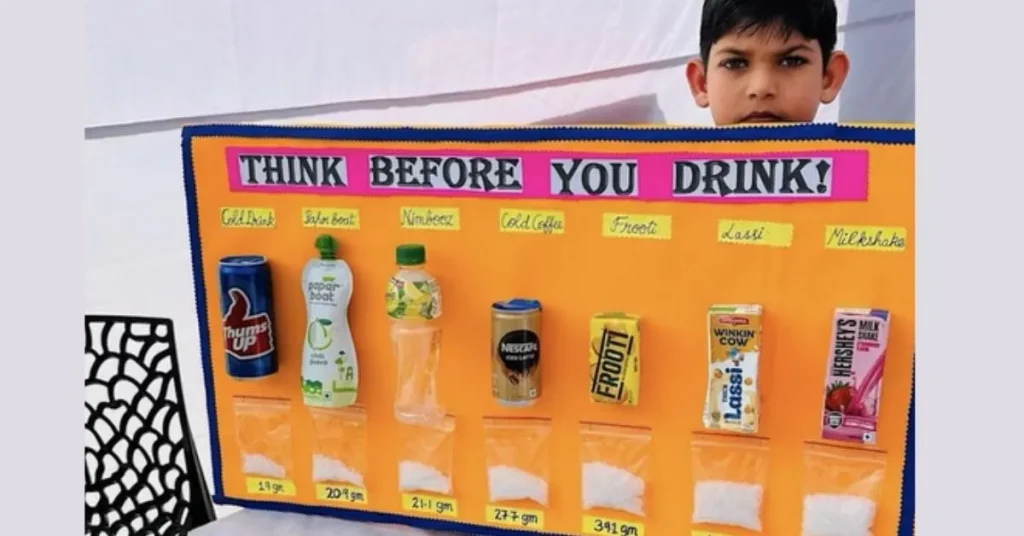
The movement gained national traction when the Central Board of Secondary Education directed all affiliated schools to install sugar boards by 15 July 2025. It marked a rare moment where social media advocacy translated directly into institutional policy.
Only What’s Needed (OWN) by FoodPharmer
Revant Himatsingka didn’t just educate consumers; he moved into solutions and brand building. He launched a clean-label food brand called Only What’s Needed (OWN), co-created with input from his audience to strip packaged products down to honest ingredients and give people healthier alternatives to what’s on shelves. Alongside this, he introduced a certification initiative called FoodPharmer Approved to highlight genuinely clean products and trusted options. Revant has also collaborated as a brand ambassador with consumer product intelligence platform TruthIn, helping promote transparent label reviews and better food choices for everyday buyers.
FoodPharmer campaigns that changed how India ate in 2025.
In 2025, FoodPharmer did more than call out misleading brands. He shifted how Indians question food, read labels and understand nutrition. His work showed that health literacy doesn’t need medical jargon or fear-driven messaging; it needs clarity, consistency and courage. As his campaigns moved from content to real-world change, Revant Himatsingka proved that informed citizens can influence markets, institutions and policy. For millions of Indians, 2025 was the year everyday food finally started making sense.