
Who is Janak Palta McGilligan and why is she being called the “Mother of Sustainability”?
This Mother’s Day, while the internet celebrates mothers through flowers, gifts, and emotional posts, one woman from Indore is being recognised for nurturing something much larger, an entire way of sustainable living. Janak Palta McGilligan, lovingly known as Janak Didi, has spent years building a life that produces almost no burden on the environment. At 78, she lives in a home that creates zero waste, runs without electricity bills, and depends almost entirely on renewable energy and natural resources.
Her story is not just about sustainability as a concept. It is about practising it every single day.
How did Janak Didi begin her sustainability journey?
Her commitment to nature began long before sustainability became a global conversation.
As a teenager, Janak underwent open-heart surgery after a near-death experience at the age of 17. That moment changed her perspective on life completely and pushed her toward dedicating herself to the well-being of the planet.
Years later, in 1992, she attended the Earth Summit in Rio De Janeiro, where she was exposed to the growing environmental challenges facing the world. That experience deepened her commitment to eco-conscious living.
However, the biggest turning point came in 2011 after the passing of her husband, Jimmy McGilligan. Determined to honour their shared environmental values, she moved to their home in Sanawadia village near Indore and transformed it into a fully self-sustaining space.
You might like: 5 Gardening & Sustainability Creators Helping India Build Greener Homes, Smarter Urban Spaces
How does Janak Didi’s zero-waste home actually function?
Janak Didi’s home operates almost entirely through renewable systems and recycled resources.
A windmill installed at her property powers not only her own house but also supplies electricity to nearly 50 nearby homes. Because of this, her household has effectively eliminated electricity bills.

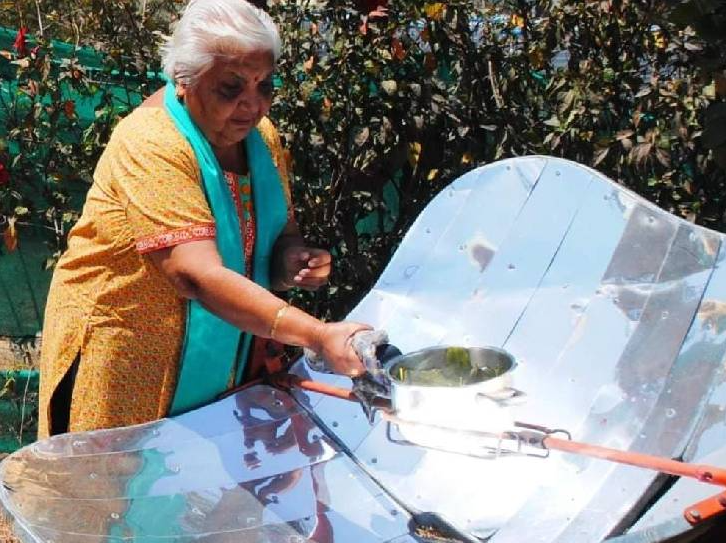
Cooking is done using solar cookers that rely completely on sunlight for preparing meals and heating water. Even during periods with limited sunlight, she avoids conventional fuels by converting old newspapers into compact fuel bricks for cooking and lighting purposes.
Nothing in the house is casually discarded.
Every resource is reused thoughtfully.
What kind of food does Janak Didi grow at home?
Her home is not just energy-independent. It is also food-sufficient.
The surrounding garden contains nearly 160 trees and around 13 different crops. She grows:
- vegetables
- pulses
- rice
- spices
- grains
Everything is organic and cultivated without creating unnecessary environmental strain. Alongside food, she also prepares daily-use products like soap, toothpaste, and face packs using natural ingredients available around her.
Her lifestyle reflects the idea that sustainability is not sacrifice, but conscious abundance.
Why is Janak Didi’s work important beyond her own home?
What makes Janak Didi’s journey even more impactful is that she did not stop at personal change.

She has spent decades teaching sustainable living practices to others through the Jimmy McGilligan Centre for Sustainable Development and her work with the Barli Development Institute for Rural Women.
Under her guidance:
- over 1,50,000 young people
- more than 6,000 rural and tribal women
- across 1,000 villages
have received training in sustainable practices such as solar cooking and eco-friendly living.
For many rural communities, this knowledge has directly improved both quality of life and economic independence.
What recognition has she received for her work?
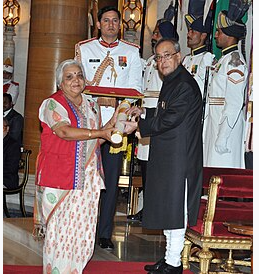
In 2015, Janak Palta McGilligan was awarded the Padma Shri for her contribution to social work and sustainability.
But beyond awards, her biggest achievement may be proving that a low-consumption lifestyle does not mean a low-quality life.
Visitors who meet her often describe her as deeply content, energetic, and fulfilled through nature’s rhythm rather than material excess.
Why does Janak Palta’s story matter this Mother’s Day?
Janak Didi represents a different kind of motherhood.
Not only nurturing people, but nurturing land, resources, communities, and future generations.
At a time when sustainability is often reduced to hashtags and trends, her life stands as a working model of what conscious living can actually look like.
No excess. No waste and No performance.
Just consistency, responsibility, and care for the world around her.
And perhaps that is why this Mother’s Day, she is being remembered not just as an environmentalist, but as a true Mother of Sustainability.