
Content creator Apoorva Mukhija, popularly known as The Rebel Kid, has sparked a fresh conversation around online harassment and accountability after publicly calling out an Instagram user who allegedly sent her abusive and misogynistic messages. The incident has since drawn responses from companies linked to the individual and reignited discussions about whether online behaviour should have real-world consequences.
What Happened Between Apoorva Mukhija and the Instagram User?
The controversy began when Mukhija shared screenshots on Instagram Stories of messages allegedly sent by an account identified as “pratyush_iam”.
According to the screenshots, the user allegedly sent derogatory and slut-shaming messages directed at the creator. Mukhija subsequently shared screenshots of the individual’s social media profile and tagged the visual effects company DNEG, believing the person to be employed there.
In one of her posts, she alleged that the company’s employee had sent her the abusive messages.
How Did DNEG Respond?
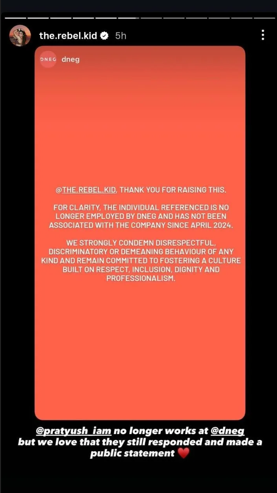
DNEG later issued a public statement addressing the matter.
The company thanked Mukhija for bringing the issue to its attention but clarified that the individual referenced in her post had not been associated with DNEG since April 2024.
The company further stated that it strongly condemns disrespectful, discriminatory and demeaning behaviour and reiterated its commitment to maintaining values of inclusion, dignity and professionalism.
What Did Apoorva Mukhija Say After DNEG’s Statement?
Following the company’s clarification, Mukhija acknowledged DNEG’s response and praised the organisation for addressing the issue publicly.
She noted that although the individual no longer worked at the company, she appreciated the fact that DNEG chose to issue a public statement regarding the matter.

Mukhija later shared what appeared to be screenshots of the individual’s LinkedIn profile, which listed him as a Senior Compositor at Industrial Light & Magic (ILM), and tagged the company. At the time of reporting, ILM had not publicly responded.
Why Is This Incident Getting So Much Attention?
The episode arrives at a time when social media users are increasingly pushing for accountability beyond online platforms.
In recent years, creators and internet communities have frequently called attention to offensive, abusive or misogynistic behaviour by identifying workplaces, institutions or organisations connected to individuals accused of such conduct.
Supporters argue that online harassment should carry consequences, particularly when it involves discriminatory or abusive language. Critics, meanwhile, often raise questions about public shaming, due process and the boundaries between personal conduct and professional accountability.
How Does This Connect to the Himanshu Jangra Controversy?
The incident follows another widely discussed controversy involving Himanshu Jangra, whose remarks during a stand-up comedy show triggered widespread criticism online.
After the video went viral, Jangra’s employer terminated his employment, sparking a broader debate around accountability, punishment and whether individuals deserve opportunities for reflection and change.
The discussion surrounding Mukhija’s experience is unfolding within a similar context, where internet users are increasingly demanding consequences for behaviour they view as sexist, abusive or harmful.
Who Is Apoorva Mukhija?
Apoorva Mukhija is one of India’s most prominent digital creators and influencers, known online as The Rebel Kid.
She rose to popularity through relatable content focused on dating, friendships, adulthood and everyday experiences. Over the years, she has built a large following across social media platforms and has collaborated with several major brands.
Known for her candid personality and outspoken approach, Mukhija frequently shares personal experiences and opinions with her audience, often sparking conversations around relationships, gender and internet culture.
What Does This Incident Say About Online Accountability?
The incident highlights a growing shift in how online communities respond to harassment and abusive behaviour.
Rather than limiting criticism to comments sections or social media debates, many users are increasingly seeking accountability through institutions, employers and organisations connected to individuals accused of misconduct.
Whether this trend leads to meaningful change or raises new concerns about digital vigilantism remains a subject of debate. What is clear, however, is that conversations around online behaviour, workplace accountability and public responsibility are becoming increasingly intertwined in the creator economy and broader digital culture.