
Entertainment
Inside India’s Creator Controversies of 2025: Influence, Backlash and Lawsuits
Copyright Wars, Comedy Backlash and the Price of Influence. From deepfakes to courtrooms, the creator economy faced its toughest questions in 2025.


2025 proved to be a defining year in India’s creator world, not just because of viral growth or brand deals, but because of the situations that sparked long-overdue conversations. Issues around privacy, copyright, ethical humour, influencer accountability and the misuse of emerging technologies moved beyond comment sections and into courtrooms. From AI-generated deepfake scandals and legal battles between legacy media and YouTubers to comedy shows facing Supreme Court scrutiny and influencers responding to scam allegations, the year highlighted the fragile balance between creative freedom and responsibility. Here is a year-ender look at the most talked-about creator controversies of 2025, what triggered them and what followed.
Payal Dhare aka Payal Gaming
One of the most alarming incidents of 2025 involved Payal Dhare, popularly known as Payal Gaming. In December, an explicit deepfake video circulated widely online and on social media, falsely claiming to feature the popular gaming creator. The clip spread rapidly across platforms, raising serious concerns about privacy violations and online harassment. The Maharashtra Cyber Police later officially certified the video as either an AI-generated deepfake or recycled footage of an unrelated individual. The clarification confirmed that Payal was not involved in the content, but the damage highlighted how easily reputations can be attacked using AI tools.
The case became a flashpoint in conversations around deepfake regulation, digital consent and the lack of swift takedown mechanisms for creators targeted by synthetic media.
Asian News International vs Indian YouTubers
Creators involved:
- Dhruv Rathee
- Mohak Mangal
- Akash Banerjee
- Rajat Pawar
In May 2025, a high-profile copyright dispute erupted between ANI and several leading YouTubers known for political and social commentary. ANI issued multiple copyright strikes against creators for using short clips of its news footage in analytical videos.
The creators argued that their usage fell squarely under fair use for commentary, criticism and reporting. The controversy escalated when court documents revealed that ANI had allegedly charged some YouTubers up to 45 lakh rupees to retract copyright strikes, triggering outrage across the creator community.
The dispute sparked a nationwide debate on intellectual property rights, fair use, and the power imbalance between traditional media houses and independent digital creators. It also reignited demands for clearer copyright guidelines in India’s digital ecosystem.
Also Read: The Reelstars’ Picks of Budding Creators Who Found Their Groove in 2025
India’s Got Latent Controversy
Creators involved:
- Samay Raina
- Ranveer Allahbadia
- Apoorva Mukhija
- Ashish Chanchlani
- Vipul Goyal
- Balraj Singh Ghai
- Nishant Jagdish Tanwar
- Sonali Thakkar

The YouTube comedy show India’s Got Latent became one of the most serious legal controversies involving creators in 2025. The backlash began after a provocative joke by Ranveer Allahbadia, followed by remarks that appeared to mock individuals with Spinal Muscular Atrophy (SMA).
One particular joke referencing a two-month-old baby requiring a life-saving injection costing 16 crore rupees drew severe criticism. Multiple FIRs were filed across states, episodes were taken down, and creators were summoned by authorities including the National Commission for Women and Maharashtra Cyber Cell.
The Supreme Court granted interim protection from arrest to Allahbadia and Ashish Chanchlani but directed the government to frame clearer digital content guidelines. The Court also asked influencers to issue unconditional apologies for ridiculing persons with disabilities and rare genetic disorders.
Ranveer Allahbadia’s Remarks and the Parents’ Comment Backlash
A key flashpoint in the India’s Got Latent controversy involved comments made by Ranveer Allahbadia, which many viewers found sexually inappropriate and insensitive. During the show, Allahbadia made remarks that were widely interpreted as crossing personal and cultural boundaries, including comments involving parents and intimacy that audiences deemed unnecessary and offensive. Clips of the exchange spread rapidly online, triggering backlash across social media platforms. Critics argued that such remarks normalised crude humour under the guise of comedy and ignored the responsibility that comes with large digital influence. The fallout contributed to multiple FIRs, official summons, and intensified scrutiny from authorities, ultimately becoming a central example cited in calls for clearer content accountability norms for creators.
Raj Samani Podcast Pricing Debate
A different kind of controversy emerged around creator monetisation. Content creator Sarthak revealed in a video that a YouTuber with over 12 million subscribers charged approximately 20 lakh rupees for a paid podcast episode, 5–7 lakh for a brand reel, and similar amounts for YouTube integrations.
Commenters speculated that the creator was Raj Samani. Sarthak later replied “yes” in comments, indirectly confirming that these figures were based on collaboration discussions with Samani’s team.
While no wrongdoing was alleged, the disclosure triggered intense discussion around influencer pricing, perceived excess, and the growing gap between audience relatability and top-tier creator economics.
Orry (Orhan Awatramani)
Orry faced repeated controversies throughout 2025, making him one of the most polarising internet figures of the year. In November, he drew backlash for using a transphobic and casteist slur in a social media caption, leading to widespread condemnation and calls for accountability.
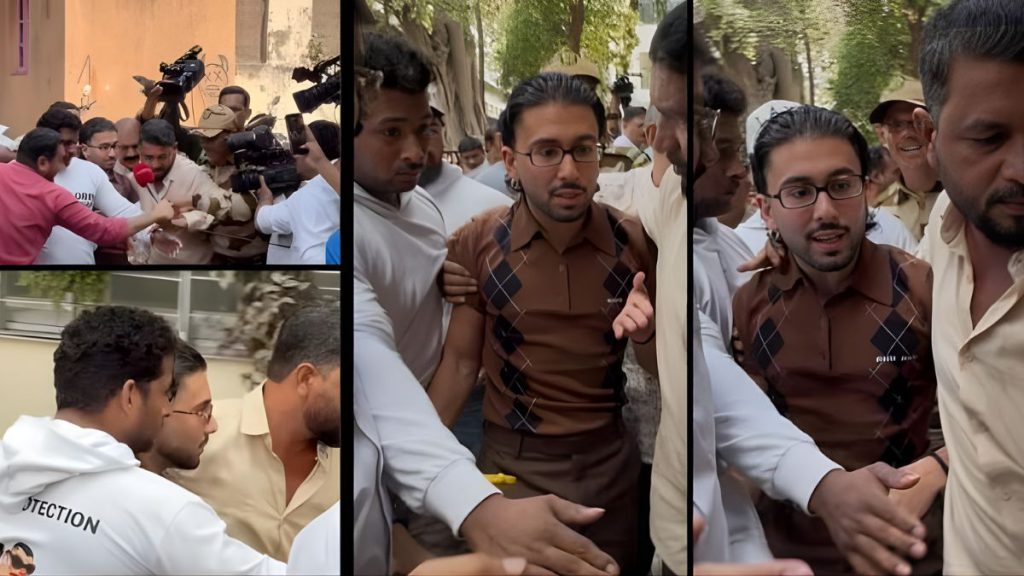
He was also summoned by the Mumbai Police Anti-Narcotics Cell in connection with a 252-crore-rupee mephedrone drug seizure case. While Orry denied any involvement, his name surfaced during questioning of an alleged trafficker.
Earlier in the year, he was booked for consuming alcohol near the Vaishno Devi shrine, violating local religious regulations. Additional backlash followed insensitive remarks about Alzheimer’s disease and public embarrassment after failing to recognise Garba icon Falguni Pathak.
Elvish Yadav and NGO Scam Allegations
Elvish Yadav found himself under scrutiny after promoting a fundraising campaign for a child suffering from SMA, requiring a life-saving injection costing 9 crore rupees. Allegations surfaced online suggesting influencers might be paid to promote such campaigns.
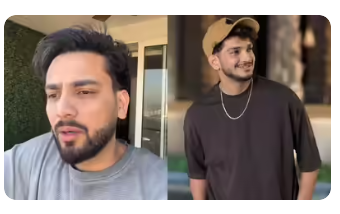
Following remarks by Munawar Faruqui questioning influencer-led fundraising promotions, speculation intensified around Elvish. He responded publicly, denying taking any money and stating that the appeal came through a close friend.
Elvish emphasised the transparency of the campaign, pointing to visible donation details, verified medical reports and hospital documents. While opinions remained divided, the episode sparked broader debate on influencer ethics, charity promotions and public trust.
What 2025 Revealed About the Creator World
The controversies of 2025 showed that influence now carries legal, ethical and social weight. Whether through AI misuse, copyright enforcement, comedic boundaries or fundraising ethics, creators faced consequences that extended far beyond follower counts.

From Air Force Officer to Travel Creator: Amit Mehta’s Journey of Exploring India

Exclusive: YouTube Money Is Not Enough: Indrajit Lahiri on 10 Years of Foodka and Building a Business Beyond Content

Bhuvan Bam Explores Dubai’s Beautyworld Event as SARKAR Looks Beyond the Studio

Eloelo Launches Dolphin AI: Will AI Video Tools Change The Future Of Creators And Filmmakers?

Surat Influencer Simran Patel Arrested Over Gandhi Reel: What We Know About Her Content

Why CRED Cast Rakhi Sawant To Explain Loan Stacking: Any Marketing Strategy?

Sufi Motiwala Turns 23, Celebrates Birthday After Recalling Near-Fatal Sea-Link Accident

OpenAI Releases 722 Maths Papers: Could AI Be Closing In On Longstanding Mathematical Mysteries?

India’s Internet Is 10 Times Faster Than In 2022. What Does That Mean For Everyday Life?

Creator-Actor Mahhi Vij’s Instagram Account Reportedly Disabled, Team Yet To React

Food Pharmer’s Cannes Look That Never Walked

Parul Gulati Wears Nish Hair on the Cannes 2025 Red Carpet

Nancy Tyagi’s 700-Hour DIY Gown Turns Heads at Cannes 2025

Navya Nanda’s IIM Ahmedabad Triumph: From Controversy to Campus Joy

Influencer Kareema’s Heartwarming Journey with Suki

Prajakta Koli and Vrishank Khanal’s Wedding

Prajakta Koli’s Haldi and Cocktail Celebrations

Prajakta Koli and Vrishank Khanal’s Pre-Wedding Celebrations

Prajakta Koli x Vrishank Khanal Magical Mehendi

Milind Soman & Ankita’s Maha Kumbh 2025 Experience

Meta One Launches With Paid AI, Creator Tools And New Features Across Instagram, Facebook And WhatsApp

YouTube Shorts Changes Repost Rules: What Creators Need To Know About Original Content

Adam Mosseri Reveals Instagram Trial Reels Rule That Could Limit Your Reach

Roopali Agrawal aka Rockonroops Turning Family Life Into Conversations On Fashion, Freedom And Safety

Technical Guruji’s iPhone 18 Pro Max Giveaway: Nearly 100 Phones And A Big Question About The Cost

What Is Meta’s New “Muse” AI And Why Are Users Seeing It?

Is Orry Getting Married? Close Friends Story Sparks Questions As His Past Wedding Rumours Resurface

The Traitors 2 Reunion Was Full Of Kalesh, Confrontations And Long-Pending Answers

Why Is MrBeast Back in India? Is His India Connect Getting Bigger in 2026?
