
Biz
‘Create in India’: Ashwini Vaishnaw Unveils Big-Bet Mission to Power India’s ₹1.7 Lakh Crore Creator Economy
From 90% 5G coverage to AI guardrails, the government lays out a 25-year roadmap to scale India’s creator economy and jobs.

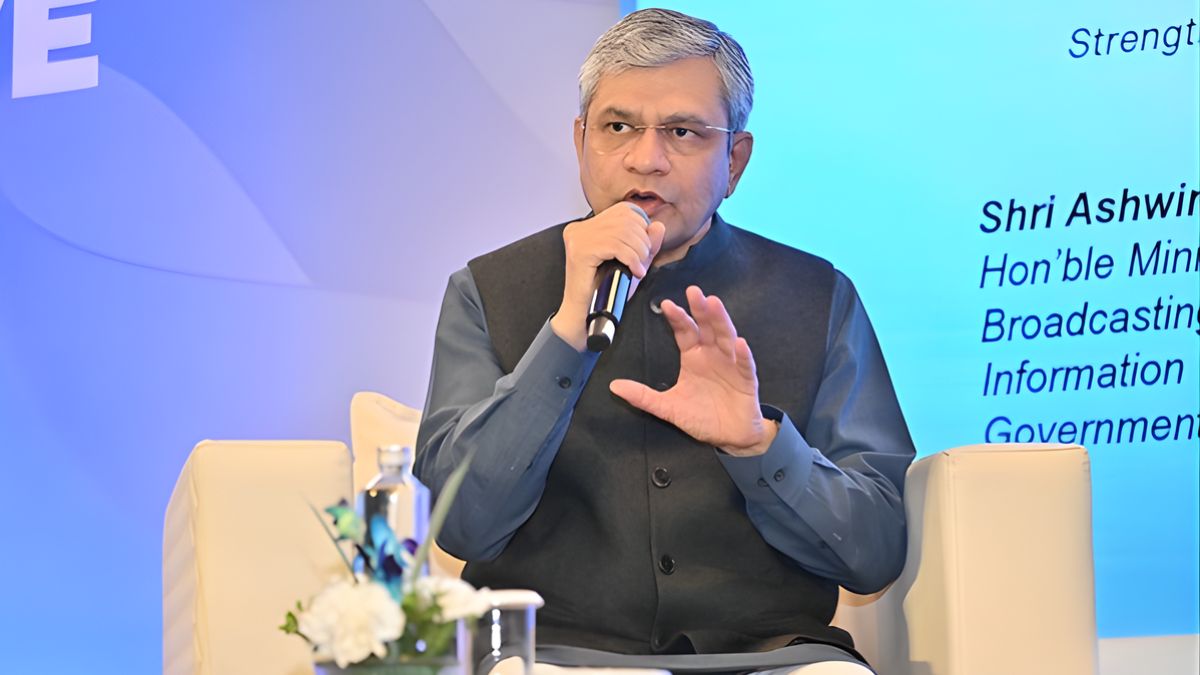
India’s creator economy is no longer just about reels and short videos. It is being positioned as a serious economic engine. At the India AI Impact Summit in New Delhi, Union Minister Ashwini Vaishnaw announced that the government will soon roll out a flagship “Create in India” mission aimed at turning the country into a global hub for content creation and creative talent. According to the minister, India’s film, television and streaming ecosystem already generates INR 1.3 lakh crore in gross output and supports 26 lakh jobs, with annual growth of around 7%. In the coming years, the sector could expand to nearly INR 1.7 lakh crore, creating 3–4 lakh new jobs.
The broader creator economy, he said, is poised for a $20 billion boost, driven by strong digital infrastructure and a young, skilled population.
Also read: ‘Orange Economy’ Gets A Big Push: Budget 2026 Brings Content Creator Labs To Schools And Colleges
What Is the ‘Create in India’ Mission?
Described as “very industry-oriented, very employment-oriented and future-oriented,” the upcoming mission is designed as a long-term strategy for the next 25 years.
The goals are clear:
- Strengthen India’s existing creative capabilities
- Make India the most preferred global platform for creation
- Build a future-ready talent pipeline
- Position India’s “orange economy” as a global force
Speaking during a fireside chat with Motion Picture Association chairman and CEO Charles Rivkin, Vaishnaw stressed that technology and creativity are growing in harmony.
“Technology and the creative world are growing together in synergy. Today’s creative world needs technology and uses technology in multiple applications,” he said.
AI, Copyright and Guardrails: The Tough Balancing Act
While the tone was optimistic, the minister did not ignore the risks.
He warned that misinformation, disinformation and deepfakes are “attacking the foundations of society.” According to him, rapid innovation without safeguards can become a liability.
India is now in discussions with ministers from over 30 countries to develop common technical and legal solutions to curb AI misuse in the media. The government is working on stringent rules that may mandate:
- Watermarking of AI-generated content
- Clear labelling of synthetic media
- Stronger copyright protection
- Techno-legal solutions combining regulation with embedded guardrails
“For such complex problems, we have to have techno-legal solutions,” Vaishnaw said, emphasising that policy must evolve alongside AI systems.
He also stated that freedom of speech relies on trust, and that trust must be protected. Deepfakes and data breaches, he said, should be treated as non-negotiable concerns.
90% 5G Coverage: The Digital Backbone of the Creator Boom
India’s creator growth story, according to the minister, is powered by its digital public infrastructure.
Nearly 90% of the country is covered by 5G, making citizens digitally native. This connectivity is enabling creators from Tier-1 cities to smaller towns to participate in the digital economy.
Vaishnaw highlighted that India’s strong digital infrastructure and skilled population give it a natural edge in becoming a global creative production hub.
The government is focusing on:
- Re-skilling and up-skilling initiatives
- Building new talent pipelines
- Integrating AI tools into education
- Ensuring creators are equipped for emerging technologies
Investing in the Talent Pipeline
A major announcement linked to the broader vision is the establishment of the Indian Institute of Creative Technologies (IICT). Announced during the WAVES Summit and inaugurated within months, the institute is being positioned as one of the most advanced creative-technology facilities globally.
In addition, the Union Budget has proposed:
- Setting up content creator labs in 15,000 schools and colleges
- Providing access to world-class creative tools via industry partnerships
- Replicating earlier models that introduced semiconductor tools in 315 universities and 5G labs in 100 universities
The aim is to democratise creative production and equip the next generation for a technology-driven content ecosystem.
AI Beyond Entertainment: Agriculture to Climate Action
At the five-day India AI Impact Summit 2026 at Bharat Mandapam, which brought together leaders from over 20 nations and delegations from more than 45 countries, Vaishnaw broadened the scope of AI’s potential.
He cited opportunities in:
- Agriculture
- Weather forecasting
- Climate action
- New materials discovery
- Productivity enhancement
However, Ashwini Vaishnaw cautioned that AI will bring both positive and negative impacts. The government’s role, he said, is to maximise benefits while containing harms.
India, through the summit, intends to play a leading role in shaping a balanced and responsible AI future.
Why This Matters for Indian Creators
For Indian creators, this signals something bigger than platform trends.
The government is formally recognising the creator economy as:
- A job engine
- A global export opportunity
- A cultural soft power tool
- A technology-integrated industry
With structured missions, educational labs, copyright reforms and AI guardrails in development, creators may soon operate in a more regulated but also more supported ecosystem.
The next phase of India’s digital economy will likely be defined by how well creators adapt to AI tools while maintaining authenticity.
As Vaishnaw put it, “Human creativity is the most important thing we have in our civilisation. AI should complement creativity and not compete with it.”
India’s Creator Economy Is Getting a Policy Push
Ashwini Vaishnaw has been central to India’s push toward digital transformation, from semiconductor initiatives to AI governance. Under his leadership, the government is positioning India not just as a consumer of global technology, but as a rule-maker and innovation hub.
India’s creator economy has already moved beyond hobby content. With ₹1.3 lakh crore in output and millions of jobs supported, it stands at the edge of structural transformation.
The proposed “Create in India” mission could mark the moment when the country stops seeing creators as influencers alone and starts treating them as economic infrastructure.
For millions of Indian creators, the message is clear: the spotlight is no longer just on content. It is on scale, policy, and global positioning.

Aakanksha Monga’s Solo-Travel Guide: How to Turn Your Parents’ ‘No’ Into a Proud ‘Yes’

‘Create in India’: Ashwini Vaishnaw Unveils Big-Bet Mission to Power India’s ₹1.7 Lakh Crore Creator Economy

Delhi Creator Hema Gill Turns Racist Taunt Into 37 Mn-View Power Moment

Badshah’s Regional Rap Revolution: How Folklore of India Became Pop

Creators Who Turned IND vs PAK Match Moments Into Viral Entertainment

One Internet Demand: Dhruv Rathee Goes Unfiltered on Learn by KK Create with Kavya

India’s Sarvam AI Claims Benchmark Edge Over Gemini and ChatGPT in Indic Vision Intelligence

The Reelstars’ Valentine’s Special: Indian Nano Couple Creators Turning Love Into Content

Why Aishwarya Mohanraj Named Mounjaro And Then Warned Everyone About It

RJs Aren’t Just a Voice Anymore, Let’s Celebrate Their Content Too This World Radio Day

Food Pharmer’s Cannes Look That Never Walked

Parul Gulati Wears Nish Hair on the Cannes 2025 Red Carpet

Nancy Tyagi’s 700-Hour DIY Gown Turns Heads at Cannes 2025

Navya Nanda’s IIM Ahmedabad Triumph: From Controversy to Campus Joy

Influencer Kareema’s Heartwarming Journey with Suki

Prajakta Koli and Vrishank Khanal’s Wedding

Prajakta Koli’s Haldi and Cocktail Celebrations

Prajakta Koli and Vrishank Khanal’s Pre-Wedding Celebrations

Prajakta Koli x Vrishank Khanal Magical Mehendi

Milind Soman & Ankita’s Maha Kumbh 2025 Experience

Top Indian Creators Who Turned Content into Companies

Ekaki Hits 100 Mn Views: Ashish Chanchlani’s Directorial Debut Is A Digital Blockbuster

TahirFuego, The Shotgun King of Indian Free Fire, Dies at 24

Meta Expands AI Reel Translations in Indian Languages: Regional Creators Rejoice

Prathamesh Kadam Dies at 26: Comedy Creator’s Sudden Passing Shocks Creator Community

6 Indian Micro Couple Creators Making Everyday Life Watchable

Apoorva Mukhija’s Love Life in the Spotlight: Rumours, Reality Shows & Online Buzz

India’s Youngest Cricket Viral Star: Shreya Singh, The 4 YO Taking Over Instagram

Khaby Lame Just Turned Silent Fame Into a Near-$1 Billion Power Move
