
Biz
India’s ‘New TV’: How YouTube Is Quietly Rewriting the Rules of Premium Content
As viewing shifts to TVs, YouTube is no longer just a creator platform. Creators, publishers, and audiences are now treating it like India’s main channel.

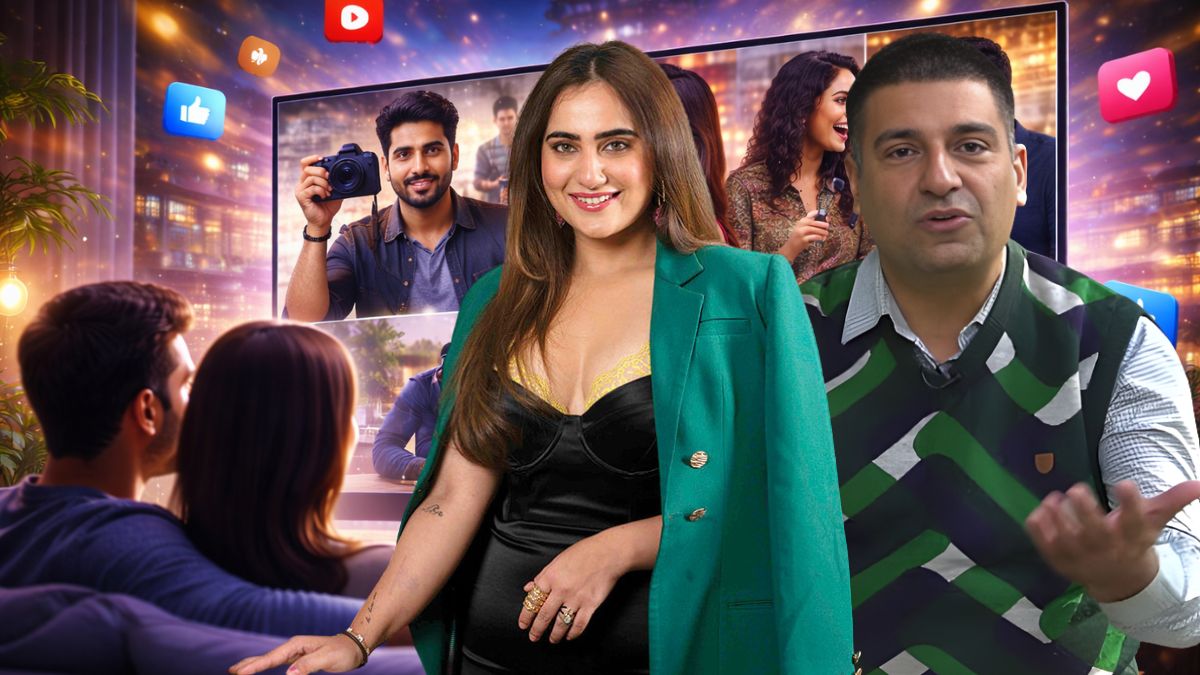
For years, YouTube was seen as India’s largest user-generated video platform, a place defined by smartphones, short clips and endless scrolls. That image is now being quietly, but deliberately, rewritten. As viewing habits shift from personal screens to shared living rooms, YouTube is repositioning itself as a premium content destination, one that increasingly resembles India’s “new TV”. Industry’s senior executives say the transition is not cosmetic. It is structural. India, YouTube’s largest market by user base, is witnessing a decisive move towards television screens and connected devices, pulling the platform into direct competition with traditional linear television and OTT streaming services.
From Mobile Habit to Living-Room Ritual
At its Brandcast 2025 event, YouTube revealed numbers that underline this transformation. Shorts alone average more than 650 million logged-in monthly viewers in India. Alongside this scale, YouTube’s Connected TV audience has crossed 75 million users aged 18 and above, a figure that firmly places it in the centre of the country’s big-screen ecosystem.
While smartphones still dominate daily consumption, with an estimated 700 million devices driving views, the tone of engagement is changing. According to Gunjan Soni, more than 50 percent of Connected TV watch time in India now comes from content that is 21 minutes or longer. That detail matters. It signals patience, intent, and a willingness to sit together and watch stories unfold, something long associated with television but rarely with digital platforms.
Soni describes YouTube today as a powerful “promotional flywheel”, one that builds anticipation and fandom well before a release. In that ecosystem, a new kind of creator has emerged, the “contentpreneur”. These are creators functioning like next-generation studios, building high-value digital intellectual property designed not just for virality, but for scale and the big screen.
Creators as Studios, Not Just Uploaders
The examples she cites reflect how wide this shift has become. Cinematic short films, long-form travel shows, structured cooking IPs, vlogs, and podcasts are no longer outliers. They are the strategy.
One of the clearest signals of this evolution is Vyarth, the short film starring Kusha Kapila and directed by Pankaj Dayani. Released on July 19, 2025, the film tells the story of a struggling actress pushing back against typecasting and the expectation that she should accept “motherly” roles. Alongside Kapila, Kajol Chugh appears as a newcomer navigating the same industry pressures. The film, released directly on YouTube, explored casting politics, ambition, and identity through a socio-psychological lens. Its reception was mixed in parts, but its ambition was unmistakable. It treated YouTube not as a compromise, but as a canvas.
A similar confidence shaped Ashish Chanchlani’s decision to release Ekaki on YouTube. A genre-bending web series blending horror, comedy, sci-fi, and suspense, Ekaki marked Chanchlani’s directorial debut under ACV Studios. He has openly spoken about spending almost everything he earned on the project, not for guaranteed returns, but for creative satisfaction. The gamble paid off. Ekaki crossed 100 million views, becoming a digital blockbuster and proof that long-form, creator-led storytelling can thrive without subscriptions or paywalls. As 2026 unfolds, Ekaki stands less as a one-off success and more as a sign that creators have outgrown the limits of short clips.
Travel, Food, and the Rise of Slow Content
Long-form success is not limited to fiction. Visa2Explore offers a different but equally telling example. Founded in January 2017 by Harish Bali, the channel built its audience through detailed travel and food vlogs that emphasise clarity, logistics, and cultural context. With over 2 million subscribers by early 2026, Visa2Explore has shown that audiences are willing to commit time when content respects their curiosity. Episodes are not rushed. Destinations are explained patiently. Food is contextualised within local history. It is precisely this kind of clean, informative storytelling that fits naturally into family co-viewing on television screens.
Publishers, Pay-Per-View, and Premium Intent
YouTube’s repositioning is also changing how large media houses use the platform. For publishers like Sony Pictures Networks India and Zee Entertainment, YouTube is no longer merely a promotional extension. It has become a distribution layer in its own right. Pay-per-view partnerships, including Aamir Khan’s Sitaare Zameen Par, underline YouTube’s push to host premium, long-form content without abandoning its open-access roots.
This hybrid model, combining advertising, subscriptions, memberships, pay-per-view options, and advanced creator tools, has wider implications for the creator economy. Increasingly, creators see YouTube as a viable alternative to traditional TV and OTT platforms, not just for reach, but for control, ownership, and monetisation.
Indian Stories, Global Screens
Another quiet shift sits beneath the surface of these numbers. Around 15 percent of watch time for Indian-produced content now comes from outside India. At the same time, India has become a major market for global creators such as MrBeast. The exchange is no longer one-way. Indian stories are travelling outward, finding audiences without intermediaries, language barriers, or rigid distribution windows.
Soni sums up the change succinctly. Content is no longer “for Indians”. It is world-class content that happens to be Indian.
A New Definition of Television
Taken together, these developments suggest that YouTube’s makeover is not about shedding its past, but about expanding its future. The platform still thrives on scale and accessibility, but it is now equally invested in depth, duration, and shared viewing. Creators are no longer chasing algorithms alone. They are building IPs, experimenting with format, and trusting audiences to stay.
As India’s living rooms increasingly turn to YouTube for stories that last longer than a scroll, the line between digital and television continues to blur. What emerges is not a replacement, but a redefinition. In that sense, YouTube’s biggest transformation may not be technological at all. It is cultural.

Roblox Creator Economy in India: Earnings, Jobs and Opportunities for Game Developers

IRL: The Raw, Real Stories Behind the Creators We Follow

Millions Use These Viral Songs, But Are the Artists Getting Paid?

Nakul Dhull Gains 800K Followers After Bigg Boss 20

9 Times Indian Creators Faced Legal Trouble

Indian Creator Aakansha Monga Gives Taiwan’s Toilet-Themed Restaurant Food 5/10

Who Needs Google When You Have Aapki Dadda? A 85-Year-Old Creator

‘I Couldn’t Express Myself Properly’: Aman Gandhi Opens Up About His Bigg Boss 20 Eviction

Bharti Singh and Haarsh Limbachiyaa to Launch Their Own Micro-Drama App

ShareChat and Moj Launch ‘Saas, Bahu aur Magic’ Micro-Drama With Glow & Lovely

Food Pharmer’s Cannes Look That Never Walked

Parul Gulati Wears Nish Hair on the Cannes 2025 Red Carpet

Nancy Tyagi’s 700-Hour DIY Gown Turns Heads at Cannes 2025

Navya Nanda’s IIM Ahmedabad Triumph: From Controversy to Campus Joy

Influencer Kareema’s Heartwarming Journey with Suki

Prajakta Koli and Vrishank Khanal’s Wedding

Prajakta Koli’s Haldi and Cocktail Celebrations

Prajakta Koli and Vrishank Khanal’s Pre-Wedding Celebrations

Prajakta Koli x Vrishank Khanal Magical Mehendi

Milind Soman & Ankita’s Maha Kumbh 2025 Experience

YouTube Is Letting Creators See What Works for Their Competitors

YouTube Shorts Changes Repost Rules: What Creators Need To Know About Original Content

Adam Mosseri Reveals Instagram Trial Reels Rule That Could Limit Your Reach

What Is Meta’s New “Muse” AI And Why Are Users Seeing It?

Roopali Agrawal aka Rockonroops Turning Family Life Into Conversations On Fashion, Freedom And Safety

Eloelo Launches Dolphin AI: Will AI Video Tools Change The Future Of Creators And Filmmakers?

Creator Twinkle Dhoot Shares 10 Trial Reel Formats Creators Should Try

Why Is MrBeast Back in India? Is His India Connect Getting Bigger in 2026?

MS Dhoni Becomes SpeakX Brand Ambassador For English Learning Campaign
