
Brand Studio
The Market Follows Earnings, Not Noise: Saurabh Nanavati on India’s Investment Reality
In this episode of Simple Hai!, Invesco CEO Saurabh Nanavati talks about India's markets, investor habits, global outlook, and the need for financial literacy.

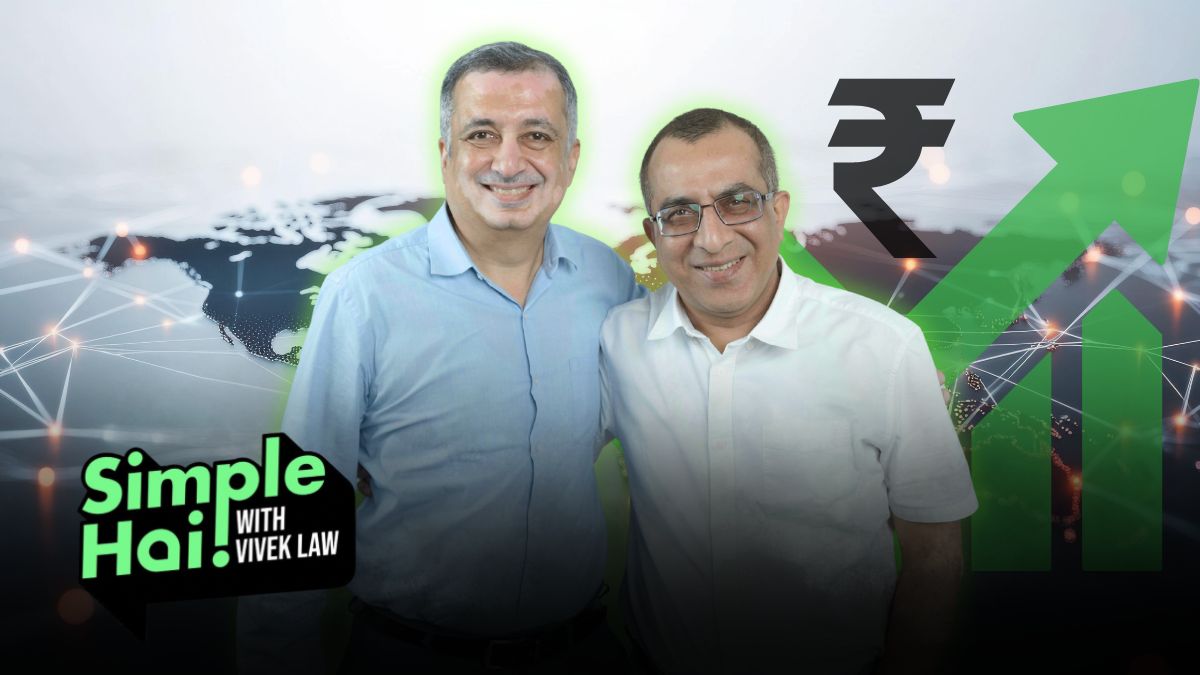
In the latest episode of Simple Hai! show, veteran finance journalist Vivek Law sat down with Saurabh Nanavati, Managing Director and CEO of Invesco Mutual Fund, to decode India’s evolving investment landscape. Known for his quiet yet powerful presence in the industry, Nanavati breaks down how earnings, investor behaviour, and financial education shape India’s markets. From India’s rise as a global investment hub to the urgent call for teaching finance in schools, the discussion blends deep insights with practical lessons for every investor.
The Market is a Slave of Earnings
Nanavati opened up about what truly drives markets: earnings. He explained his long-held belief: “The stock market is a slave of earnings.” Markets, he said, are ultimately a reflection of future earnings, not short-term trends or global noise.
The current flat market, according to him, is a result of weak earnings, as the high-growth years of 2022–2023 were largely spillovers from the pandemic years of 2020–2021. But as corporate earnings recover, the rally will return.
India’s Global Position and Market Strength
Nanavati placed India among the world’s top five markets, alongside the United States, China, Germany, and Japan. With 22 different sectors in its index, India offers fund managers a wide space to generate alpha, unlike commodity-heavy economies.
He noted a key structural shift in global perception: large institutional investors now prefer separate mandates for India and China, instead of putting both under the generic “emerging markets” category. This reflects how India is increasingly seen as a standalone growth story.
Over the next three years, Nanavati expects India to “catch up meaningfully with the US and China.” Even without major policy reforms, India’s economy could grow around 6%, which he called “huge”. With supportive government policies, growth could easily touch 6.5% to 8%.
Despite short-term volatility, he believes corporate growth should begin to bounce back after the next two quarters. On global challenges like tariffs and trade restrictions, Nanavati said such pressures might actually strengthen India by uniting businesses and people toward a common goal.
Investor Behaviour: Patience Pays
India’s investment industry has seen massive progress; the total Assets Under Management (AUM) have crossed 75 lakh crore, and monthly SIP inflows have reached 28,000 crore. Yet, investor behaviour remains a challenge.
Nanavati shared that while the number of investors staying invested for at least five years has grown from just 5% in 2020 to about 30% now, a worrying 70% still churn their portfolios too often.
He gave a relatable example: his own aunt had invested in a mutual fund back in 2014 and forgot about it. Eleven years later, that investment had grown six and a half times. His takeaway was simple: the best investors are often those who “forget their money” and let compounding do its magic.
Also Read: How AI and Technology Are Changing the Face of Personal Finance in India, Learn from Vijay Kuppa
Financial Literacy Must Start Early
Nanavati passionately advocated for introducing financial literacy in schools, suggesting that students as young as 12–13 should be taught basic money management. He observed that even highly accomplished professionals often struggle with managing their finances because they were never taught how.
He also clarified a common misconception: “Mutual funds are not equal to equity.” They include all asset classes, debt funds, gold funds, equity, property-linked investments, and even commercial real estate through Alternative Investment Funds (AIFs).
With smaller ticket sizes and easier access, even 18-year-olds are now beginning their investing journey through SIPs, a positive sign of financial awareness among India’s youth.
Active vs Passive: The Best of Both Worlds
Globally, investing strategies are shifting. In markets like the US, where generating alpha is tough, investors now prefer a 50-50 approach — half of their portfolio in passive funds for steady market returns, and the other half with top-performing active managers for potential outperformance.
Nanavati pointed out that this model gives investors stability while allowing professionals to add value. However, in India, he believes active management still has 10–15 strong years ahead, thanks to diverse opportunities and evolving market depth.
India’s Path Ahead
Saurabh Nanavati’s conversation with Vivek Law painted a clear and grounded picture of India’s investment landscape. The message was simple yet powerful: markets will follow earnings, not noise.
India’s structural strengths, growing investor base, and global recognition put it on the path to sustained growth. But for investors to truly benefit, financial literacy, patience, and discipline must go hand in hand with opportunity.
As Nanavati concluded, India’s wealth creation journey is only beginning, and those who understand the fundamentals will be the ones to gain the most.
Keep Reading The Reelstars.

Siddhesh Lokare Takes His Social-Impact Stories To The Stage With Musical Show ‘APAAR’

Meet Pragya Tewari, The Creator Opening Up About The Struggles Behind Content Creation

MrBeast Says His Next YouTube Video Cost $10 Million And Took More Than 1,000 Hours

Innovative Nani: Meet the 70-Year-Old Tech Creator Making Gadgets Fun for Gen Z

Prannay Joshi Teams Up With Star Sports India For Manchester Derby Promo

Meet Tamasi, The Creator Exploring Sarees Through Different Drapes

Deepinder Goyal’s Temple Is Testing Whether Meditation Can Be Measured

Jonathan Gaming, Shreeman Legend And TechnoGamerz Take Indian Gaming To Silverstone For ‘Max vs 100’

Architha: How a Telugu Creator Turned Relatable Gen Z Rants Into Her Own Digital Niche

How Zohran Mamdani Is Using Influencers To Reach New Yorkers

Food Pharmer’s Cannes Look That Never Walked

Parul Gulati Wears Nish Hair on the Cannes 2025 Red Carpet

Nancy Tyagi’s 700-Hour DIY Gown Turns Heads at Cannes 2025

Navya Nanda’s IIM Ahmedabad Triumph: From Controversy to Campus Joy

Influencer Kareema’s Heartwarming Journey with Suki

Prajakta Koli and Vrishank Khanal’s Wedding

Prajakta Koli’s Haldi and Cocktail Celebrations

Prajakta Koli and Vrishank Khanal’s Pre-Wedding Celebrations

Prajakta Koli x Vrishank Khanal Magical Mehendi

Milind Soman & Ankita’s Maha Kumbh 2025 Experience

Could Bilibili Be the Next Creator Opportunity for Indians?

China’s Bilibili Goes Global, Taking Aim at YouTube and Gen Z

A YouTuber Begged For A Day And Earned ₹4000. Here’s What Happened

AI Content Creator Platform Creedom Raises ₹4.1 Crore in Seed Funding

R Udhay Is Helping Creators Level Up Their Content With Editing, AI & Instagram Tips

Bihar Creators Can Earn Up to ₹1 Lakh Per Video Under New Social Media Rules

Poonam Singh Is Turning Everyday Gen-Z Chaos Into Relatable Content

Internet Famous Golden Retriever Tucker Budzyn Diagnosed With Lymphoma

Who Was Manjeet Kaur? What We Know About the Punjabi Influencer’s Death
