
Entertainment
After Malviya Nagar Row, Northeast Creators Answer Hate With Pride and Proof

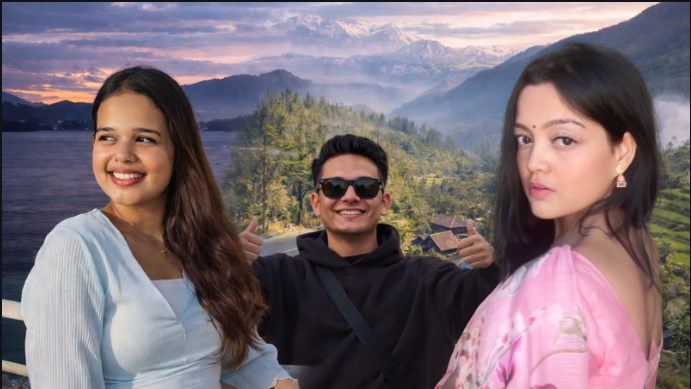
On February 19, 2026, a disturbing incident in South Delhi’s Malviya Nagar triggered outrage across India. Three women from Arunachal Pradesh were allegedly subjected to racial slurs, sexist remarks and threats by neighbours following a dispute over dust from an AC installation. What began as a minor disagreement escalated into something deeper, exposing the prejudice that many Northeastern Indians say they continue to face in metropolitan cities. The video went viral. Public anger followed. Meghalaya Chief Minister Conrad Sangma condemned the incident. Delhi Police arrested the two accused under the Bharatiya Nyaya Sanhita (BNS) for criminal intimidation. The case is now being handled by the Special Police Unit for North-Eastern Region (SPUNER). But while legal processes began, another response took shape online. Creators from the Northeast did not just condemn the hate. They showed the country who they are.
Aakancha Jaiswal: Turning Stereotypes Into a Lesson in Dignity
“Don’t judge a paradise you’ve only seen through a blurry lens of ignorance.”
Aakancha Jaiswal, a digital creator from Assam with 64.8K followers, used her platform to address the moment head-on.
Her reel wasn’t defensive. It was declarative.
“They call us ‘different’ because they can’t handle the Gold Standard.”
She reframed the narrative by highlighting everyday realities of the Northeast:
- Women running local markets
- Girls walking home safely at midnight
- No dowry culture
- Women earning as a norm
- Honesty as a lived value
“In the Northeast, women empowerment isn’t a chapter in a textbook, it’s real life.”
Her tone blended pride and challenge. She invited doubters to visit, to experience, to learn. Not with hostility, but with confidence.
“Pack a bag. Leave the prejudice at home.”
Her content turned hurt into assertion. A powerful example of how creators can shift a national conversation.
Monu Bikomiya Deori: A Motovlogger’s Emotional Call for Equality
“We are not here to suffer in our own country.”
Monu Bikomiya Deori, known online as a motovlogger with 832K followers, posted a deeply emotional video addressing racism against Northeast Indians.
“Stop racism against Northeast Indians. Please stop harassing students of Northeast India. We are Indians. Bharat Mata Ki Jai.”
His video focused on lived experience, how people from the region grow up in disciplined, respectful, community-driven environments. He spoke about how the Northeast often offers cleaner cities, safer streets and stronger community values than many metro areas.
His appeal was not political. It was personal.
He reminded viewers that identity does not need validation; it demands respect.
Hridisthita: Soft Storytelling, Strong Message
“Welcome to the Northeast, with love.”
Hridisthita, a content writer and storyteller with 30.6K followers, took a quieter route.
Her post read like an invitation rather than an argument.
She painted a picture of:
- Lush green landscapes
- Clean roads and fresh air
- Women leading in business and community life
- No dowry system
- Strong clan and community structures
- Respectful upbringing
- Safe spaces for women
Her ideology is simple: build empathy through storytelling.
Instead of reacting with anger, she offered context.
Instead of countering hate with confrontation, she countered it with culture.
Her post carried one line that summed up the tone:
“Welcome to the Northeast, with love. #stopracism”
Also read: 5 Creators Putting India’s Most Underrated Region on the Travel Map
How Social Media Became a Space for Cultural Reclaiming
The Malviya Nagar incident could have remained just another viral controversy.
Instead, it became a moment of digital assertion.
Creators used:
- Reels
- Storytelling
- Emotional monologues
- Cultural highlights
- Personal narratives
Not to argue, but to educate.
They showed markets run by women and spoke about safety as a birthright.
They highlighted pride from Olympic podiums to global stages and emphasised honesty, dignity and community values.
The message was clear:
The Northeast is not “different.”
It is deeply Indian.
And hate has no place in that identity.
Beyond Outrage: Why Representation Matters
Legal action is essential. Accountability is necessary.
But representation shifts perception. When creators speak directly to the camera, sharing upbringing, culture, values and lived reality, they humanise communities often reduced to stereotypes.
The February 19 incident reminded India of an uncomfortable truth.
The creators’ response reminded India of something else: unity cannot exist without understanding.
One Country, Many Cultures, Zero Space for Hate
The Malviya Nagar case is still under investigation. SPUNER continues to handle the matter. But beyond the legal proceedings, something larger happened.
Voices from the Northeast rose, not just in protest, but in pride.
Through reels and words, creators reminded the country that the Northeast is not an outsider story. It is part of India’s story. And perhaps that is the most powerful response of all. The whole of India should see these videos, not as reactions, but as reminders. Hate must go. Respect must stay.

Niharika Tiwari Takes Charge in Rise & Fall 2, Eliminates Shehzad Poonawalla and Irina Rudakova

Sania Mistry Deepfake Case: Maharashtra Cyber Acts Against AI-Manipulated Images

YouTube’s Gunjan Soni Says India’s Creator Economy Is Evolving Into a Global Media Powerhouse

Navratri Outfit Inspiration: Creators Who Understood the Festive Assignment

Rowhi Rai Buys Her Own House: How Northeast India’s Creators Are Building Their Own Success Stories

Ashish Chanchlani’s Perfume Business: Can Creator Brands Smell Like Success?

Lilly Singh Is Back to Sketch Comedy, and Her Characters Have Become Creators of Their Own

Anubhav Singh Bassi’s ‘Cheating’ Crossed 100 Million YouTube Views

Meet Saurav Haldar, the Indian Cricket Creator Featured at the ICC Men’s World Cup 2027 Schedule Launch

15–25% of Brand Marketing Budgets Are Moving Towards the Creator Economy

Food Pharmer’s Cannes Look That Never Walked

Parul Gulati Wears Nish Hair on the Cannes 2025 Red Carpet

Nancy Tyagi’s 700-Hour DIY Gown Turns Heads at Cannes 2025

Navya Nanda’s IIM Ahmedabad Triumph: From Controversy to Campus Joy

Influencer Kareema’s Heartwarming Journey with Suki

Prajakta Koli and Vrishank Khanal’s Wedding

Prajakta Koli’s Haldi and Cocktail Celebrations

Prajakta Koli and Vrishank Khanal’s Pre-Wedding Celebrations

Prajakta Koli x Vrishank Khanal Magical Mehendi

Milind Soman & Ankita’s Maha Kumbh 2025 Experience

Meta One Launches With Paid AI, Creator Tools And New Features Across Instagram, Facebook And WhatsApp

YouTube Shorts Changes Repost Rules: What Creators Need To Know About Original Content

YouTube Is Letting Creators See What Works for Their Competitors

Adam Mosseri Reveals Instagram Trial Reels Rule That Could Limit Your Reach

What Is Meta’s New “Muse” AI And Why Are Users Seeing It?

Roopali Agrawal aka Rockonroops Turning Family Life Into Conversations On Fashion, Freedom And Safety

Technical Guruji’s iPhone 18 Pro Max Giveaway: Nearly 100 Phones And A Big Question About The Cost

Eloelo Launches Dolphin AI: Will AI Video Tools Change The Future Of Creators And Filmmakers?

Is Orry Getting Married? Close Friends Story Sparks Questions As His Past Wedding Rumours Resurface
