
Fashion
Ralph Lauren ₹44,800 Bandhani Skirt Sparks Backlash

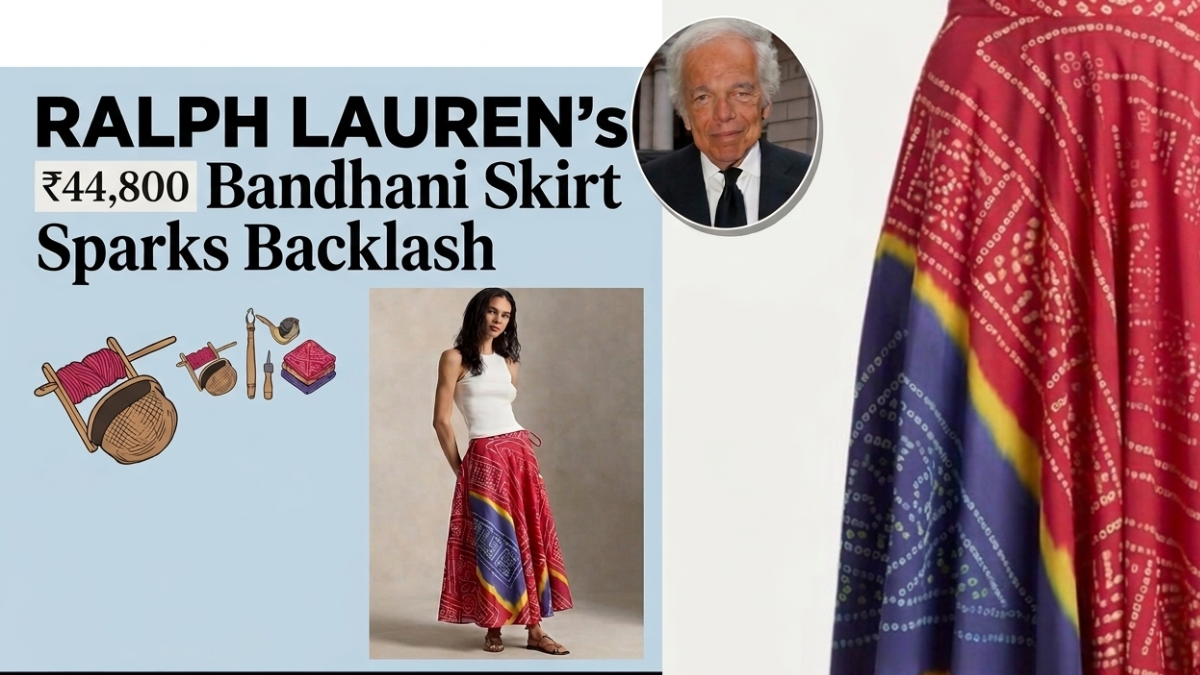
Why Is Ralph Lauren Facing Backlash Again?
Global luxury brand Ralph Lauren is once again at the center of a cultural debate. This comes after launching a Rs.44,800 Bandhani-inspired skirt, sparking fresh backlash on social media over the use of Indian traditional designs without proper credit.
The controversy follows earlier criticism faced by luxury houses like Prada and Louis Vuitton. Both brands were criticized for showcasing Indian inspired elements without acknowledging their cultural origins.
Backlash over Jhumkas to Bandhani?
The latest outrage comes shortly after Ralph Lauren was criticized for featuring Indian jhumkas in a Paris runway collection. There, they were labeled simply as “vintage accessories” rather than Indian craftsmanship.
Now, the brand is facing renewed criticism for a Bandhani-style wrap skirt priced at Rs.44,800. It is described on its website as being “inspired by traditional Bandhani tie-dye techniques and motifs.”
What Is the Controversy Around the Bandhani Skirt?
Social media users and creators have questioned the pricing and lack of credit. They point out that Bandhani is a centuries old Indian textile art rooted in regions like Gujarat and Rajasthan.
Digital creator Radha Patel called out the brand, asking, “Why Ralph Lauren, why?” She also highlighted that the design appears to be printed rather than hand tie-dyed. This has raised concerns about authenticity and pricing.
Many users argued that while inspiration is common in fashion, the issue lies in:
- Lack of credit to Indian artisans
- Absence of cultural acknowledgment
- High luxury pricing compared to local craftsmanship
What Is Bandhani and Why Does It Matters?
Bandhani is one of India’s oldest textile traditions, dating back to the Indus Valley Civilization (around 4000 BCE). It involves hand-tying and dyeing fabric into intricate patterns, often seen in sarees, dupattas, and traditional wear.
The craft is deeply rooted in regions such as Jaipur, Udaipur, Rajkot, and Bhuj. There, artisans have preserved the technique for generations.
Beyond fashion, Bandhani represents heritage, livelihood, and cultural identity for thousands of Indian craftsmen.
Why Is Global Fashion Facing Cultural Backlash?
This is not an isolated incident. Similar debates have emerged around:
- Kolhapuri chappal-inspired footwear by Prada
- Jhumka-inspired accessories by Ralph Lauren
- Indian textile and embroidery motifs used across global luxury collections
While global fashion has always drawn inspiration from cultures worldwide, critics argue that lack of attribution and context creates cultural erasure. This is seen as erasure rather than appreciation.

‘India Has a R*pe Problem’: Meet Anaheez Patel, the Creator Speaking Beyond Her Fitness Niche

Niharika Tiwari Confirms Breakup With Sorab Bedi, Says Their Relationship Was “Real”

Kartika Jalani: From Chartered Accountant To India’s Got Latent

Who Is Amin Jaz? The DJ and Podcaster at the Centre of Apoorva Mukhija Dating Buzz

Ashneer Grover Calls New UPI Merchant Charge a ‘Tax’: What the New Rule Actually Changes

Budding Creator Krisha Shah Sparks Debate After Sharing Her View On Abortion And Down Syndrome

Major Rishabh Singh Sambyal Goes Viral as 1,000+ Fans Subscribe to His Instagram Content

Shantanu Deshpande Calls Out ‘Unprofessional’ Influencers

Prajakta Koli Becomes First Indian To Judge UN SDG Action Awards

Snapchat India Partners With Qoruz To Make Creator Discovery Easier For Brands

Food Pharmer’s Cannes Look That Never Walked

Parul Gulati Wears Nish Hair on the Cannes 2025 Red Carpet

Nancy Tyagi’s 700-Hour DIY Gown Turns Heads at Cannes 2025

Navya Nanda’s IIM Ahmedabad Triumph: From Controversy to Campus Joy

Influencer Kareema’s Heartwarming Journey with Suki

Prajakta Koli and Vrishank Khanal’s Wedding

Prajakta Koli’s Haldi and Cocktail Celebrations

Prajakta Koli and Vrishank Khanal’s Pre-Wedding Celebrations

Prajakta Koli x Vrishank Khanal Magical Mehendi

Milind Soman & Ankita’s Maha Kumbh 2025 Experience

Could Bilibili Be the Next Creator Opportunity for Indians?

Rohit Sukheja and Kanupriya Gupta Hit 5 Billion YouTube Views

China’s Bilibili Goes Global, Taking Aim at YouTube and Gen Z

R Udhay Is Helping Creators Level Up Their Content With Editing, AI & Instagram Tips

A YouTuber Begged For A Day And Earned ₹4000. Here’s What Happened

Rebel Kid Taking Her Journey From Social Media To Columbia University

AI Content Creator Platform Creedom Raises ₹4.1 Crore in Seed Funding

Meet RJ Parima Jain, The Former Radio Mirchi Host Building Her Own Digital Creator Journey

Poonam Singh Is Turning Everyday Gen-Z Chaos Into Relatable Content
