
Tech
Deepinder Goyal Isn’t Launching Temple for Everyone And That’s Exactly the Point
The first 100 Temple devices are ready, but only select founders, creators, and athletes will get access.

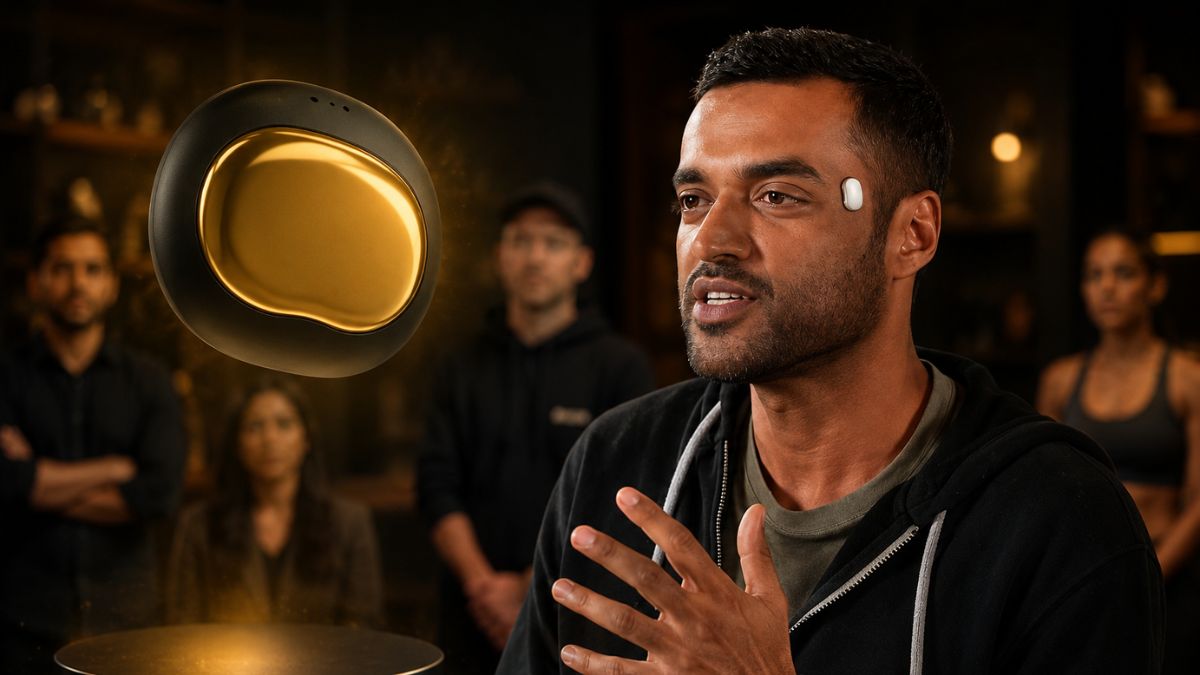
What is Temple and why is Deepinder Goyal’s new launch creating buzz?
Deepinder Goyal has officially opened early access applications for Temple, his new wearable-tech venture focused on physical and cognitive performance. But this is not a regular gadget launch. Only 100 Temple devices currently exist, and not everyone applying will receive one. Instead of opening sales publicly, Temple is carefully selecting a small group of users who can actively contribute feedback and help shape the future of the product. The rollout already feels less like a consumer-tech launch and more like the beginning of an exclusive performance-focused ecosystem.
Also read: Deepinder Goyal’s ‘Temple’ Sparks Debates and Memes After Raj Shamani Podcast
What exactly does the Temple wearable do?
Temple is a wearable device designed to sit on the temple area of the head, rather than on the wrist like traditional smartwatches or fitness bands.
According to the company, the wearable continuously tracks cerebral blood flow to better understand:
- recovery
- training
- sleep
- work performance
- cognitive output
Temple claims the temple area provides access to denser neural and vascular signals, allowing cleaner and richer physiological data collection compared to standard wearables.
The company is positioning the product as a deeper performance tool rather than just another health tracker.
Who is Temple being built for?
The target audience is extremely intentional.
Temple is currently inviting applications from:
- athletes
- founders
- scientists
- doctors
- creators
- performance-focused individuals
The messaging around the product repeatedly emphasises people who care deeply about both physical and cognitive optimisation.
This is not being marketed as a mass-market fitness gadget. It is being framed almost like a high-performance research community built around human potential.
Why is Temple not launching publicly yet?
The current phase is being treated as a feedback-driven pilot rollout.
Deepinder Goyal clarified that applications will be screened carefully, and only a select group will receive access based on their ability to provide meaningful and critical feedback.
The idea is simple:
Temple wants contributors, not passive users.
This strategy allows the company to refine the product alongside early adopters instead of waiting for post-launch corrections.
In many ways, the users themselves become part of the product-building process.
Why is everyone talking about Temple’s exclusivity strategy?
One major reason Temple is getting attention is because of how intentionally exclusive the rollout feels.
Scarcity is part of the launch itself.
Only 100 devices exist right now, and even among applicants, very few will actually get selected. The application process also asks users to explain why they want access, along with sharing social profiles and personal details.
That changes the psychology completely.
Instead of simply “buying a product,” users are effectively applying to become part of a curated early community.
What is the investment angle behind Temple?
Perhaps the most interesting layer of the rollout is that selected users may also get an opportunity to invest in Temple’s future funding rounds.
Deepinder Goyal mentioned that contributors helping shape the product may later become stakeholders in the company itself.
This creates a very different relationship between product and user.
The strategy aligns:
- product experience
- community participation
- long-term ownership
Temple is essentially building believers before building scale.
How much funding has Temple already raised?
The device reportedly raised around $54 million (approximately Rs 493 crore) in seed funding earlier this year, valuing the startup at nearly $190 million.
The funding round included participation from:
- Peak XV Partners
- Steadview Capital
- Info Edge Ventures
- along with over 80 angel investors.
The scale of early investment signals strong confidence in Temple’s long-term vision around performance technology and wearable intelligence.
Why does Temple feel different from typical wearable launches?
Most wearable brands compete around:
- step tracking
- notifications
- fitness scores
- mainstream accessibility
This is taking a completely different route.
It is built around:
- exclusivity
- cognitive performance
- elite user groups
- long-term community alignment
The launch feels closer to an invitation-only performance lab than a traditional consumer-tech release.
And that may be exactly what makes it stand out in an already crowded wearable market.

Top Female Mental Health Creators in India To Follow On World Mental Health Day

From Air Force Officer to Travel Creator: Amit Mehta’s Journey of Exploring India

Exclusive: YouTube Money Is Not Enough: Indrajit Lahiri on 10 Years of Foodka and Building a Business Beyond Content

Bhuvan Bam Explores Dubai’s Beautyworld Event as SARKAR Looks Beyond the Studio

Eloelo Launches Dolphin AI: Will AI Video Tools Change The Future Of Creators And Filmmakers?

Surat Influencer Simran Patel Arrested Over Gandhi Reel: What We Know About Her Content

Why CRED Cast Rakhi Sawant To Explain Loan Stacking: Any Marketing Strategy?

Sufi Motiwala Turns 23, Celebrates Birthday After Recalling Near-Fatal Sea-Link Accident

OpenAI Releases 722 Maths Papers: Could AI Be Closing In On Longstanding Mathematical Mysteries?

India’s Internet Is 10 Times Faster Than In 2022. What Does That Mean For Everyday Life?

Food Pharmer’s Cannes Look That Never Walked

Parul Gulati Wears Nish Hair on the Cannes 2025 Red Carpet

Nancy Tyagi’s 700-Hour DIY Gown Turns Heads at Cannes 2025

Navya Nanda’s IIM Ahmedabad Triumph: From Controversy to Campus Joy

Influencer Kareema’s Heartwarming Journey with Suki

Prajakta Koli and Vrishank Khanal’s Wedding

Prajakta Koli’s Haldi and Cocktail Celebrations

Prajakta Koli and Vrishank Khanal’s Pre-Wedding Celebrations

Prajakta Koli x Vrishank Khanal Magical Mehendi

Milind Soman & Ankita’s Maha Kumbh 2025 Experience

Meta One Launches With Paid AI, Creator Tools And New Features Across Instagram, Facebook And WhatsApp

YouTube Shorts Changes Repost Rules: What Creators Need To Know About Original Content

Adam Mosseri Reveals Instagram Trial Reels Rule That Could Limit Your Reach

Roopali Agrawal aka Rockonroops Turning Family Life Into Conversations On Fashion, Freedom And Safety

What Is Meta’s New “Muse” AI And Why Are Users Seeing It?

Technical Guruji’s iPhone 18 Pro Max Giveaway: Nearly 100 Phones And A Big Question About The Cost

Is Orry Getting Married? Close Friends Story Sparks Questions As His Past Wedding Rumours Resurface

The Traitors 2 Reunion Was Full Of Kalesh, Confrontations And Long-Pending Answers

Why Is MrBeast Back in India? Is His India Connect Getting Bigger in 2026?
