
Lifestyle
Dr Shanthi Tummala Left Her Clinic to Fight Bengaluru’s Garbage Crisis, And Changed Over 1 Lakh Lives
Dr Shanthi Tummala quit dentistry to teach waste segregation, proving civic change begins from home.

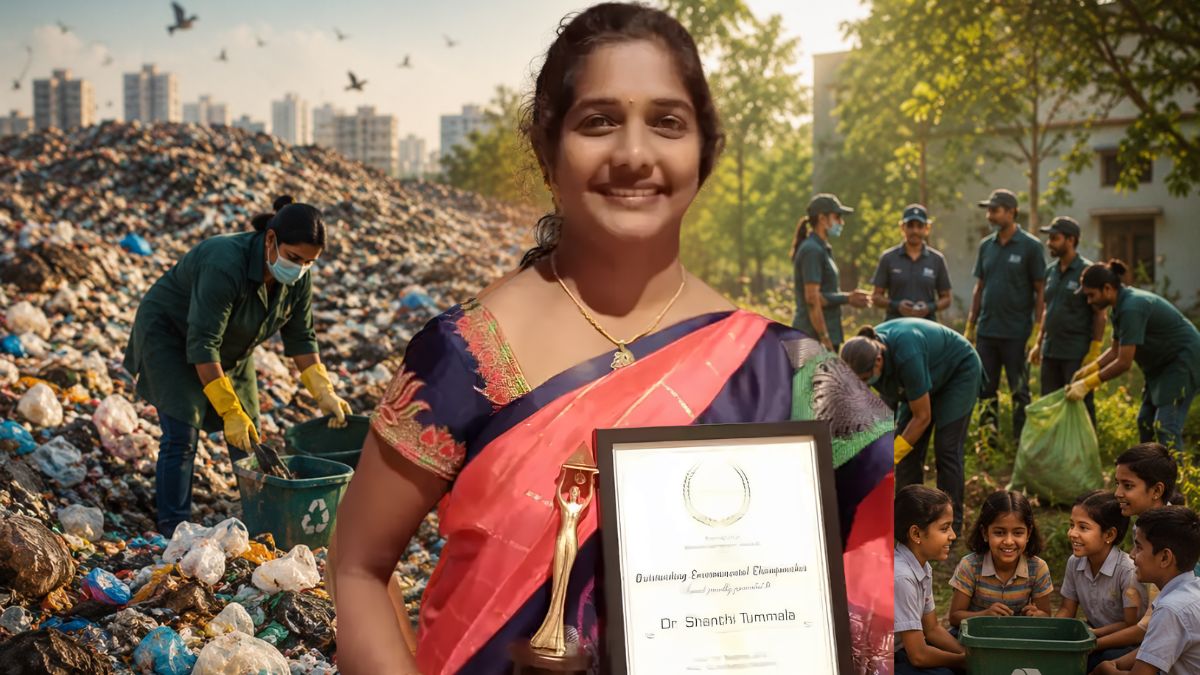
Who is Dr Shanthi Tummala and why is Bengaluru talking about her?
Shanthi Tummala was once living a comfortable life as a dentist in Bengaluru. Today, she is known for something completely different. She became one of the strongest voices pushing Bengaluru toward responsible waste management, sustainable living, and civic accountability, not through speeches or politics, but through years of direct work with citizens. What makes her journey remarkable is that she had absolutely no background in waste management when she began.
What made Dr Shanthi Tummala leave dentistry?
Everything changed after one disturbing moment.
Dr Shanthi once saw a waste picker standing inside a massive pile of garbage, searching desperately for something recyclable to sell. The image stayed with her long after that day.
As she began tracing Bengaluru’s waste trail, she discovered a much bigger crisis hiding beneath the city’s daily routine.
Most of the waste generated by citizens ended up in landfills, contaminating groundwater, polluting nearby communities, and putting waste workers at serious health risk.
One incident affected her deeply: a woman reportedly lost a finger while sorting mixed waste because households failed to segregate garbage properly.
That was the moment Dr Shanthi decided she could no longer stay disconnected from the problem.
Also read: Instagram Noticed Him, He Didn’t Blink: Meet Kalu Putik, the Creator Turning Trash Into High Fashion
How did she start fixing Bengaluru’s garbage problem?
Despite having zero technical experience in waste management, she stepped directly into the field. Dr Shanthi quit her dental practice and started something extremely basic, but powerful: going door to door and teaching people how to segregate waste.
She educated residents about separating:
- wet waste
- dry waste
- hazardous waste
At first, many people dismissed her efforts. Some accused her of chasing fame or preparing for politics. Others mocked the work entirely.
But she continued.
Through the HSR Citizen Forum, she eventually helped more than one lakh Bengaluru residents move towards nearly 90 percent waste segregation.
What impact has her work created?
Dr Shanthi’s work went beyond awareness campaigns.
She travelled across the city, often using crowded public buses, meeting citizens directly and pushing civic authorities to support segregation and composting systems.
She also established a Compost Learning Centre to teach sustainable practices and responsible waste handling.
Over time, her work gained wider recognition, including appreciation from Kiran Mazumdar-Shaw.
But perhaps the biggest impact lies in changing behaviour.
She helped people understand one important idea:
Waste does not disappear after leaving your home.
How does Dr Shanthi practice sustainability in her own life?
What makes her work credible is that she follows the same lifestyle she advocates.
Dr Shanthi carries a steel dabba, uses cloth bags, avoids plastic at home, and even wears preloved sarees as part of conscious consumption.
For her, sustainability is not an occasional campaign or social media trend. It is a daily practice.
Her philosophy is simple:
“My waste, my responsibility.”
Why does her story matter today?
At a time when Indian cities continue struggling with landfill overload, poor segregation, and growing plastic pollution, Dr Shanthi’s journey highlights something important.
Real change often begins with citizens before systems catch up.
Her work also raises a larger question:
Should governments involve more grassroots experts like her while designing waste management policies?
People who spend years working directly with waste systems, communities, and ground realities often understand challenges in ways reports and meetings cannot fully capture.
Dr Shanthi’s journey shows that practical knowledge built through lived experience can sometimes become more valuable than theory alone.
What can people learn from Dr Shanthi Tummala?
Her story is not just about garbage.
It is about civic sense, responsibility, and refusing to normalise everyday problems.
One doctor saw a city drowning in waste and chose not to look away.
Instead of waiting for someone else to solve it, she stepped into the mess herself.
And in doing so, she changed how an entire community thinks about waste, responsibility, and sustainability.

Exclusive: Chhote & Aandu: The Couple Behind Billions of Views, Viral Reels and an Unfiltered Creator Life

Vir Das Gets Third International Emmy Nomination For ‘Fool Volume’

Why Is MrBeast Back in India? Is His India Connect Getting Bigger in 2026?

Darshan Magdum To Finally Arrive In US As Boy Throb Announces Free Darshan Day Event

Mirabai Chanu Wins Silver At Asian Games 2026, Ends India’s 28-Year Wait For Weightlifting Medal

MS Dhoni Becomes SpeakX Brand Ambassador For English Learning Campaign

Adam Mosseri Reveals Instagram Trial Reels Rule That Could Limit Your Reach

Ranveer Allahbadia Takes Gen Z Inside India’s Space-Tech Boom With Skyroot Visit

7 Indian States Using Creators To Promote Tourism, Culture And Government Schemes

Shru Gaming: The Mom Gamer Proving Gaming And Motherhood Can Coexist

Food Pharmer’s Cannes Look That Never Walked

Parul Gulati Wears Nish Hair on the Cannes 2025 Red Carpet

Nancy Tyagi’s 700-Hour DIY Gown Turns Heads at Cannes 2025

Navya Nanda’s IIM Ahmedabad Triumph: From Controversy to Campus Joy

Influencer Kareema’s Heartwarming Journey with Suki

Prajakta Koli and Vrishank Khanal’s Wedding

Prajakta Koli’s Haldi and Cocktail Celebrations

Prajakta Koli and Vrishank Khanal’s Pre-Wedding Celebrations

Prajakta Koli x Vrishank Khanal Magical Mehendi

Milind Soman & Ankita’s Maha Kumbh 2025 Experience

Meta One Launches With Paid AI, Creator Tools And New Features Across Instagram, Facebook And WhatsApp
Adam Mosseri Reveals Instagram Trial Reels Rule That Could Limit Your Reach

ScoutOP Reveals ₹30 Lakh Monthly Income

AI Content Creator Platform Creedom Raises ₹4.1 Crore in Seed Funding

Snoop Dogg Has the Job We All Secretly Want: ₹10 Lakh A Month to Eat Ice Cream

R Udhay Is Helping Creators Level Up Their Content With Editing, AI & Instagram Tips

Internet Famous Golden Retriever Tucker Budzyn Diagnosed With Lymphoma

Is Saurav Joshi Really Entering GTA VI? Here’s What We Found

Visha Khandelwal’s 2-Minute Reel Crosses 500K Views With Just a Personal Story
