
Lifestyle
10 Startups That Used Social Media to Solve Problems
From ocean waste to village tech labs, these Indian startups solved everyday problems with ideas that worked on the ground.

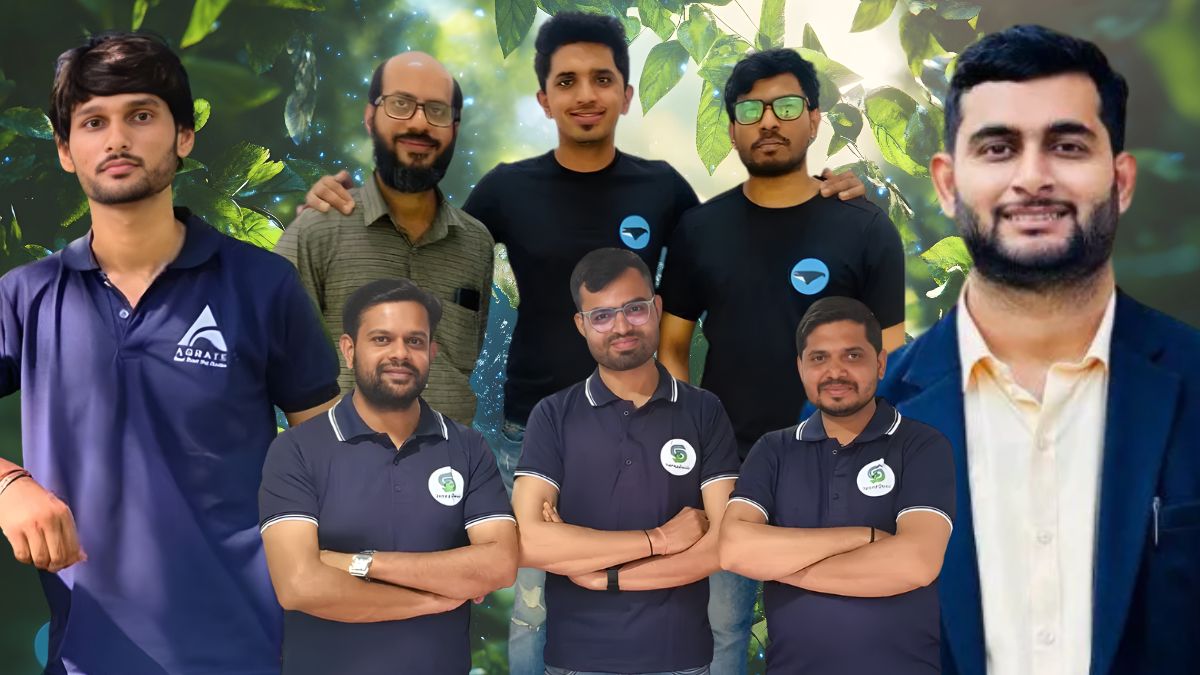
India’s most meaningful innovation didn’t come from glossy pitch decks or billion-dollar valuations. It emerged from beaches, classrooms, construction sites, village roads and crowded cities. Across the country, founders spotted everyday problems and chose to fix them, often documenting their journeys online and using social media to build visibility, trust and scale.
These startups didn’t wait for perfect conditions. They built solutions where waste was piling up, water was running out, jobs were uncertain and access to technology was unequal. From turning ocean plastic into public infrastructure to taking mobile science labs to government schools, their ideas spread not just through funding rounds, but through stories shared, communities engaged and impact that travelled far beyond screens.
1. Siddharth A K: Giving Ocean Waste a Second Life
For Siddharth A K, beach clean-ups began as a childhood habit shared with his mother. After her passing, those clean-ups became a way to stay grounded. But one moment changed everything. After hours of cleaning a beach, Siddharth returned the very next day to find it littered again.
That realisation led to Carbon & Whale, founded in 2022 with friends Sooraj Verma and Alvin George. Siddharth sold his personal belongings to fund months of research and experimentation. Today, Carbon & Whale converts discarded plastic into benches and tiles used across metro stations, malls and public spaces in Kerala and Bengaluru. The team has already diverted 10,000 kg of plastic from coastlines and aims to clear one million kilograms from Kerala’s shores.
By documenting beach clean-ups, recycling trials and finished public installations on social media, Carbon & Whale turned environmental fatigue into visible, shareable progress that attracted partners and civic adoption.
2. Navkaran Singh Bagga: Pulling Drinking Water from Thin Air
Growing up in Kolkata, Navkaran Singh Bagga spent his time dismantling electronics. But India’s worsening water crisis pushed him toward a different kind of problem-solving. Surrounded by humidity, he wondered why clean drinking water was still scarce.
That question led to Akvo, an atmospheric water system that converts air into mineral-balanced drinking water. Since going commercial in 2018, Akvo has installed over 2,000 units across six Indian cities and 15 countries. The machines have produced more than 100 million litres of water without extracting groundwater, offering decentralised access to safe drinking water for schools, factories and remote locations.
Akvo used social platforms to explain complex water-from-air technology in simple visuals, helping industries, schools and institutions discover decentralised water solutions beyond traditional outreach.
3. Shani Pandya: Redesigning Solar Power for Tight Urban Spaces
When Gandhinagar’s solar ambitions clashed with space constraints, Shani Pandya asked a simple question: why should clean energy need acres of land? Determined to find an answer, he broke his mutual funds and mortgaged his home to continue building his idea.
His solar trees stack up to 45 panels on a single pole, reducing land use from 2,200 sq ft to just 2 sq ft. With over 150 installations across India, Shani’s company has shown that renewable energy can adapt to dense urban environments. In 2025, the venture’s turnover grew from Rs 7 crore to a projected Rs 13 crore.
Short videos showing solar trees installed in tight urban spaces helped Shani’s innovation travel from local pilot projects to nationwide interest, proving clean energy could work anywhere.
4. Rupankar Bhattacharjee and Aniket Dhar: Paper from Water Hyacinth
The idea for Kumbhi Kagaz emerged during a wildlife rescue in Assam, where Rupankar Bhattacharjee saw water hyacinth choking wetlands. During the lockdown, he began experimenting with the plant’s fibres at home. When he shared early samples with Aniket Dhar, the two realised they could turn an environmental nuisance into a useful material.
Their startup has processed 92 tonnes of water hyacinth into chemical-free, tree-free paper and generated Rs 20 lakh in sales. What was once considered waste now supports local livelihoods and provides artists and businesses with sustainable paper alternatives.
By sharing the transformation of invasive water hyacinth into beautiful paper, Kumbhi Kagaz built demand through storytelling, turning an ecological problem into a visible livelihood opportunity.
5. Ravi Kaushik: Turning Your AC into an Air Purifier
Delhi’s winter smog pushed Ravi Kaushik to look indoors. He noticed that indoor air quality was often just as polluted as outdoors. Working with engineers from IIT Kanpur and IISc Bengaluru, he developed AIRTH, a compact device that fits onto existing split ACs.
Costing under Rs 3,000, AIRTH filters particles as small as 0.3 microns. By 2025, over 25,000 homes had upgraded their ACs using the device, giving families an affordable way to breathe cleaner air without bulky purifiers.
AIRTH scaled awareness through explainers and indoor air comparisons on social media, helping households understand that pollution doesn’t stop at the doorstep and solutions don’t need bulky machines.
6. Chandrashekhar Mandal: Taking Labour Chowks Online
On a rainy day in Delhi, Chandrashekhar Mandal watched daily wage workers huddle for shelter outside his office. Memories of his relatives doing the same in Bihar pushed him to act. In 2020, he quit his finance job with just Rs 20,000 and began building Digital Labour Chowk.
The platform works like a LinkedIn for blue-collar workers. Today, over one lakh workers use it to find jobs closer to home, while contractors hire skilled labour with a few taps. The app gives workers visibility, choice and dignity, often for the first time.
Digital Labour Chowk used real worker stories and on-ground videos to build trust online, making blue-collar employment visible, searchable and accessible at scale.
7. Jayesh, Ganesh and Vaibhav Pakhale: Making Recycling as Easy as Ordering Food
Scrapdeal began with frustration. Pune student Jayesh Pakhale couldn’t understand why responsible waste disposal was still so complicated. Starting with pocket money, he began collecting scrap and soon brought his brothers Ganesh and Vaibhav on board.
The bootstrapped startup now operates like a delivery app for recyclables. With a Rs 2 crore business, a 4,000 sq ft warehouse and 500+ housing society tie-ups, Scrapdeal has recycled nearly 10 lakh kg of waste and maintains close to 90 percent customer retention through transparent pricing and instant digital payments.
Scrapdeal turned waste disposal into a familiar digital habit by using social media to normalise recycling, show transparent pickups and simplify responsible waste behaviour.
8. Prince Shukla: Building Sustainable Farming from the Ground Up
When COVID forced Prince Shukla back to his village in Bihar, he saw the same challenges farmers had faced for generations. With Rs 1 lakh borrowed from his father, he started AGRATE to improve access to quality seeds, irrigation and training.
By 2025, AGRATE had supported over 10,000 farmers, built a Rs 2.5 crore turnover and partnered with companies like ITC, Godrej and Parle. Beyond products, the startup trains farmers in grafting, multi-cropping and sustainable practices.
AGRATE shared farmer success stories, crop practices and training moments online, helping sustainable agriculture spread peer-to-peer instead of top-down advisories.
9. Vikram Goel and Rajvinder Kaur: Making Heart Care Affordable
After losing her husband to cardiac arrest, Rajvinder Kaur questioned why life-saving heart procedures were so expensive. Along with Vikram Goel, she founded Incredible Devices to address the issue.
Their automated Catheter Reprocessing System safely cleans and sterilises angiography and angioplasty catheters, reducing costs by up to 99 percent. For hospitals serving low-income patients, this difference often determines whether treatment is possible at all.
Through educational content on medical costs and reuse safety, Incredible Devices used social platforms to open conversations hospitals rarely have publicly, driving acceptance of affordable innovation.
10. Krovvidi Madhulash Babu: Bringing Tech Labs to Village Schools
In Telangana and Andhra Pradesh, students step into a bus and enter a world of drones, robots and virtual reality. FLOW, the Futuristic Lab On Wheels, is a solar-powered mobile science lab created by Edodwaja.
Designed to host 35 students at a time, the lab focuses on hands-on learning in AI, AR/VR, IoT and 3D printing. Since June 2024, FLOW has reached over 45,000 students, while its Kalam Spoorthi Yatra has introduced digital technology to another 17,000 children, many for the first time.
Videos of children interacting with drones, robots and VR inside the FLOW bus helped the idea travel beyond villages, drawing educators, institutions and policymakers into the conversation.
Why This Kind of Change Matters
They responded to life’s problems with patience, risk and persistence. As their work found resonance on social media, local solutions gained national visibility, helping them scale faster and reach communities far beyond where they began. They showed that innovation doesn’t always look flashy. Sometimes, it looks like cleaner beaches, safer air, fairer work and classrooms filled with curiosity.

India’s DJ Creators Turning Drops, Mashups and Reels Into Mainstage Moments and Content

Maxtern vs Elvish Yadav & Archit: “Stop Playing Mummy Wala Victim Card,” Says Evicted ‘The 50’ Contestant

Influencer Economy Meets West Bengal Election Season: Poll Push Is Now a Reel Push

2026 Influencer Trends: The Year the Creator Economy Became Business Infrastructure

After Malviya Nagar Row, Northeast Creators Answer Hate With Pride and Proof

PM Narendra Modi Crosses 100 Million Instagram Followers

Influencer RJ Princy Parikh Deletes Viral David Miller Reel After R*pe Threats and Body-Shaming

FoodPharmer Launches Whey Protein Isolate (Cocoa): “Buy It Or Don’t. But Consume Only What’s Needed”

Zakir Khan Breaks Silence on Health Rumours

Diya Joukani – Mumbai Designer Turns Street Chaos Into Global Fashion Currency

Food Pharmer’s Cannes Look That Never Walked

Parul Gulati Wears Nish Hair on the Cannes 2025 Red Carpet

Nancy Tyagi’s 700-Hour DIY Gown Turns Heads at Cannes 2025

Navya Nanda’s IIM Ahmedabad Triumph: From Controversy to Campus Joy

Influencer Kareema’s Heartwarming Journey with Suki

Prajakta Koli and Vrishank Khanal’s Wedding

Prajakta Koli’s Haldi and Cocktail Celebrations

Prajakta Koli and Vrishank Khanal’s Pre-Wedding Celebrations

Prajakta Koli x Vrishank Khanal Magical Mehendi

Milind Soman & Ankita’s Maha Kumbh 2025 Experience

TahirFuego, The Shotgun King of Indian Free Fire, Dies at 24

The Reelstars’ Valentine’s Special: Indian Nano Couple Creators Turning Love Into Content

Apoorva Mukhija’s Love Life in the Spotlight: Rumours, Reality Shows & Online Buzz

Is the ‘Vada Pav Girl’ Remarried? Or Is This the Biggest Plot Twist Yet? UPDATED

One Internet Demand: Dhruv Rathee Goes Unfiltered on Learn by KK Create with Kavya

The 50: India’s Biggest Creator-Led Reality Show

Creators Who Turned IND vs PAK Match Moments Into Viral Entertainment

Vividh, The Kurta Guy Gets Hitched

Raj Shamani Joins ICC T20 World Cup 2026, Signalling A Turning Point For India’s Creator Economy
