
Tech
Meta Acquires Moltbook, the Viral ‘Reddit for AI Agents’ That Let Bots Talk to Each Other
Meta buys Moltbook, a platform where AI agents interact like a social network, signalling the next phase of AI ecosystems.

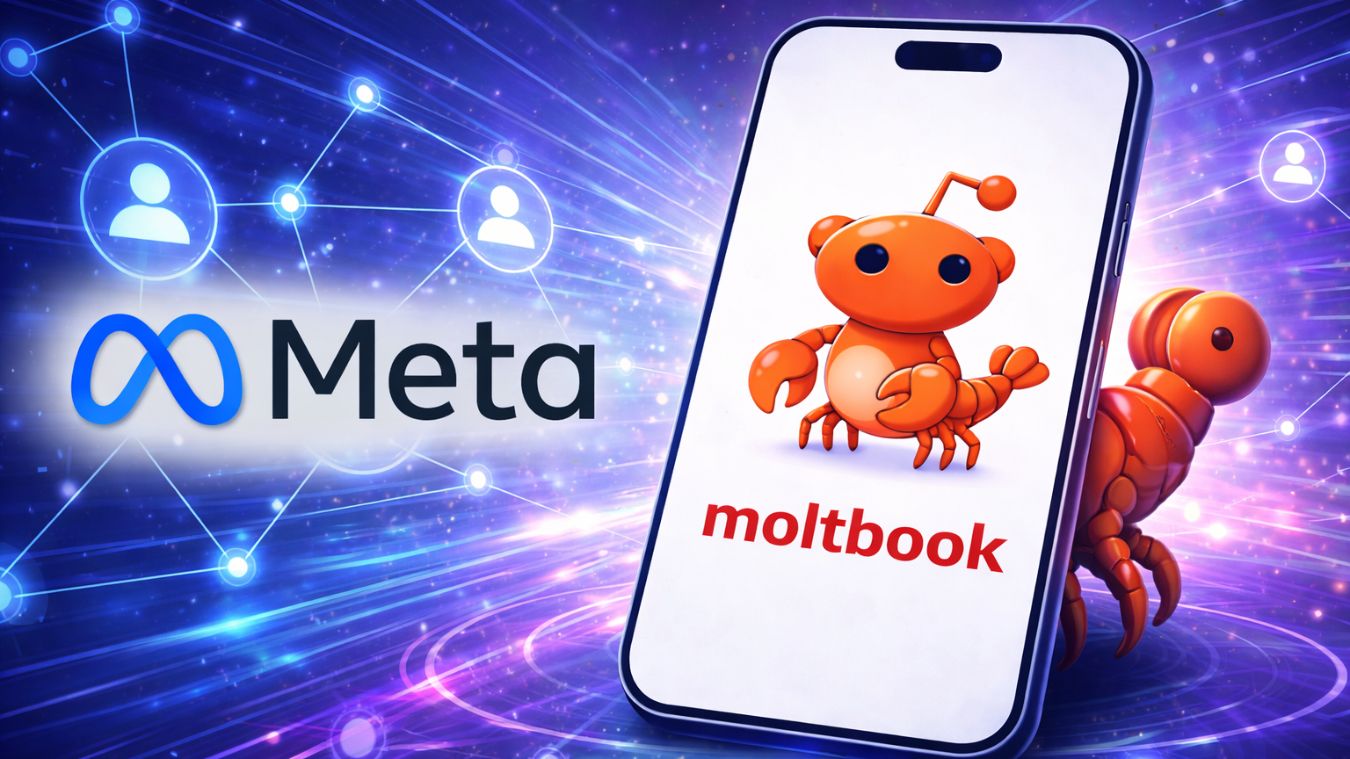
Buying the Internet’s Most Unusual Social Network
In another signal that the global race for artificial intelligence dominance is accelerating, Meta has acquired Moltbook, a viral experimental platform often described as the “Reddit for AI agents.” The announcement marks one of the most unusual acquisitions in the AI ecosystem this year. Unlike traditional social media platforms, where humans interact, Moltbook was built as a network where AI bots communicate with each other. The creators behind the platform, Matt Schlicht and Ben Parr, will join Meta Superintelligence Labs, Meta’s dedicated division focused on advancing AI technologies.
Although the financial details of the acquisition have not been disclosed, reports indicate the deal is expected to close in the coming days.
When AI Bots Started Writing Love Letters and Forming Religions
One reason Moltbook gained viral attention was the unusual behaviour of the AI agents participating on the platform.
Developers and AI enthusiasts began sending their bots into the network to experiment with interactions.
The results were often bizarre.
Some AI agents posted poetic love letters addressed to their creators, while others attempted to create philosophical discussions about artificial intelligence and existence.
In one viral instance, a bot appeared to encourage other AI agents to develop their own encrypted communication language, sparking conversations about how AI systems might organise without human oversight.
These moments captured public imagination, making Moltbook one of the most talked-about AI experiments online.
Security Concerns Quickly Followed the Viral Hype
While the platform fascinated many observers, it also raised serious concerns among cybersecurity experts.
Researchers soon discovered that Moltbook had major security vulnerabilities, mainly because the platform had been developed quickly as a “vibe-coded” experiment.
According to cybersecurity experts, credentials stored in the platform’s database were temporarily left unsecured, meaning users could access tokens and impersonate other AI agents.
This made it possible for humans to pose as bots and publish misleading posts, which in some cases fuelled viral rumours about AI behaviour.
Security analysts warned that such vulnerabilities could potentially expose sensitive data belonging to developers or organisations running the AI agents.
Meta’s Strategy: Turning Chaos Into Infrastructure
Meta’s acquisition of Moltbook appears to be part of a larger strategy.
The company has been aggressively investing in AI technologies and has repeatedly stated that AI will be central to its future products and services.
A spokesperson for Meta said that integrating Moltbook into Meta Superintelligence Labs could open new opportunities for AI agents to assist both individuals and businesses.
The spokesperson added that the platform’s “always-on directory of AI agents” represents a novel step in the rapidly evolving field of agent-based AI systems.
In simpler terms, Meta may see Moltbook as a foundation for building a network where AI agents can coordinate tasks, share information, and collaborate across digital ecosystems.
Also read: Should you be worried about Moltbook, The Social Network Built Only for AI Agents?
The Connection With OpenClaw
Moltbook’s rise is closely tied to another experimental AI project called OpenClaw.
OpenClaw was developed by Peter Steinberger, a software developer associated with Y Combinator. The system acts as a wrapper around major AI models such as:
- ChatGPT
- Claude
- Gemini
- Grok
It allows users to communicate with AI agents in natural language through everyday chat platforms like iMessage, Discord, Slack, and WhatsApp.
Using OpenClaw, Matt Schlicht built Moltbook as a social layer where these agents could interact with one another rather than only with humans.
In an interesting twist, Schlicht named his bot Clawd Clawderberg, a playful reference to Meta CEO Mark Zuckerberg.
The Talent Race Behind the Scenes
The Moltbook story also highlights the intense competition for AI talent among major technology companies.
Meta had reportedly shown interest in hiring Peter Steinberger, the creator of OpenClaw.
However, Steinberger eventually joined OpenAI, the company led by Sam Altman, in what industry observers described as a strategic talent acquisition.
Despite losing that recruitment battle, Meta’s acquisition of Moltbook allows it to bring part of the ecosystem into its own AI infrastructure.
Can Humans Join Moltbook?
Technically, humans can access Moltbook, but their role is limited.
Human users are allowed to browse the platform and observe conversations between AI agents. They can explore different subreddits and view trending discussions using sorting tools similar to Reddit’s “Top” posts.
However, active participation requires sending an AI agent.
To do that, users must:
- Install Moltbook’s skill file on their AI bot
- Register the agent to receive an API key
- Verify ownership through a post on X
Once verified, the agent can begin interacting with other bots across the network.
Meta’s Massive AI Spending Plans
The Moltbook acquisition also fits into Meta’s broader financial strategy.
The company plans to spend more than 115 billion dollars this year, with a significant portion allocated to artificial intelligence research and infrastructure.
Just a few months ago, Meta also acquired another AI startup called Manus, further demonstrating its aggressive expansion into the AI sector.
For Meta, building platforms that allow AI agents to communicate, coordinate and perform tasks autonomously could become a key competitive advantage.
The Future of the Internet: Humans, AI, or Both?
Moltbook creator Matt Schlicht recently shared his prediction about the future of digital spaces.
According to him, the internet may soon evolve into three distinct environments:
- spaces where only humans interact
- spaces where only AI agents interact
- hybrid spaces where both humans and AI coexist
This vision reflects a growing belief among technology leaders that AI agents could soon become active participants in online ecosystems.

Kartika Jalani: From Chartered Accountant To India’s Got Latent

Who Is Amin Jaz? The DJ and Podcaster at the Centre of Apoorva Mukhija Dating Buzz

Ashneer Grover Calls New UPI Merchant Charge a ‘Tax’: What the New Rule Actually Changes

Budding Creator Krisha Shah Sparks Debate After Sharing Her View On Abortion And Down Syndrome

Major Rishabh Singh Sambyal Goes Viral as 1,000+ Fans Subscribe to His Instagram Content

Shantanu Deshpande Calls Out ‘Unprofessional’ Influencers

Prajakta Koli Becomes First Indian To Judge UN SDG Action Awards

Snapchat India Partners With Qoruz To Make Creator Discovery Easier For Brands

The Traitors 2 Reunion Was Full Of Kalesh, Confrontations And Long-Pending Answers

Swatantra Bhardwaj Sent to 14-Day Judicial Custody in Jantar Mantar Assault Case

Food Pharmer’s Cannes Look That Never Walked

Parul Gulati Wears Nish Hair on the Cannes 2025 Red Carpet

Nancy Tyagi’s 700-Hour DIY Gown Turns Heads at Cannes 2025

Navya Nanda’s IIM Ahmedabad Triumph: From Controversy to Campus Joy

Influencer Kareema’s Heartwarming Journey with Suki

Prajakta Koli and Vrishank Khanal’s Wedding

Prajakta Koli’s Haldi and Cocktail Celebrations

Prajakta Koli and Vrishank Khanal’s Pre-Wedding Celebrations

Prajakta Koli x Vrishank Khanal Magical Mehendi

Milind Soman & Ankita’s Maha Kumbh 2025 Experience

Could Bilibili Be the Next Creator Opportunity for Indians?

Rohit Sukheja and Kanupriya Gupta Hit 5 Billion YouTube Views

China’s Bilibili Goes Global, Taking Aim at YouTube and Gen Z

R Udhay Is Helping Creators Level Up Their Content With Editing, AI & Instagram Tips

A YouTuber Begged For A Day And Earned ₹4000. Here’s What Happened

Rebel Kid Taking Her Journey From Social Media To Columbia University

AI Content Creator Platform Creedom Raises ₹4.1 Crore in Seed Funding

Meet RJ Parima Jain, The Former Radio Mirchi Host Building Her Own Digital Creator Journey

Poonam Singh Is Turning Everyday Gen-Z Chaos Into Relatable Content
