
Entertainment
How Nepal’s Elephants In The Fog Created A Historic Cannes Moment For Trans Representation
A historic Cannes-winning Nepali film gives trans women and the Kinnar community a powerful global spotlight at Cannes!

Why Is Elephants In The Fog Becoming Such An Important Cannes Moment?
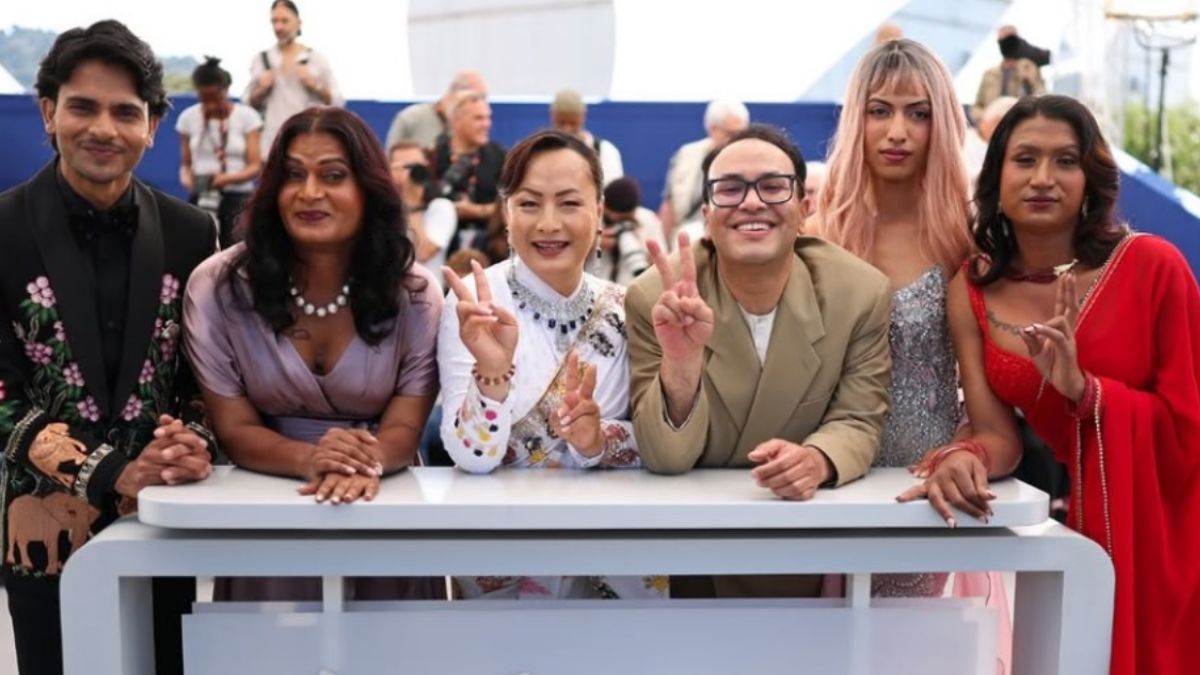
At the 2026 Cannes Film Festival, a Nepali film centered on trans women and the Kinnar community achieved something historic for South Asian cinema.
Elephants in the Fog, written and directed by Abinash Bikram Shah, became the first Nepali feature film to be selected in Cannes’ prestigious Un Certain Regard section. Later, the film went on to win the Jury Prize. It reportedly received more than seven minutes of applause after its premiere. As a result, it became one of the festival’s most emotionally discussed films.
But beyond the awards and standing ovations, the film’s impact comes from something much deeper.
For decades, South Asian cinema has often reduced Hijra, Kinnar, and other gender-diverse communities into stereotypes, comic relief, fear, or spectacle. However, Elephants in the Fog completely rejects that tradition. Instead, it places trans women at the center of their own story with complexity, grief, love, rage, family, rituals, tenderness, and dignity.
The film does not ask viewers to “accept” its characters as symbols. It simply allows them to exist fully as human beings.
You might also like: Cannes 2026 Creator List: Which Indian Influencers Are Attending This Year?
What Is Elephants In The Fog About?
Set in a Nepali village near a forest inhabited by wild elephants, the film follows Pirati, the matriarch of a Kinnar family.
Pirati dreams of leaving the village with the man she loves. However, everything changes when one of her daughters, Apsara, suddenly goes missing. As the villagers and police refuse to help, Pirati begins searching for her daughter on her own.
That search becomes the emotional core of the film. Through Pirati’s journey, Elephants in the Fog examines what happens when a community that is culturally visible is still denied protection, safety, and justice. The film asks a painful question: if society calls upon the Kinnar community to bless weddings, births, and celebrations, why does that same society abandon them when they need help themselves?
That hypocrisy becomes one of the film’s strongest emotional and political statements.
You might also like: Bangalore-Based Nikhil Jain to Represent India’s LGBTQ community at Mr Gay World 2025
Why Is The Film’s Representation Being Praised So Widely?
One of the biggest reasons the film has resonated globally is because it refuses to flatten trans identity into a single narrative.
The Kinnar clap, for example, a gesture often mocked or turned into a transphobic stereotype across South Asia, is reclaimed throughout the film. Here, the clap becomes many things at once. It represents identity, resistance, celebration, warning, kinship, anger, and survival.
The film also focuses deeply on everyday emotional realities that are rarely explored in mainstream cinema. Instead of presenting the Kinnar community as outsiders looking into society, the story places their internal lives at the center.
You might also like: Niranjan Mondal’s Cannes Debut Feels Bigger Than Just A Red Carpet Moment For Indian Creators
Why Does The Cannes Recognition Matter Beyond Nepal?
The Cannes win is significant not just for Nepali cinema, but for trans representation across South Asia.
Historically, queer and trans stories from the region have struggled to receive global visibility unless filtered through stereotypes or trauma-heavy narratives designed for outsiders. Elephants in the Fog changes that conversation. Specifically, it tells a deeply local story with emotional honesty and cultural specificity.
The film’s Nepali title, Tini Haru, translates to “them,” reflecting how gender-diverse communities are often treated as outsiders within society.
Director Abinash Bikram Shah has also spoken about the importance of casting actors from the same community represented in the film. Pushpa Thing Lama leads the story as Pirati. She appears alongside Aliz Ghimire, Deepika Yadav, Jasmine Bishwokarma, Aashant Sharma, and Sanjay Gupta Dura.
That decision adds another layer of authenticity to the project and helps move representation beyond symbolism into actual inclusion.
You might also like: How LGBTQ+ Creators Use Fashion to Express Identity, Visibility, and Freedom
Why Is This Film Resonating So Strongly Online?
Many people online are calling Elephants in the Fog a landmark moment because the film feels emotionally honest without trying to sensationalize its characters.
At a time when conversations around gender identity are still heavily politicized across South Asia, the film quietly insists on something simple but powerful. Therefore, trans people do not need permission to exist at the center of stories.
The Cannes recognition may be historic, but for many viewers, the real achievement is that the film treats the Kinnar community with humanity instead of distance. And perhaps that is why this moment feels bigger than cinema itself. Because Elephants in the Fog is not just about visibility. It is about finally allowing a community to be seen fully.

Ankush Bahuguna Brings His Signature Style to Lakmē Fashion Week Grand Finale

Madhuri Dixit Hosts Marathi KBC: Why Regional Content Is a Growth Opportunity for Brands

How Swiggy Instamart Turned a Viral Influencer’s COD Nightmare Into a Marketing Win

Meet Nishant Kerketta: The Jharkhand Farmer Turning His Village Into a Fashion Runway

Who Is Yung DSA? The Pune Rapper Who Went From a BPO Job to Bigg Boss 20

Niharika Tiwari Takes Charge in Rise & Fall 2, Eliminates Shehzad Poonawalla and Irina Rudakova

Sania Mistry Deepfake Case: Maharashtra Cyber Acts Against AI-Manipulated Images

YouTube’s Gunjan Soni Says India’s Creator Economy Is Evolving Into a Global Media Powerhouse

Navratri Outfit Inspiration: Creators Who Understood the Festive Assignment

Rowhi Rai Buys Her Own House: How Northeast India’s Creators Are Building Their Own Success Stories

Food Pharmer’s Cannes Look That Never Walked

Parul Gulati Wears Nish Hair on the Cannes 2025 Red Carpet

Nancy Tyagi’s 700-Hour DIY Gown Turns Heads at Cannes 2025

Navya Nanda’s IIM Ahmedabad Triumph: From Controversy to Campus Joy

Influencer Kareema’s Heartwarming Journey with Suki

Prajakta Koli and Vrishank Khanal’s Wedding

Prajakta Koli’s Haldi and Cocktail Celebrations

Prajakta Koli and Vrishank Khanal’s Pre-Wedding Celebrations

Prajakta Koli x Vrishank Khanal Magical Mehendi

Milind Soman & Ankita’s Maha Kumbh 2025 Experience

YouTube Shorts Changes Repost Rules: What Creators Need To Know About Original Content

YouTube Is Letting Creators See What Works for Their Competitors

Adam Mosseri Reveals Instagram Trial Reels Rule That Could Limit Your Reach

What Is Meta’s New “Muse” AI And Why Are Users Seeing It?

Roopali Agrawal aka Rockonroops Turning Family Life Into Conversations On Fashion, Freedom And Safety

Technical Guruji’s iPhone 18 Pro Max Giveaway: Nearly 100 Phones And A Big Question About The Cost

Eloelo Launches Dolphin AI: Will AI Video Tools Change The Future Of Creators And Filmmakers?

Is Orry Getting Married? Close Friends Story Sparks Questions As His Past Wedding Rumours Resurface

Why Is MrBeast Back in India? Is His India Connect Getting Bigger in 2026?
