
Lifestyle
How Did 7-Year-Old Ishank Singh From Ranchi Swim Across the Palk Strait?
The Ranchi schoolboy Ishank Sing completed the 29-km India-Sri Lanka swim in 9 hours 50 minutes, setting a new record.

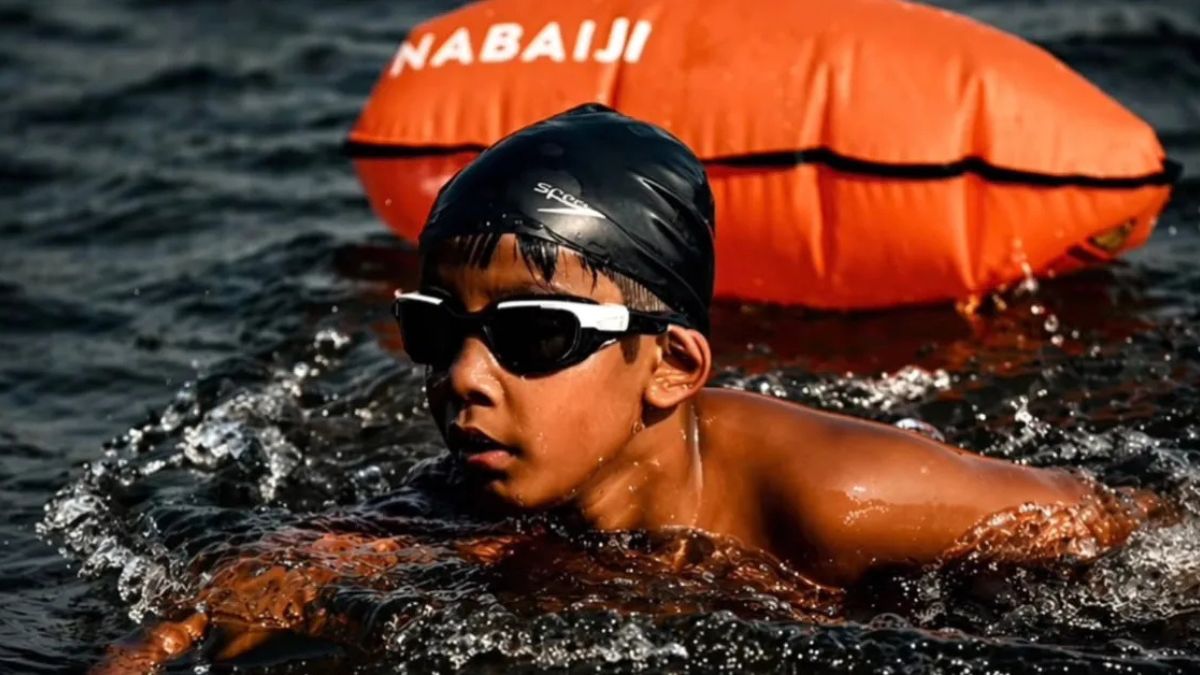
At an age when most children are learning new games in school playgrounds, Ishank Singh was battling ocean currents between two countries. The seven-year-old from Ranchi, Jharkhand, has become the youngest swimmer to successfully cross the Palk Strait, completing the challenging 29-kilometre route between Sri Lanka and India in just 9 hours and 50 minutes. The achievement has earned him recognition from the Universal Records Forum (URF) and placed him among India’s most remarkable young sporting talents.
Who Is Ishank Singh?
Ishank Singh is a Class 3 student from Dhurwa in Ranchi, Jharkhand.
Known among family and friends as a natural “water baby”, Ishank’s relationship with swimming began long before formal training.
According to his mother, Manisha Sinha, he was drawn to water from the age of two and would eagerly jump into ponds, tanks and other water bodies whenever given the opportunity.
Recognising his unusual comfort in water, his parents decided to nurture the interest rather than discourage it.
That decision would eventually lead him to one of the toughest open-water swimming challenges in South Asia.
What Is the Palk Strait and Why Is It So Difficult?
The Palk Strait separates the southern coast of India from northern Sri Lanka.
Although relatively narrow, it is regarded as one of the most challenging open-water swimming routes because of:
- Strong ocean currents
- Changing tides
- Unpredictable weather conditions
- Long-distance endurance requirements
- Marine life and open-sea challenges
Many experienced swimmers attempt the crossing, but only a limited number successfully complete it.
For a seven-year-old to attempt the route is extraordinary.
How Did Ishank Prepare for the Challenge?
Despite living hundreds of kilometres away from the coast, Ishank trained extensively at the Dhurwa Dam in Ranchi.
Under the guidance of coaches Aman Kumar Jaiswal and Bajrang Kumar, he developed exceptional endurance and stamina.
In preparation for the swim, he reportedly trained four to five hours daily and frequently completed long-distance swimming sessions lasting several hours without stopping.
His coaches quickly recognised his ability to remain calm in the water and sustain effort over long periods.
According to those who worked with him, fear was never a major obstacle.
What Happened During the Historic Swim?
The swim began at approximately 4 AM on April 30, 2026, from Talaimannar in Sri Lanka.
For the first section of the journey, Ishank was accompanied by the Sri Lankan Navy before being monitored by the Indian Coast Guard as he approached Indian waters.
Support teams tracked weather conditions, monitored his physical condition and ensured hydration throughout the challenge.
The journey was far from easy.
At several points, strong currents reportedly pushed him backwards, forcing him to expend additional energy to maintain progress toward India.
Yet Ishank continued swimming.
At 1:50 PM, nearly ten hours after entering the water, he reached Arichalmunai near Dhanushkodi in Tamil Nadu.
His final time was 9 hours and 50 minutes.
Did Ishank Break a Record?.
The crossing was officially recognised by the Universal Records Forum.
His time surpassed the previous benchmark for his age category and earned him recognition as the youngest and fastest swimmer to complete the Palk Strait crossing.
The achievement immediately attracted national attention and added his name to the growing list of Indian child prodigies making headlines through extraordinary sporting feats.
How Important Was Family Support?
Behind the record was years of commitment from Ishank’s family.
His father, Sunil Kumar Singh, coordinated travel arrangements, permissions and logistical planning for the international swim.
Meanwhile, his mother played a critical role in managing his daily routine, nutrition and training schedule.
The family also adjusted his diet to support the physical demands of endurance swimming, ensuring he received the nutrition required for long training sessions and recovery.
Their support allowed Ishank to pursue a goal rarely attempted by children his age.
What’s Next for Ishank Singh?
Ironically, one of the biggest challenges now facing Ishank is age eligibility.
Many national swimming competitions require participants to be older than 11 years, limiting the opportunities currently available to him.
As a result, his family and coaches are increasingly focusing on open-water swimming challenges.
Among the long-term goals reportedly being discussed is the English Channel, one of the most iconic endurance swimming achievements in the world.
Why Is Ishank’s Story Inspiring So Many People?
His achievement goes beyond records and medals.
It highlights what can happen when talent, discipline, coaching and family support come together at an early age.
At just seven years old, Ishank Singh has already accomplished something many athletes spend decades preparing for.
He swam across international waters, battled one of South Asia’s toughest open-water routes and emerged with a world record.
For a child from Ranchi, far from India’s coastlines, it is a reminder that extraordinary journeys often begin in the most unexpected places.

Exclusive: Chhote & Aandu: The Couple Behind Billions of Views, Viral Reels and an Unfiltered Creator Life

Vir Das Gets Third International Emmy Nomination For ‘Fool Volume’

Why Is MrBeast Back in India? Is His India Connect Getting Bigger in 2026?

Darshan Magdum To Finally Arrive In US As Boy Throb Announces Free Darshan Day Event

Mirabai Chanu Wins Silver At Asian Games 2026, Ends India’s 28-Year Wait For Weightlifting Medal

MS Dhoni Becomes SpeakX Brand Ambassador For English Learning Campaign

Adam Mosseri Reveals Instagram Trial Reels Rule That Could Limit Your Reach

Ranveer Allahbadia Takes Gen Z Inside India’s Space-Tech Boom With Skyroot Visit

7 Indian States Using Creators To Promote Tourism, Culture And Government Schemes

Shru Gaming: The Mom Gamer Proving Gaming And Motherhood Can Coexist

Food Pharmer’s Cannes Look That Never Walked

Parul Gulati Wears Nish Hair on the Cannes 2025 Red Carpet

Nancy Tyagi’s 700-Hour DIY Gown Turns Heads at Cannes 2025

Navya Nanda’s IIM Ahmedabad Triumph: From Controversy to Campus Joy

Influencer Kareema’s Heartwarming Journey with Suki

Prajakta Koli and Vrishank Khanal’s Wedding

Prajakta Koli’s Haldi and Cocktail Celebrations

Prajakta Koli and Vrishank Khanal’s Pre-Wedding Celebrations

Prajakta Koli x Vrishank Khanal Magical Mehendi

Milind Soman & Ankita’s Maha Kumbh 2025 Experience

Meta One Launches With Paid AI, Creator Tools And New Features Across Instagram, Facebook And WhatsApp
Adam Mosseri Reveals Instagram Trial Reels Rule That Could Limit Your Reach

ScoutOP Reveals ₹30 Lakh Monthly Income

AI Content Creator Platform Creedom Raises ₹4.1 Crore in Seed Funding

Snoop Dogg Has the Job We All Secretly Want: ₹10 Lakh A Month to Eat Ice Cream

R Udhay Is Helping Creators Level Up Their Content With Editing, AI & Instagram Tips

Internet Famous Golden Retriever Tucker Budzyn Diagnosed With Lymphoma

Is Saurav Joshi Really Entering GTA VI? Here’s What We Found

Visha Khandelwal’s 2-Minute Reel Crosses 500K Views With Just a Personal Story
