
Lifestyle
How Karnataka’s ‘Library Man’ Anke Gowda Sold His Property To Build One Of India’s Largest Free Book Libraries
Padma Shri awardee Anke Gowda spent decades collecting 20 lakh books to make knowledge free for everyone.

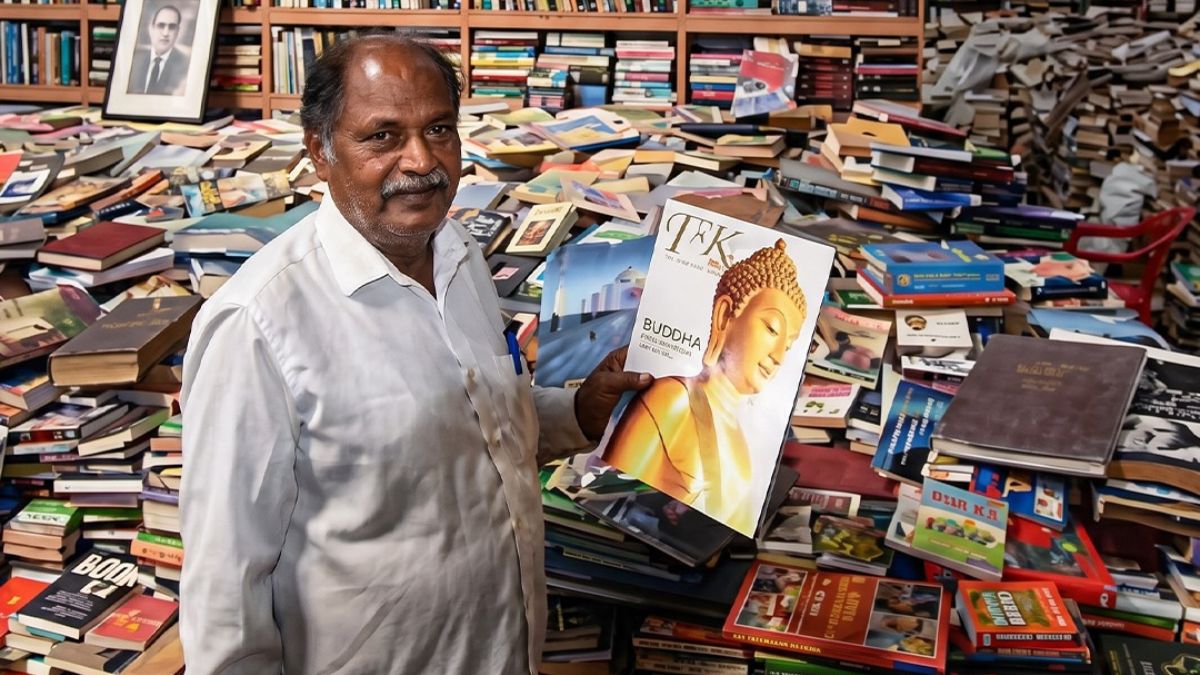
Who Is Anke Gowda And Why Is The Internet Calling Him India’s ‘Library Man’?
Anke Gowda, popularly known as the “Library Man of Mandya,” is being celebrated across the internet for dedicating almost his entire life to books, education, and free public access to knowledge. The Karnataka-based bibliophile recently received the Padma Shri in 2026 for building one of India’s largest personal free libraries called Pustaka Mane or “House of Books.” What makes his story extraordinary is not wealth, celebrity, or institutional backing. It is a sacrifice. For decades, Gowda reportedly spent nearly all his earnings collecting books. When his salary was not enough, he sold personal assets and property to continue expanding his library mission. Today, his collection houses nearly 20 lakh books and remains open completely free of cost for students, teachers, researchers, and readers. For many people online, his journey feels like the kind of story rarely seen in today’s internet culture.
How Did Anke Gowda’s Love For Books Begin?
According to reports, Gowda grew up in a farming family in Karnataka’s Mandya district, where books were considered a luxury.
As a child, he balanced school with farm work while developing a deep curiosity toward reading and learning. He later shared that even though books were difficult to access in his village, he always dreamed of collecting them and gaining knowledge through reading.
His fascination reportedly grew stronger after reading books about Indian freedom fighters and spiritual leaders. Inspired by a teacher during his younger years, Gowda slowly began building a personal collection so other rural students could also access books more easily.
At one point, he even used money meant for food to buy books instead.
That obsession with learning would eventually shape the rest of his life.
What Jobs Did Anke Gowda Do Before Building His Library?
Before becoming known nationally for his library, Gowda lived a very ordinary working-class life.
He initially worked as a bus conductor before later joining a sugar factory in Pandavapura as a timekeeper.
Despite earning a modest salary, he reportedly spent almost two-thirds of his income on books while using the remaining money for household necessities. He also worked additional jobs, including selling milk and functioning as an insurance agent, to support both his family and his growing book collection.
Reports further state that he pursued higher education through evening college and correspondence courses, eventually completing postgraduate studies in Kannada literature.
Even during financially difficult periods, his commitment to books never slowed down.
You might also like: Beyond the Bookmark: Creators Who Are Turning Bookstagram into a Powerhouse
How Did Pustaka Mane Become One Of India’s Largest Libraries?
Over nearly five decades, Gowda continued collecting books from every possible source.
He purchased discounted books during literary conferences, accepted donations, searched for rare editions, and invested most of his personal earnings into preserving and expanding the collection.
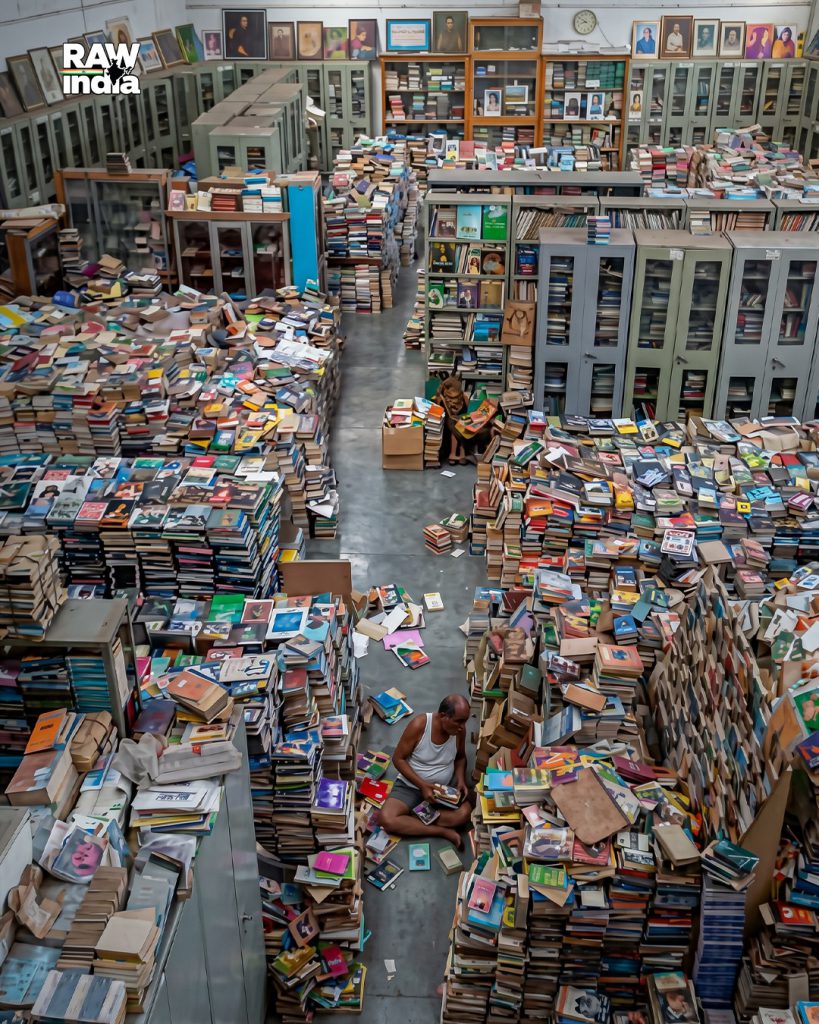
As the collection grew larger, his home reportedly ran out of space. He first stored books inside trunks and later filled rooms with bookshelves. Eventually, the collection became too massive to manage inside a normal household setup.
A major turning point came when businessman Hari Khoday reportedly visited Gowda’s collection and was stunned by the scale of the books owned by one individual. Instead of asking for personal financial help, Gowda requested support to build a library. Khoday later funded the construction of a large building that became the foundation of Pustaka Mane.
Later, additional structures were reportedly added with government support after political leaders visited the library and recognised its educational importance.
Today, the library stretches across a massive space in Pandavapura and continues growing through purchases and public donations.
What Makes Pustaka Mane So Unique?
What makes the library extraordinary is not just the number of books, but the scale and diversity of the collection itself.
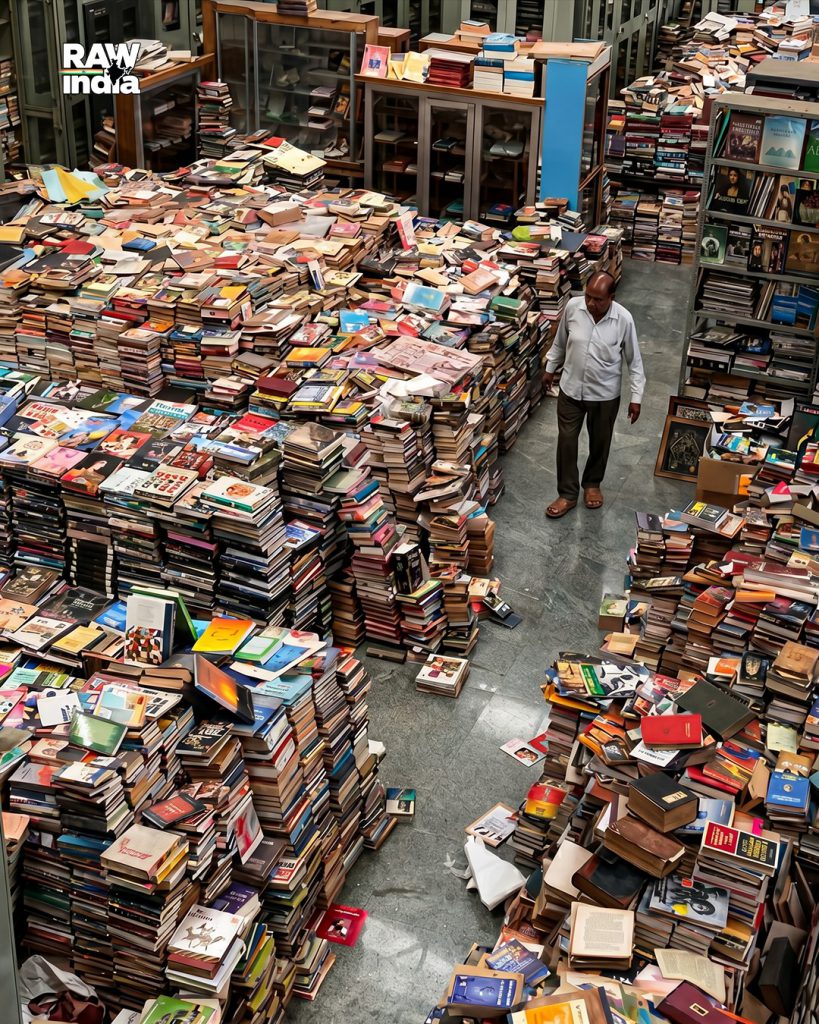
According to reports, Pustaka Mane now houses around 20 lakh books across literature, science, mythology, philosophy, technology, religion, history, and research. The collection reportedly includes: rare historical manuscripts dating back to 1832, over 5,000 dictionaries, books in more than 20 Indian and foreign languages, 35,000 international magazines, 2,500 Kannada magazines, thousands of books on Mahatma Gandhi and the Bhagavad Gita, and rare editions of religious scriptures, including the Bible. The library also reportedly contains nearly five lakh rare foreign books.
Interestingly, despite the enormous scale of the collection, visitors often describe the library as visually chaotic rather than professionally organised. Books are stacked on shelves, piled across rooms, and even stored inside large sacks waiting to be unpacked. Yet regular visitors say Gowda somehow remembers exactly where specific books are located.
That almost mythical memory has become part of the library’s identity itself.
Why Is His Story Resonating So Strongly Online?
At a time when internet conversations are often dominated by luxury lifestyles, viral fame, and fast success stories, Anke Gowda’s life feels radically different. He did not build a business empire and did not chase celebrity status. He spent decades quietly building free access to knowledge for ordinary people. Many online users are especially emotional about the fact that he reportedly sold personal property and invested retirement funds just to continue expanding the library.
For younger audiences online, his story feels like a reminder that some people still dedicate their entire lives to something larger than personal success.
What Does Anke Gowda Want For The Future Of The Library?
According to recent interviews, Gowda now hopes society and the government will preserve the library’s future. He says age has reduced his physical energy to manage everything alone. Even today, the library serves students, teachers, researchers, and readers free of cost. That is what makes his journey so powerful. In a world driven by subscriptions and expensive institutions, one retired bus conductor spent decades making books accessible to everyone.

‘I Couldn’t Express Myself Properly’: Aman Gandhi Opens Up About His Bigg Boss 20 Eviction

Bharti Singh and Haarsh Limbachiyaa to Launch Their Own Micro-Drama App

ShareChat and Moj Launch ‘Saas, Bahu aur Magic’ Micro-Drama With Glow & Lovely

Sanika Bhadane Gives Farah Khan’s ‘Dhoom Taana’ a Gen-Z Twist and the OG Loves It!

Who Are Priya Sharma and Sid Madiwale? The Indian-Australian Creators Who Joined MrBeast in Ghana

Hungry Mahi Teases New Business Venture After Winning Comedy Cooks

Mayuresh Gujar Hits 500K Followers After Six Years of Creating Content

Ishank Gupta, Sanya Rohillaa and Ahsan Vazir Win Big at Instagram’s Edits Film Festival

Prajakta Koli Becomes the Face of Rubans Accessories

“5 Years of Work Stolen”: Finance Influencer V Harish’s Final Video Before His Death

Food Pharmer’s Cannes Look That Never Walked

Parul Gulati Wears Nish Hair on the Cannes 2025 Red Carpet

Nancy Tyagi’s 700-Hour DIY Gown Turns Heads at Cannes 2025

Navya Nanda’s IIM Ahmedabad Triumph: From Controversy to Campus Joy

Influencer Kareema’s Heartwarming Journey with Suki

Prajakta Koli and Vrishank Khanal’s Wedding

Prajakta Koli’s Haldi and Cocktail Celebrations

Prajakta Koli and Vrishank Khanal’s Pre-Wedding Celebrations

Prajakta Koli x Vrishank Khanal Magical Mehendi

Milind Soman & Ankita’s Maha Kumbh 2025 Experience

YouTube Is Letting Creators See What Works for Their Competitors

YouTube Shorts Changes Repost Rules: What Creators Need To Know About Original Content

Adam Mosseri Reveals Instagram Trial Reels Rule That Could Limit Your Reach

What Is Meta’s New “Muse” AI And Why Are Users Seeing It?

Roopali Agrawal aka Rockonroops Turning Family Life Into Conversations On Fashion, Freedom And Safety

Eloelo Launches Dolphin AI: Will AI Video Tools Change The Future Of Creators And Filmmakers?

Is Orry Getting Married? Close Friends Story Sparks Questions As His Past Wedding Rumours Resurface

Why Is MrBeast Back in India? Is His India Connect Getting Bigger in 2026?

Creator Twinkle Dhoot Shares 10 Trial Reel Formats Creators Should Try
