
Entertainment
How Instagram Became A Powerful Digital Gallery For India’s Anti-Caste Artists
Dalit and Bahujan artists are using Instagram to challenge caste narratives, reclaim identity, and bypass traditional art gatekeeping.

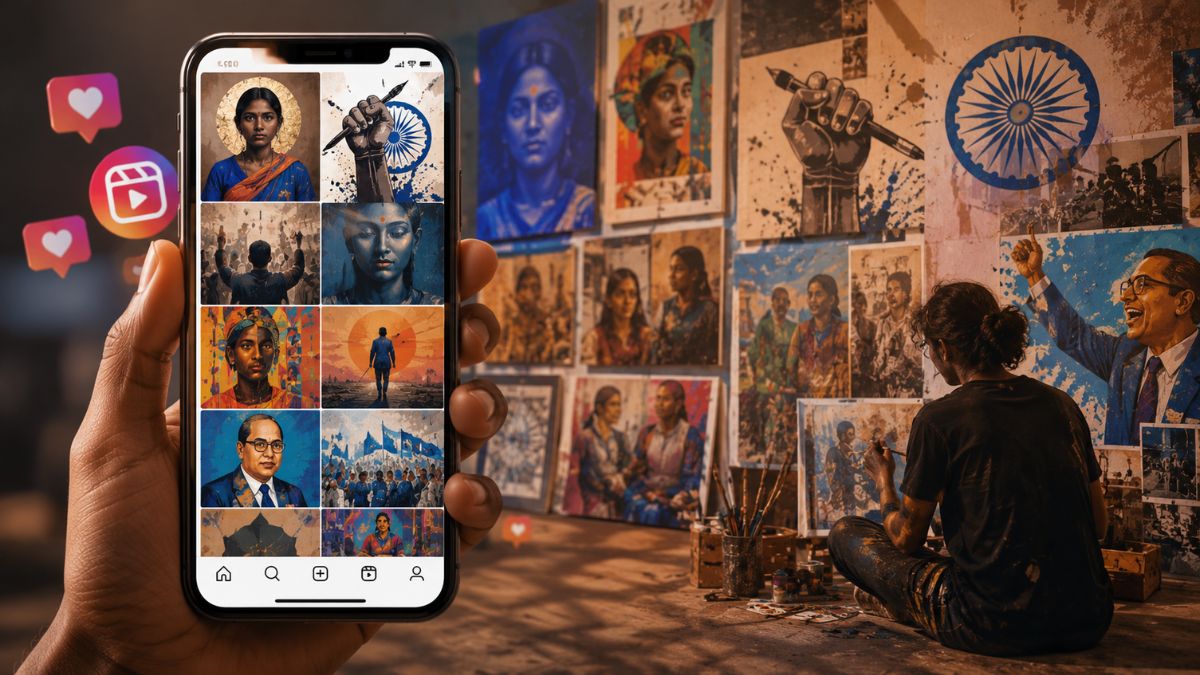
Why Are Anti-Caste Artists Finding A Home On Instagram?
For years, India’s mainstream art spaces were often controlled by galleries, institutions, patrons, and cultural systems that many marginalised artists felt excluded from. But social media, especially Instagram, is now changing that reality for a growing number of Dalit and Bahujan creators.
Today, many anti-caste artists use Instagram beyond just a portfolio platform. They treat it as a public gallery and political space. Their pages feature illustrations, digital art, poetry, animations, zines, and personal stories. Most focus on caste, identity, resistance, and representation.
What makes this movement important is that it is not only about creating art. It is also about reclaiming visual space. Many of these artists openly argue that India’s dominant visual culture has historically centred upper-caste imagery while marginalising Dalit, Bahujan, and Adivasi stories.
Instagram, for them, has become a way to bypass traditional gatekeeping entirely.
Who Are Some Of The Artists Leading This Digital Movement?
One of the most recognised names in this growing online art movement is Siddhesh Gautam, whose Instagram page @bakeryprasad has built a large audience over the years.
His work frequently features powerful blue-toned illustrations of figures such as Dr B.R. Ambedkar, Ramabai Ambedkar, and Mahatma Phule. Gautam reportedly described Instagram as “the underground media of our time” and explained that social media allowed him to create and distribute art without depending on expensive gallery systems or wealthy patrons.
Another major voice is Priyanka Paul, known online as @artwhoring. Her work combines anti-caste politics, literature, poetry, sci-fi visuals, and reinterpretations of historical figures. According to the report, Paul believes mainstream Indian cultural production often revolves around repetitive upper-caste middle-class imagery that fails to represent many lived realities across the country.
Artists such as Rahee Punyashloka, Shrujana N Shridhar, Vineet Gedam, Bao, Yogesh Barve, and Jay Sagathia are also part of this larger movement, where creators are using digital platforms to tell stories historically ignored by mainstream art systems.
How Is Their Art Different From Mainstream Visual Culture?
A major part of anti-caste digital art involves questioning how Indian identity itself has traditionally been visually represented.
Several artists argue that the dominant visual language in India often normalises upper-caste symbols, aesthetics, and narratives while marginalising others. According to illustrator Bao, symbols such as Om imagery, upper-caste religious iconography, and sanitised portrayals of historical figures are frequently treated as the “default” Indian identity online and offline.
These artists are now actively trying to reshape that imagery.
For example, many creators reimagine figures like Savitribai Phule, Phoolan Devi, Rohith Vemula, B. R. Ambedkar, and Dalit women to challenge colourism, caste-based beauty standards, and sanitised history.
Artist Shrujana N Shridhar reportedly described her work as an “anti-reference” to older art traditions. Those traditions often idealised upper-caste women while excluding Dalit women from visibility and dignity. Her work explores caste violence, academia, resistance, education, and emotional survival.
This movement is not only producing political art.
It is also rebuilding visual memory itself.
Why Are Captions Becoming Just As Important As The Artwork?
Interestingly, many anti-caste art pages online function almost like educational archives alongside being visual galleries.
Artists frequently accompany their work with long captions discussing personal caste experiences, food histories, social discrimination, historical movements, family memories and forgotten community narratives.
Graphic designer Vineet Gedam, for instance, reportedly wrote about lambya rotya, a traditional food linked to Dalit communities in Nagpur, explaining how mainstream conversations around regional cuisine often ignored foods deeply connected to marginalised communities.
For many creators, storytelling itself becomes part of the art practice.
Several artists also said that discovering Dr Ambedkar’s writings helped politically shape their understanding of caste and identity online.
Has Social Media Fully Solved The Problem Of Representation?
Not entirely. While Instagram has opened visibility and community-building opportunities, many artists interviewed in the report also spoke openly about continuing structural inequalities inside India’s creative industries.
Several creators argued that galleries, design institutions, publishing spaces, and commercial art industries are still dominated by upper-caste networks and often engage with anti-caste art only temporarily or symbolically.
Some artists also expressed frustration that they are approached mainly for explicitly “Dalit” or political projects while receiving fewer mainstream commercial opportunities. Others said algorithms themselves often favour aesthetically generic or religious content over political anti-caste work.
Even access to social media, artists pointed out, depends on resources such as smartphones, internet access, time, and digital literacy.
So while platforms like Instagram create visibility, they do not automatically eliminate larger social inequalities.
Why Is This Movement Becoming So Important For Younger Audiences?
What makes this digital anti-caste art movement powerful is that it blends internet culture, political education, visual storytelling, community-building and identity assertion all at the same time.
For many younger Dalit and Bahujan audiences, these creators are building spaces where people can finally see their histories, aesthetics, and experiences represented openly online.
Several artists in the report described social media as a place where they first found community and language for their identities. Others said they may never have entered traditional art systems without online visibility.
And perhaps that is the biggest shift happening here.
Instagram is no longer functioning only as a content platform for these artists.
For many of them, it has become: a gallery, an archive, a classroom, a protest site and a way of reclaiming visibility in a country where caste still shapes who gets seen and heard.

Snapchat India Partners With Qoruz To Make Creator Discovery Easier For Brands

The Traitors 2 Reunion Was Full Of Kalesh, Confrontations And Long-Pending Answers

Swatantra Bhardwaj Sent to 14-Day Judicial Custody in Jantar Mantar Assault Case

Hardik Arora Teams Up With Meta for a Micro-Drama Series

Amazon Launches Creator Connections in India to Connect Creators With Brand Campaigns

Telugu YouTuber Ramana Nandana Detained at Hyderabad Airport Over Alleged UK Job Fraud

Snoop Dogg Has the Job We All Secretly Want: ₹10 Lakh A Month to Eat Ice Cream

Is Saurav Joshi Really Entering GTA VI? Here’s What We Found

Missing Mahi Review: When Missing Someone Starts Playing Tricks on Your Mind

Wimbledon Draws a Line on Influencer Access After US Open Disruptions

Food Pharmer’s Cannes Look That Never Walked

Parul Gulati Wears Nish Hair on the Cannes 2025 Red Carpet

Nancy Tyagi’s 700-Hour DIY Gown Turns Heads at Cannes 2025

Navya Nanda’s IIM Ahmedabad Triumph: From Controversy to Campus Joy

Influencer Kareema’s Heartwarming Journey with Suki

Prajakta Koli and Vrishank Khanal’s Wedding

Prajakta Koli’s Haldi and Cocktail Celebrations

Prajakta Koli and Vrishank Khanal’s Pre-Wedding Celebrations

Prajakta Koli x Vrishank Khanal Magical Mehendi

Milind Soman & Ankita’s Maha Kumbh 2025 Experience

Instagram Replaces Its Classic Cursive Wordmark With a New Design

Could Bilibili Be the Next Creator Opportunity for Indians?

Rohit Sukheja and Kanupriya Gupta Hit 5 Billion YouTube Views

China’s Bilibili Goes Global, Taking Aim at YouTube and Gen Z

R Udhay Is Helping Creators Level Up Their Content With Editing, AI & Instagram Tips

Rebel Kid Taking Her Journey From Social Media To Columbia University

A YouTuber Begged For A Day And Earned ₹4000. Here’s What Happened

Meet RJ Parima Jain, The Former Radio Mirchi Host Building Her Own Digital Creator Journey

Want to Be an Influencer? There’s Now a College Degree for It
