
Creator resources
YouTube in 2027: Why Copying Content Won’t Work for Creators
As AI makes content production easier and YouTube gets more competitive, what will actually help creators stand out in 2027?
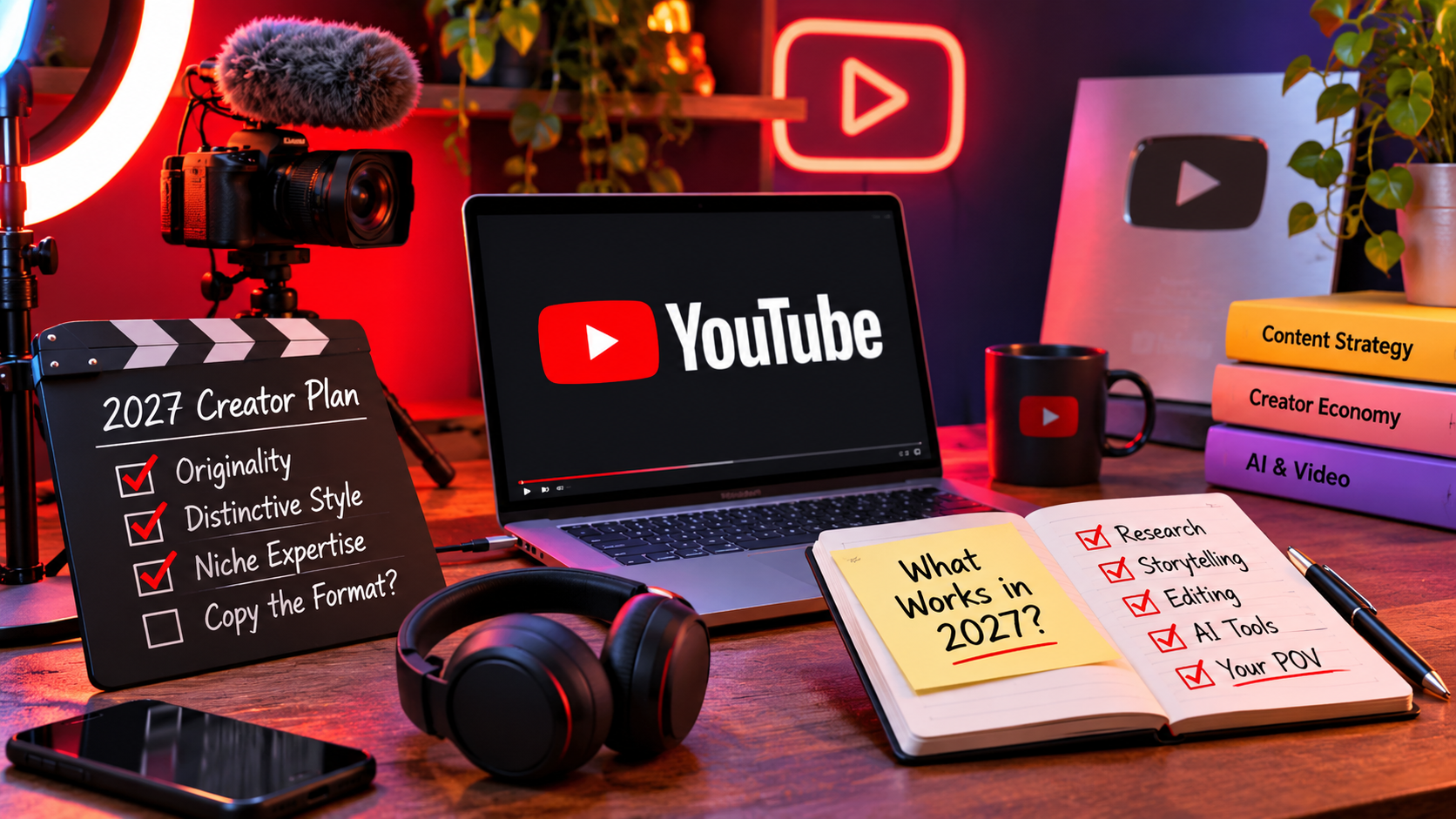
Ranveer Allahbadia recently made an interesting prediction on LinkedIn: copying won’t work in the next phase of content creation.
His argument is simple. Whether it’s research, editing, storytelling or camera skills, creators need something that others cannot easily replicate.
And the numbers suggest why that distinction could matter.
Is YouTube Becoming Too Crowded?
According to YouTube’s 2025 India report, over 100 million Indian channels uploaded content in the preceding year, with more than 15,000 crossing one million subscribers.
Podcasting offers another example. YouTube reported over one billion monthly podcast viewers globally in 2025.
India’s podcast ecosystem is growing too. As The Reelstars recently reported, Raj Shamani’s Figuring Out crossed 22 million subscribers in November 2026.
The opportunity is enormous. But a familiar interview format or trending topic doesn’t automatically make a creator memorable.
2027 forecast: Formats will remain familiar, but distinctive research, questions and storytelling could become stronger competitive advantages.
Will AI Change What Original Content Means?
In January 2026, YouTube revealed that over one million channels used its AI creation tools daily on average in December 2025.
AI can simplify scripting, editing, dubbing and production. But easier production also makes familiar formats easier to reproduce.
Importantly, YouTube’s inauthentic-content policy excludes mass-produced, repetitive content from monetisation, regardless of whether AI was used.
The Reelstars previously explored this monetisation policy and its implications for creators.
2027 forecast: AI-assisted production is likely to become more common, while original creative decisions remain important for differentiation.
How Can Creators Build an Identity in 2027?
For emerging creators, the starting point could be one recognisable strength: local reporting, research-led explainers, distinctive humour or recurring characters.
Established creators can experiment with deeper conversations, audience-driven series and original experiences without abandoning formats their communities already enjoy.
AI can handle captions, transcripts and repetitive editing tasks. But creators still decide which questions to pursue, whose stories to tell and what perspective to bring.
As The Reelstars explored in its 2026 creator-economy analysis, creator-led formats are increasingly becoming recognisable content properties.
The takeaway for 2027 isn’t to stop following trends.
It’s to make your interpretation recognisable enough that audiences know whose video they’re watching, even before seeing the channel name.



YouTube in 2027: Why Copying Content Won’t Work for Creators

Snax Gaming Makes His Debut As Award Presenter At Esports Awards 2026 In Miami

Vixens Crew Collaborates With Quick Style For A Dance On ‘Jhanak Jhanak’

Microdramas Are Winning the Download Race. But Are They Winning the Audience?

Bigg Boss 20 Contestants’ Educational Qualifications: From Kanika Mann To ScoutOP

Ipsita Chowdhury Wins Best Pet Friendly Content Award At Times Entertainment Power Creator Awards 2026

Raj Shamani Beats Joe Rogan, Becomes YouTube’s Most-Subscribed Podcaster

Do Creators Really Need a Talent Manager? Here’s How India’s Creator Economy Is Changing

Kamya Punjabi Calls Out Scout OP And Love Gill Amid Arishfa Khan’s Captaincy Row

Myntra and Underneat Bring 120+ Creators Together for ZYADA: Baddies & Bling

Food Pharmer’s Cannes Look That Never Walked

Parul Gulati Wears Nish Hair on the Cannes 2025 Red Carpet

Nancy Tyagi’s 700-Hour DIY Gown Turns Heads at Cannes 2025

Navya Nanda’s IIM Ahmedabad Triumph: From Controversy to Campus Joy

Influencer Kareema’s Heartwarming Journey with Suki

Prajakta Koli and Vrishank Khanal’s Wedding

Prajakta Koli’s Haldi and Cocktail Celebrations

Prajakta Koli and Vrishank Khanal’s Pre-Wedding Celebrations

Prajakta Koli x Vrishank Khanal Magical Mehendi

Milind Soman & Ankita’s Maha Kumbh 2025 Experience

Instagram Edits Adds Halloween Effects, 13 Text Animations and New Editing Tools

Amazon Creators Can Now Earn Money on YouTube and Pinterest in India

Instagram Is Testing 90-Minute Videos. Will YouTube Have Its New Rival?

Samay Raina, Prajakta Kohli & over 60 other influencers got awarded at InfluencEX Awards

Why Indian Models Are Going Viral With This Trend

Rizz Master Brings India’s First Vertical Dating Show to JioHotstar’s Tadka

Gangstar Mirage City’s First Major Update Adds a Halloween Takeover, Player-Run Businesses and 50-Player Syndicate System

ShareChat and Moj Launch ‘Saas, Bahu aur Magic’ Micro-Drama With Glow & Lovely

Bharti Singh and Haarsh Limbachiyaa to Launch Their Own Micro-Drama App
