
Biz
Exclusive: YouTube Money Is Not Enough: Indrajit Lahiri on 10 Years of Foodka and Building a Business Beyond Content
The Foodka founder on creator monetisation, regional storytelling, AI, entrepreneurship and taking Bengali food culture global.

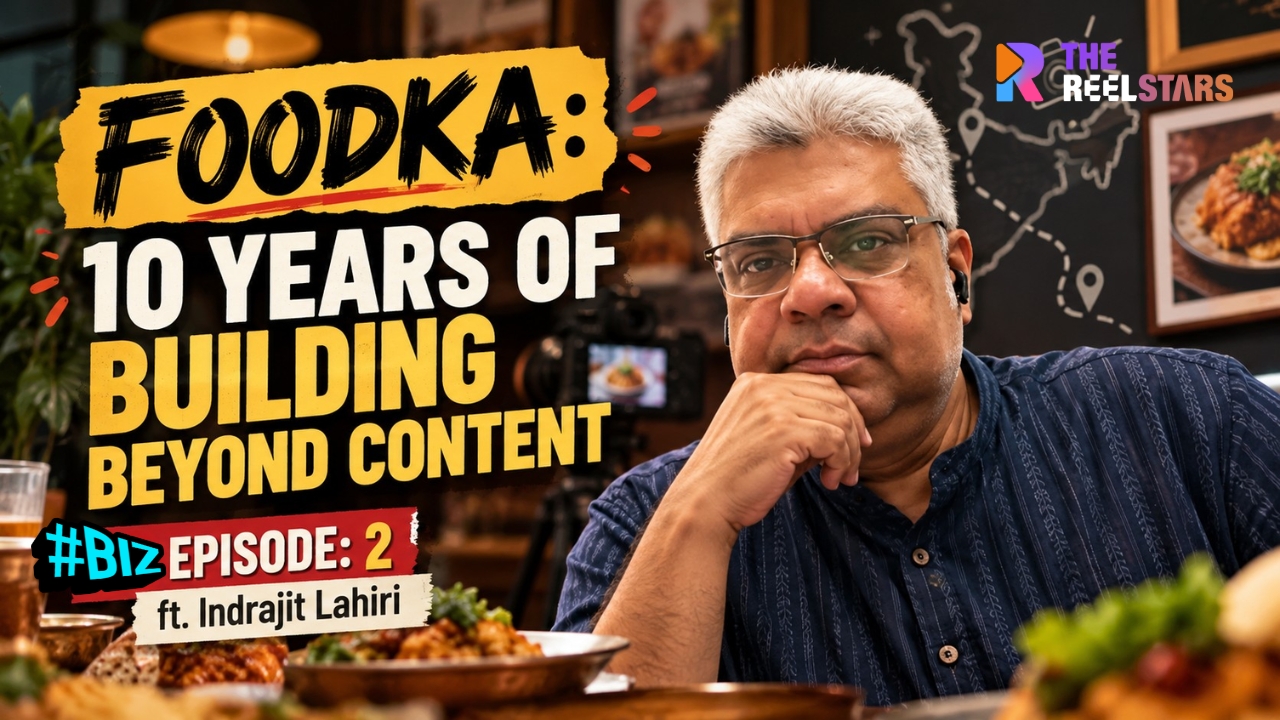
For nearly a decade, Indrajit Lahiri has been building Foodka around an idea that goes beyond restaurant reviews and food videos: every dish has a story worth telling. What began as a Bengali food blogging initiative in 2017 has evolved into one of the region’s recognised food content brands, with ambitions extending into education, consulting and international markets. However, building an audience and running a sustainable content business are two different challenges. Producing quality videos requires a team, equipment, software, production resources and consistent investment. Advertising revenue alone, particularly from Indian audiences, may not be enough to cover these costs.
The Reelstars BIZ
In this exclusive conversation on The Reelstars BIZ, Lahiri reflects on nearly ten years of content creation, the economics of YouTube, Foodka’s business expansion and the opportunities emerging for regional creators. He also discusses his plans for Foodka Global, the importance of human storytelling in an AI-driven content landscape and the realities of starting a food business.
Do Not Miss The IRL Episode: Why Indrajit Lahiri’s Foodka Conversation Is About Much More Than Bengali Food
From Facebook Posts to a Food Storytelling Brand
When Lahiri started Foodka in 2017, the digital food landscape looked very different. Facebook was a major platform for content discovery, while food blogging largely revolved around written reviews and personal opinions about restaurants.
Lahiri saw an opportunity to go beyond this approach. Written blogs could preserve information, but visual storytelling offered the potential to reach a much larger audience. As people increasingly moved from reading to watching, professionally produced food videos created new ways to explore dishes, restaurants and culinary traditions.
Foodka entered this space with a focus on production quality and storytelling. Lahiri believes his team was among the early creators producing professionally presented food content in Bengal and eastern India.
Rather than simply showing a dish and offering a verdict, Foodka sought to explore the people, places and cultural contexts behind it. Over time, the platform evolved from blogs and Facebook posts to YouTube videos and vlogs, building an identity around food as a medium for documenting culture.
Why YouTube Revenue Alone Cannot Sustain a Creator Business
One of the most candid aspects of Lahiri’s journey is his assessment of the economics of content creation. While audiences often associate views and subscribers with substantial earnings, running a professional content operation involves expenses that platform revenue may not cover.
“AdSense for Indian audience is not really that great,” he said, explaining why Foodka needed to explore additional revenue streams.
Beyond the creator appearing on camera, a content business requires people to handle production, digital operations and sales. These expenses continue even when individual videos do not generate sufficient advertising revenue. Foodka also often does not charge restaurants for food blogging, making alternative sources of income essential.
The turning point came when businesses began approaching Lahiri for advice. After years of building experience in food content, he realised that his knowledge could serve a wider purpose. This led to the development of consulting services and educational programmes alongside Foodka’s regular content.
His experience highlights an important distinction for aspiring creators: building an audience is only one part of the journey. A sustainable business also needs a clear revenue model that supports its team, operations and long-term growth.
Expanding Foodka Beyond Content
Foodka’s expansion into consulting and education emerged from the demand for Lahiri’s expertise. People wanted help with food content, branding and business development, but personalised consultations were not affordable for everyone.
Foodka Academy was one response to that challenge. By offering courses, the platform makes his knowledge accessible to aspiring creators and entrepreneurs who may not be able to pay for individual consultations. Foodka Consulting, meanwhile, offers a more personalised approach to businesses seeking guidance.
For Lahiri, this expansion serves two purposes. It creates additional revenue to sustain the wider operation while allowing him to share what he has learnt over the years.
The approach also reflects a broader shift in the creator economy. Instead of relying exclusively on advertising revenue and brand collaborations, creators can explore services, education and other opportunities connected to their expertise.
Foodka’s evolution demonstrates how the knowledge built through content creation can become the foundation for a larger business ecosystem.
The Business of Food: Why Cooking Well Is Not Enough
Through his consulting work, Lahiri has also gained insight into the challenges faced by aspiring food entrepreneurs. He believes many people enter the industry attracted by the idea of feeding others or the confidence that comes from being a good cook.
“The food business looks extremely glossy, colourful and sexy from the outside. But it’s not really so,” he said.
Lahiri argues that passion alone cannot establish whether a food venture is commercially viable. Entrepreneurs must understand their costs, operational requirements and ability to maintain consistency. Preparing an excellent biryani once is different from producing the same quality repeatedly, across multiple menu items, while managing a business.
The industry also depends heavily on people, making recruitment and employee retention significant challenges.
His advice is to assess the business model before committing to the idea. Aspiring entrepreneurs should be able to explain the financial logic of their venture rather than rely solely on their enthusiasm for food.
For Lahiri, helping people understand these realities is part of Foodka’s larger role in supporting the next generation of food entrepreneurs.
Foodka Global: Taking Regional Storytelling International
Foodka’s next phase involves expanding its storytelling beyond India. During the interview, Lahiri revealed plans for Foodka Global, an initiative intended to showcase food cultures from multiple countries through the same platform.
The proposed expansion includes London, Bangladesh, Abu Dhabi and other Middle Eastern markets, alongside a city in the United States. The initiative builds on Foodka’s previous food-content assignments in Thailand, Vietnam and Bangladesh.
Lahiri also reflected on his experience at London Mahotsav, where he was invited to host a panel and participate in a knowledge-sharing session. He described the opportunity as an honour, particularly because it allowed him to represent Bengali culture before an international audience.
For Foodka, international expansion is about more than exploring new destinations. It offers an opportunity to take regional storytelling to wider audiences and demonstrate how food connects people through history, memory and cultural identity.
The proposed expansion could also help establish Foodka as a platform for documenting culinary traditions across countries while retaining the storytelling approach that shaped its beginnings in Bengal.
Ten Years of Foodka: Learning to Adapt
Looking back, Lahiri acknowledges that Foodka began with passion rather than a detailed business strategy. If he were starting today, he would pay greater attention to analytics, audience insights, tags and AI tools that can help identify content niches.
“Maybe I would work more on the analytics and insights and tags and use the AI to find out the niche,” he said.
The reflection captures how much the creator economy has changed since 2017. Creators now have access to tools that can help them understand audiences and make more informed decisions. Yet Lahiri believes that technology cannot replace the human element at the heart of meaningful storytelling.
With AI-generated food videos attracting large audiences, he remains confident that people will continue seeking stories grounded in personal experience and observation.
Foodka’s approach goes beyond presenting information about a dish. It combines food with lived experiences, cultural context and the people behind culinary traditions. Lahiri believes these qualities will continue to matter even as content formats evolve.
The Creator Is Only One Part of the Brand
Despite being closely associated with Foodka, Lahiri is careful to acknowledge the people behind its growth. He credits the content, shoot and digital teams, along with the audience that has supported the platform.
He also manages other business interests, including an IT company, and describes switching between his creative and entrepreneurial responsibilities as essential to managing both. While content creation requires artistic thinking, running a business demands attention to numbers, operations and revenue.
His experience reflects the transition from an individual creator to a more structured organisation, where long-term growth depends on people and systems rather than personal visibility alone.
As Foodka approaches a decade of content creation, its ambitions extend beyond producing more videos. Through consulting, education and planned international expansion, Lahiri is building on the expertise and credibility accumulated over the years.
His advice to upcoming creators remains simple: understand why you started, do not take trolling or praise too personally, and remember to enjoy the process.
For Lahiri, Foodka’s journey demonstrates that content can be the starting point for something much larger. An audience creates opportunities, but a sustainable business requires a clear purpose, multiple ways to generate revenue and the willingness to keep learning.










From Air Force Officer to Travel Creator: Amit Mehta’s Journey of Exploring India

Exclusive: YouTube Money Is Not Enough: Indrajit Lahiri on 10 Years of Foodka and Building a Business Beyond Content

Bhuvan Bam Explores Dubai’s Beautyworld Event as SARKAR Looks Beyond the Studio

Eloelo Launches Dolphin AI: Will AI Video Tools Change The Future Of Creators And Filmmakers?

Surat Influencer Simran Patel Arrested Over Gandhi Reel: What We Know About Her Content

Why CRED Cast Rakhi Sawant To Explain Loan Stacking: Any Marketing Strategy?

Sufi Motiwala Turns 23, Celebrates Birthday After Recalling Near-Fatal Sea-Link Accident

OpenAI Releases 722 Maths Papers: Could AI Be Closing In On Longstanding Mathematical Mysteries?

India’s Internet Is 10 Times Faster Than In 2022. What Does That Mean For Everyday Life?

Creator-Actor Mahhi Vij’s Instagram Account Reportedly Disabled, Team Yet To React

Food Pharmer’s Cannes Look That Never Walked

Parul Gulati Wears Nish Hair on the Cannes 2025 Red Carpet

Nancy Tyagi’s 700-Hour DIY Gown Turns Heads at Cannes 2025

Navya Nanda’s IIM Ahmedabad Triumph: From Controversy to Campus Joy

Influencer Kareema’s Heartwarming Journey with Suki

Prajakta Koli and Vrishank Khanal’s Wedding

Prajakta Koli’s Haldi and Cocktail Celebrations

Prajakta Koli and Vrishank Khanal’s Pre-Wedding Celebrations

Prajakta Koli x Vrishank Khanal Magical Mehendi

Milind Soman & Ankita’s Maha Kumbh 2025 Experience

Meta One Launches With Paid AI, Creator Tools And New Features Across Instagram, Facebook And WhatsApp

YouTube Shorts Changes Repost Rules: What Creators Need To Know About Original Content

Adam Mosseri Reveals Instagram Trial Reels Rule That Could Limit Your Reach

Roopali Agrawal aka Rockonroops Turning Family Life Into Conversations On Fashion, Freedom And Safety

Technical Guruji’s iPhone 18 Pro Max Giveaway: Nearly 100 Phones And A Big Question About The Cost

Is Orry Getting Married? Close Friends Story Sparks Questions As His Past Wedding Rumours Resurface

What Is Meta’s New “Muse” AI And Why Are Users Seeing It?

The Traitors 2 Reunion Was Full Of Kalesh, Confrontations And Long-Pending Answers

Why Is MrBeast Back in India? Is His India Connect Getting Bigger in 2026?
