
Lifestyle
Food Pharmer Features Bittu Tabahi On His Podcast: The 21-Year-Old Who Took On A Polluted River
When Bittu Tabahi went viral for cleaning a polluted river with his own savings, Food Pharmer Revant Himatsingka sat down with him to hear his story.

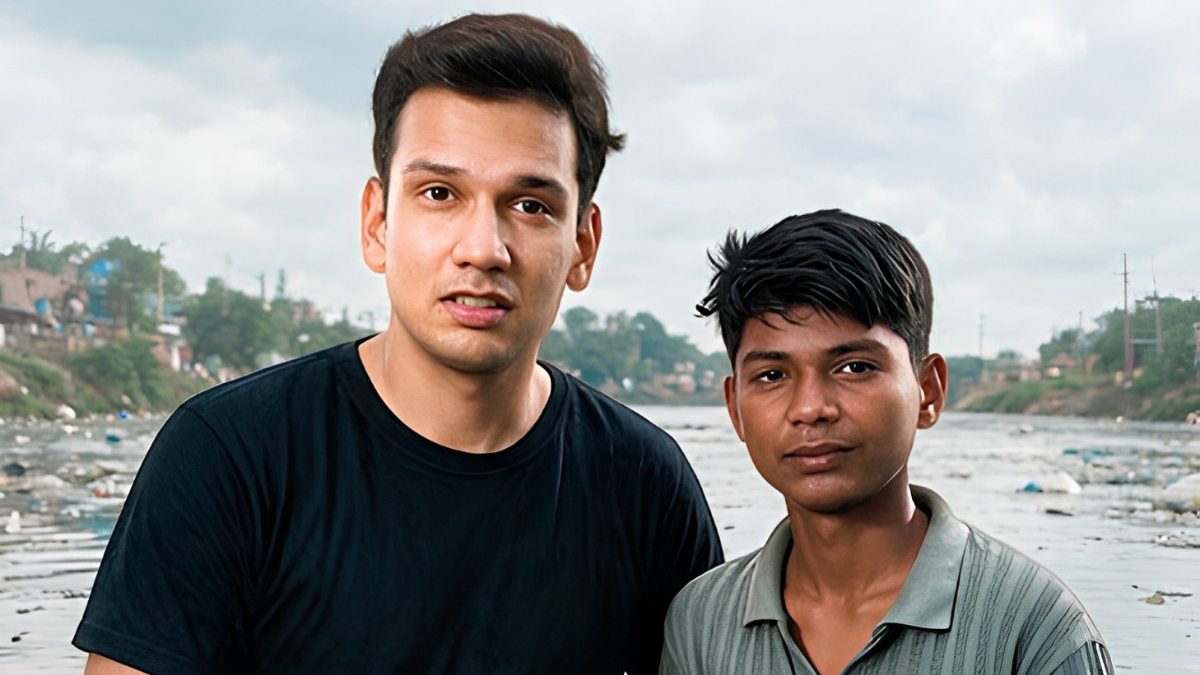
A 21-year-old student from Madhya Pradesh has become an unlikely social media sensation after videos of him cleaning a heavily polluted river began circulating online. Known as Bittu Tabahi, Surendra Singh Choudhary, also referred to as Bittu Singh Raghuvanshi, started cleaning a polluted stretch of the Ajnar River in Biaora, Madhya Pradesh, largely on his own. He did not have a large organisation behind him or have a team of hundreds of volunteers. He did not have major financial backing and used money he had saved from his lunch to buy supplies and started removing plastic and other waste from the river. His work eventually caught the attention of people across the country, including industrialist Anand Mahindra, and turned him into a recognisable face in online conversations around environmental action.
Now, Bittu’s story has reached another large audience through a dedicated episode of Food Pharmer’s podcast, where content creator and health activist Revant Himatsingka sat down with him to understand what pushed him to keep going.
Who Is Bittu Tabahi?
Bittu is a 21-year-old BSc student from Biaora.
His journey began after he saw the condition of the Ajnar River and decided to start cleaning it himself.
Instead of waiting for an organisation or a government-backed campaign, he began removing waste from the river with whatever resources he could afford.
According to Revant Himatsingka, Bittu used money saved from his lunch to buy the supplies needed for the cleanup.
That decision eventually became the beginning of a much bigger story.
He Was Cleaning The River Without Basic Protection
The work came with serious physical risks.
Bittu reportedly entered polluted stretches of the river without even having basic protective equipment such as proper gloves.
He dealt with plastic waste, toxic sludge and other material accumulated in the water. He also encountered snakes and other dangers while carrying out the cleanup.
The conditions eventually affected his health.
Himatsingka said Bittu developed severe infections on his hands and feet. The smell from the polluted river also became so intense that it affected his sleep.
Despite this, he continued returning to the river.
His Parents And People Around Him Were Not Always Supportive
Bittu’s story is also about continuing despite a lack of support.
According to Himatsingka, even Bittu’s parents did not initially support his decision to spend his time cleaning the river.
He also faced apathy from people around him and scepticism about whether one person’s efforts could make any real difference.
But Bittu continued working.
That persistence eventually became one of the biggest reasons his story resonated online.
How Bittu Tabahi Went Viral
The internet changed the scale of Bittu’s work.
Videos showing him physically entering polluted stretches of water and removing waste began circulating across social media.
The visuals stood out because Bittu was not simply speaking about environmental problems. He was physically getting into the polluted water and doing the work himself.
As more people shared his videos, his local cleanup effort became a national conversation.
His work attracted appreciation from people across India, including industrialist Anand Mahindra, who acknowledged his efforts.
His growing online visibility also allowed him to take the message beyond the Ajnar River, including efforts focused on waste along the Yamuna in Delhi.
The internet effectively turned a local cleanup into a story that millions could see.
Food Pharmer Meets Bittu Tabahi
Bittu’s growing online presence eventually brought him to the Food Pharmer podcast.
Revant Himatsingka invited Bittu onto his YouTube podcast for a dedicated conversation about his journey, the challenges he faced and what kept him going when there was little support around him.
For Himatsingka, the conversation was also personal in a broader sense.
In a LinkedIn post announcing the episode, he explained that he had recently met Bittu and was struck by his approach to solving problems.
Himatsingka pointed out that the two are working on very different issues, but share a similar mindset: if you see a problem around you, you cannot simply keep waiting for someone else to fix it.
The podcast therefore goes beyond Bittu’s viral videos. It gives him an opportunity to explain the story behind them.
Why Food Pharmer Wanted To Tell His Story
Himatsingka said he wanted Bittu’s story to reach millions of Indians.
His post about the episode focused on the fact that Bittu did not begin with institutional support or financial resources.
He began with whatever he had.
That includes the money he saved from his lunch, which he used to purchase supplies for the cleanup.
Himatsingka also highlighted the physical toll Bittu endured, from infections on his hands and feet to the smell of the polluted river making it difficult for him to sleep.
Yet Bittu continued.
For Himatsingka, that determination is what makes the story worth amplifying.
‘India Doesn’t Need One Bittu’
The message behind the podcast is bigger than one river.
While announcing the episode, Himatsingka wrote that he hoped Bittu’s story would inspire more people to stop waiting for someone else to solve problems in their communities.
“India doesn’t need one Bittu. India needs millions of them,” he wrote.
That line captures the broader idea behind the conversation.
Bittu’s story is not being presented simply as an environmental success story. It is also about individual action, what happens when someone sees a problem and decides to start doing something about it, even without knowing whether anyone else will join.
From A Polluted River To A National Audience
Bittu’s journey has now moved well beyond the Ajnar River.
What began as one student’s personal effort has become a social media story that has attracted attention from creators, public figures and audiences across the country.
His videos made the physical reality of river pollution visible to people who may never have seen the problem up close.
The Food Pharmer podcast takes that viral story one step further by putting Bittu himself at the centre of the conversation.
There are no large production teams or elaborate campaigns behind how the story began.
There was a polluted river, a young student, money saved from his lunch and a decision to start cleaning.
Social media made Bittu Tabahi famous.
But the reason people are still talking about him is much simpler: he saw something that was broken and decided not to wait for somebody else to fix it.








Food Pharmer Features Bittu Tabahi On His Podcast: The 21-Year-Old Who Took On A Polluted River

Why Indrajit Lahiri’s Foodka Conversation Is About Much More Than Bengali Food

Dolly Singh Steps Into A New World With Sanjay Mishra In ‘Arjun Bewakoof’

What Is Kusha Kapila Up To? From An Instagram Microdrama To A Netflix Treasure Hunt

World Vegetarian Day: 5 Indian Creators Making Vegetarian And Plant-Based Food Interesting

Why Aishwarya Mohanraj Says, ‘I’m Scared I Might Have A Girl Child’

International Music Day: 5 Indian Music Creators To Follow On Instagram

Creator Twinkle Dhoot Shares 10 Trial Reel Formats Creators Should Try

MESC Partners With KlugKlug To Identify Creators And Build Skilling Programmes

From YouTube To Netflix: Why Creator-Led Shows Are Becoming OTT’s New Bet

Food Pharmer’s Cannes Look That Never Walked

Parul Gulati Wears Nish Hair on the Cannes 2025 Red Carpet

Nancy Tyagi’s 700-Hour DIY Gown Turns Heads at Cannes 2025

Navya Nanda’s IIM Ahmedabad Triumph: From Controversy to Campus Joy

Influencer Kareema’s Heartwarming Journey with Suki

Prajakta Koli and Vrishank Khanal’s Wedding

Prajakta Koli’s Haldi and Cocktail Celebrations

Prajakta Koli and Vrishank Khanal’s Pre-Wedding Celebrations

Prajakta Koli x Vrishank Khanal Magical Mehendi

Milind Soman & Ankita’s Maha Kumbh 2025 Experience

Meta One Launches With Paid AI, Creator Tools And New Features Across Instagram, Facebook And WhatsApp

Adam Mosseri Reveals Instagram Trial Reels Rule That Could Limit Your Reach

ScoutOP Reveals ₹30 Lakh Monthly Income

AI Content Creator Platform Creedom Raises ₹4.1 Crore in Seed Funding

Snoop Dogg Has the Job We All Secretly Want: ₹10 Lakh A Month to Eat Ice Cream

R Udhay Is Helping Creators Level Up Their Content With Editing, AI & Instagram Tips

Is Orry Getting Married? Close Friends Story Sparks Questions As His Past Wedding Rumours Resurface

Is Saurav Joshi Really Entering GTA VI? Here’s What We Found

Visha Khandelwal’s 2-Minute Reel Crosses 500K Views With Just a Personal Story
