
Biz
YouTube’s Gunjan Soni Says India’s Creator Economy Is Evolving Into a Global Media Powerhouse
YouTube’s creative ecosystem contributed over Rs 18,000 crore to India’s GDP in 2025 and supported nearly one million full-time jobs.

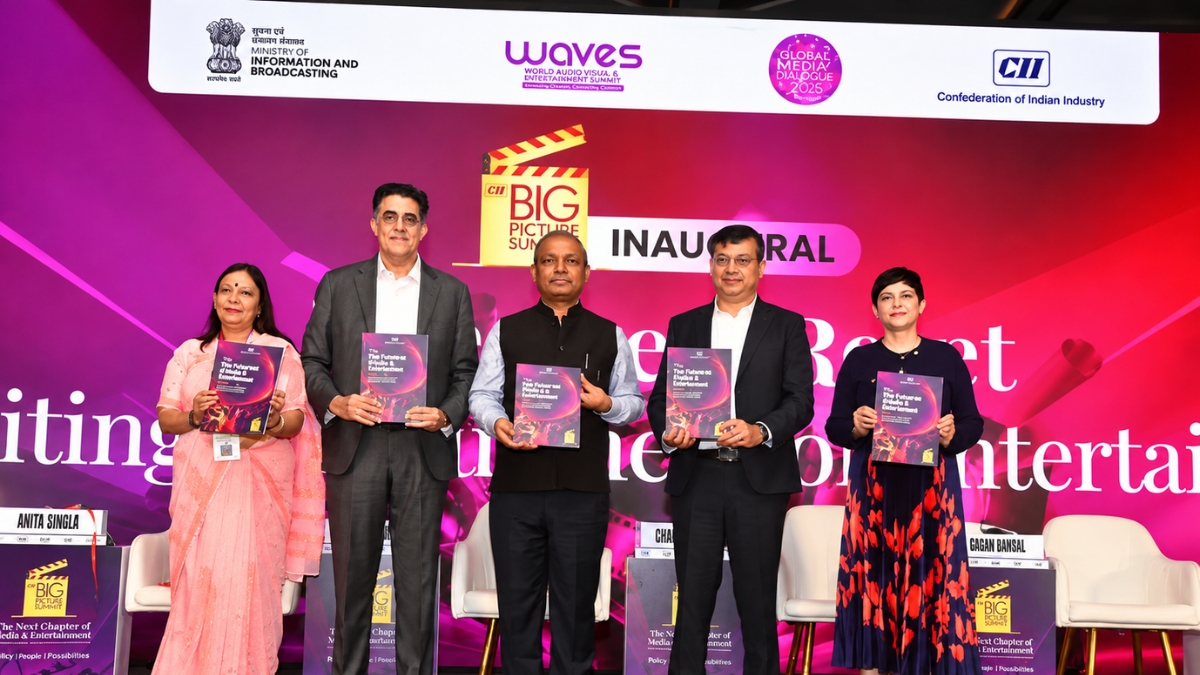
India’s creator economy is moving beyond individual influencers and viral videos to build professionally run media businesses, with creators increasingly working as directors, producers and entrepreneurs, according to YouTube India Managing Director Gunjan Soni. Speaking at the CII Big Picture Summit 2026, Soni said creators across India are building studios, managing teams and developing businesses that can take Indian stories to audiences worldwide. “For years, the word ‘creator’ conjured up the image of a hobbyist running around with a selfie stick and a webcam somewhere,” Soni said. “Today, India has totally outgrown that model. Today, our creators are directors, actors, producers, all rolled into one, scaling into full-fledged media CEOs.” Her remarks point to a broader shift in India’s digital entertainment industry, where content creation is increasingly becoming a business involving production infrastructure, employees, intellectual property and multiple revenue streams.
YouTube’s Creator Ecosystem Contributed Over Rs 18,000 Crore to GDP
According to figures shared by Soni, YouTube’s creative ecosystem contributed more than Rs 18,000 crore to India’s gross domestic product (GDP) in 2025 and supported nearly one million full-time jobs.
The platform’s contribution extends beyond creators appearing on camera. The wider ecosystem also includes editors, production teams, writers, animators, musicians, marketing professionals and other workers involved in creating and distributing content.
Soni described the economic contribution as only the measurable impact of YouTube’s ecosystem, highlighting the wider role that digital video plays in India’s media and entertainment industry.
The number of creators entering the platform’s monetisation ecosystem is also growing. Around 200,000 Indian channels began monetising for the first time in the previous year, she said. The number of creators achieving seven-figure earnings increased by 20%.
These figures suggest that YouTube is becoming an increasingly important route for creators to build businesses around their content. However, monetisation does not guarantee consistent income, and earnings can vary significantly depending on audience size, engagement, content category and revenue sources.
From Individual Creators to Professional Media Businesses
One of the central themes of Soni’s address was the professionalisation of content creation.
Creators who once managed most aspects of production themselves are increasingly investing in studios, hiring teams and developing repeatable content formats. Some are also expanding into merchandise, live events, brand partnerships and original intellectual property.
This shift changes the way creator businesses operate. Instead of relying on individual videos, professionally run teams can produce content across platforms, build recurring formats and develop relationships with advertisers and audiences over time.
It also creates opportunities for people working behind the scenes. As creators expand their operations, demand can grow for skills in editing, production, animation, storytelling, audience analytics and digital marketing.
The creator economy is therefore becoming more than a collection of individual online personalities. It is developing into a network of businesses and professionals supporting digital entertainment.
Indian Stories Are Finding Global Audiences
Soni also highlighted the growing international reach of Indian music, regional storytelling and digital entertainment.
Media companies, music labels and independent artists are increasingly looking beyond domestic audiences, using digital platforms to distribute content across borders.
She cited Marathi singer Sanju Rathore’s track Gulabi Sadi as an example of Indian music reaching audiences internationally.
“India is doing it, loud and strong, turning local stories into global exports,” she said.
The opportunity extends beyond music. Regional-language videos, comedy, food, travel, cultural traditions and locally rooted stories can reach viewers who may not share the creator’s language or location.
For creators, this can open up new audiences and commercial opportunities. For the wider industry, it creates the possibility of exporting Indian intellectual property and cultural content rather than focusing exclusively on domestic consumption.
However, reaching international audiences requires more than uploading content. Discoverability, language accessibility, distribution, rights management and audience engagement all influence whether a local hit can develop a lasting global presence.
The Rise of Participatory Fandoms
Soni also discussed the changing relationship between audiences and entertainment, particularly in sports.
Fans increasingly want more than live matches or official broadcasts. They seek behind-the-scenes stories, athlete interviews, reactions, analysis and content that allows them to participate in the wider culture surrounding a sport.
Soni described this trend as the “infinite stadium”, where the experience of following a team or athlete extends beyond the event itself.
For creators, this creates opportunities to develop content around sporting personalities, fan communities and the moments that surround major competitions.
The same principle can apply to entertainment more broadly. Audiences often follow not just a finished video or performance, but the personalities, discussions and communities that grow around it.
This gives creators more ways to build lasting audience relationships beyond individual uploads.
AI Could Boost Productivity for Creative Workers
Artificial intelligence was another key focus of Soni’s address. She argued that AI should support human creativity rather than replace it, helping creative professionals work more efficiently and explore new possibilities.
“I genuinely believe that this is not about replacing creativity. But this is truly about supporting human imagination in ways that were never possible before,” she said.
Citing a report by Public First and Google, Soni said AI tools were delivering a 20% productivity boost for Indian creative workers, equivalent to approximately seven weeks a year.
She also said the potential impact could extend to an additional Rs 75,000 crore in GDP and nearly 360,000 new creative jobs.
The potential applications include supporting editing, translation, localisation, research and other production tasks. Multilingual capabilities could also help creators adapt content for audiences who speak different languages.
However, the benefits will depend on how effectively creative professionals adopt these tools. Investment in AI skills, access to technology and responsible use will be important as the industry develops.
Soni called for greater investment in AI skills, multilingual capabilities and technology to help creators expand their reach and improve monetisation.
What Will It Take to Build Global Creator Businesses?
Soni outlined three priorities for building globally competitive media enterprises: supporting creator-led ventures with capital, infrastructure and enabling policies; adopting AI as a creative partner; and expanding the international reach of Indian culture.
She also highlighted the role of the Indian Institute of Creative Technology (IICT) in supporting the next generation of creative talent.
These priorities address different stages of the creator business journey. Capital and infrastructure can help creators move beyond individual production efforts, while technology can improve efficiency and make content accessible to wider audiences. International distribution can help successful formats and intellectual property reach new markets.
Yet the transition from creator to media entrepreneur also brings challenges. Businesses need sustainable revenue models, skilled teams, consistent production and the ability to manage costs while maintaining audience interest.
Not every creator will build a large media company, and platform monetisation alone may not be enough to sustain one. The long-term opportunity lies in developing businesses that can generate value across content formats, partnerships, platforms and intellectual property.
India already has a large base of digital storytellers and audiences. The next stage will depend on whether creators can turn that reach into sustainable enterprises and whether the wider industry can provide the investment, skills and infrastructure needed to support them.
As Soni’s remarks suggest, the creator economy is no longer only about who can attract views. It is increasingly about who can build a business around the stories audiences want to watch.


Niharika Tiwari Takes Charge in Rise & Fall 2, Eliminates Shehzad Poonawalla and Irina Rudakova

Sania Mistry Deepfake Case: Maharashtra Cyber Acts Against AI-Manipulated Images

YouTube’s Gunjan Soni Says India’s Creator Economy Is Evolving Into a Global Media Powerhouse

Navratri Outfit Inspiration: Creators Who Understood the Festive Assignment

Rowhi Rai Buys Her Own House: How Northeast India’s Creators Are Building Their Own Success Stories

Ashish Chanchlani’s Perfume Business: Can Creator Brands Smell Like Success?

Lilly Singh Is Back to Sketch Comedy, and Her Characters Have Become Creators of Their Own

Anubhav Singh Bassi’s ‘Cheating’ Crossed 100 Million YouTube Views

Meet Saurav Haldar, the Indian Cricket Creator Featured at the ICC Men’s World Cup 2027 Schedule Launch

15–25% of Brand Marketing Budgets Are Moving Towards the Creator Economy

Food Pharmer’s Cannes Look That Never Walked

Parul Gulati Wears Nish Hair on the Cannes 2025 Red Carpet

Nancy Tyagi’s 700-Hour DIY Gown Turns Heads at Cannes 2025

Navya Nanda’s IIM Ahmedabad Triumph: From Controversy to Campus Joy

Influencer Kareema’s Heartwarming Journey with Suki

Prajakta Koli and Vrishank Khanal’s Wedding

Prajakta Koli’s Haldi and Cocktail Celebrations

Prajakta Koli and Vrishank Khanal’s Pre-Wedding Celebrations

Prajakta Koli x Vrishank Khanal Magical Mehendi

Milind Soman & Ankita’s Maha Kumbh 2025 Experience

Meta One Launches With Paid AI, Creator Tools And New Features Across Instagram, Facebook And WhatsApp

YouTube Shorts Changes Repost Rules: What Creators Need To Know About Original Content

YouTube Is Letting Creators See What Works for Their Competitors

Adam Mosseri Reveals Instagram Trial Reels Rule That Could Limit Your Reach

What Is Meta’s New “Muse” AI And Why Are Users Seeing It?

Roopali Agrawal aka Rockonroops Turning Family Life Into Conversations On Fashion, Freedom And Safety

Technical Guruji’s iPhone 18 Pro Max Giveaway: Nearly 100 Phones And A Big Question About The Cost

Eloelo Launches Dolphin AI: Will AI Video Tools Change The Future Of Creators And Filmmakers?

Is Orry Getting Married? Close Friends Story Sparks Questions As His Past Wedding Rumours Resurface
