
Biz
Are Comedy Creators Becoming India’s Next TV Networks?
As YouTube payouts remain limited, comedians are turning recurring shows into media properties with brands funding the gap.

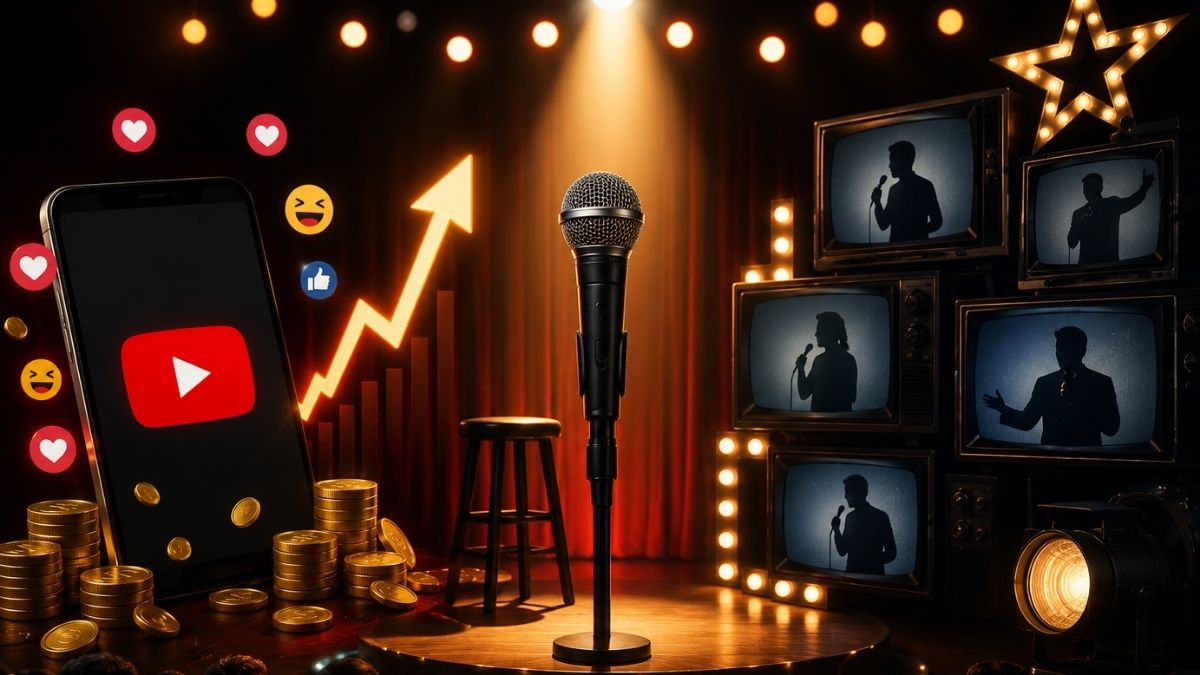
Comedy creators are increasingly moving beyond stand-up clips and one-off brand integrations. They are building recurring shows with recognisable formats, hosts and loyal audiences. The shift raises an interesting question for the creator economy: are comedians becoming entertainment companies rather than simply influencers?
Why comedy needs another revenue model
Comedy remains one of the harder content categories to produce consistently. Yet its YouTube advertising returns can remain relatively modest. The source report estimates comedy, vlogs, gaming and entertainment at around Rs 30 to Rs 60 per 1,000 views. Finance, technology, business and education content can generate considerably more. A recurring comedy show also involves writers, cameras, editors, crew, guests and post-production.
The audience may see a casual conversation. Behind it sits a complete production operation. That creates a gap between what an episode costs to make and what its views directly earn.
Brands are increasingly stepping into that gap.
From creator videos to creator IPs
Shows such as Raunaq Rajani’s Relationshit Advice, Gursimran Khamba’s Nation Wants to Guess and Ashish Solanki’s Judge Me If You Can demonstrate the shift. Brands are not merely placing logos around these shows. They are entering the formats themselves. Cashify, Moxie Beauty, DaMENSCH and Wild Stone have associated with comedian-led content.
That distinction matters. An audience does not necessarily arrive to watch an advertisement. It arrives for the comedian, chemistry and format.
The brand can then become part of that experience rather than interrupt it.
Why recurring formats matter to brands
For brands, a creator IP offers something a single influencer post cannot. A recurring show creates repeated exposure and a familiar environment. It can also give brands several episodes instead of one campaign asset. Ayush Shukla of Finnet Media describes creator IPs as increasingly becoming media properties. He points to targeted audiences, repeated exposure and native integrations as key advantages.
The economics can also become attractive. According to Shukla, recurring formats could bring CPVs below Rs 0.50 in some cases. That could make creator-led entertainment significantly cheaper than traditional television sponsorships.
Kaustubh Agarwal shows where this could go
Kaustubh Agarwal’s growing portfolio illustrates another part of the opportunity. His properties include Andha Pyaar, Loose Emotions, Akal Ke Ghode and Madhur Model. Different brands have entered these recurring formats, including MARS Cosmetics and Cashify. The important asset is therefore no longer only the comedian.
It is the format.
A successful format can produce episodes, clips and social conversations. It can move across platforms and create multiple commercial touchpoints.
That makes the creator increasingly resemble a small entertainment company.
The Samay Raina effect
Samay Raina’s India’s Got Latent offers an even bigger example.
The format created a discovery engine alongside its entertainment value. Emerging creators could appear on the show and reach audiences far beyond their existing following.
The format later crossed into mainstream streaming.
Netflix announced that Season 2 would launch simultaneously on Netflix and YouTube. The first four days reportedly generated more than 45 million YouTube views, compared with around 2.2 million on Netflix.
That gap says something important about where audiences may still prefer creator-led entertainment.
Brands are becoming production partners
Cashify’s association with Gaurav Kapoor’s Lie Hard offers another example. The show combines comedy, storytelling and a game-show structure. Episodes release every two weeks on Kapoor’s YouTube channel. The relationship is therefore closer to a production partnership than a conventional endorsement. For brands, this creates continuity. For creators, it can provide the financial support needed to sustain higher-quality productions.
Does this mean television is losing?
Traditional television still offers enormous reach and cultural familiarity. Kaun Banega Crorepati, for example, continues to attract major national brand partnerships. But the economics of attention are changing.
PwC India projects India’s internet advertising market to grow from $7.5 billion in 2025 to $14.3 billion by 2030. Traditional television revenue is projected to grow much more slowly. The shift is therefore not simply from television to YouTube. It is from buying reach to buying engagement, measurability and repeat attention.
The creator may become the media company
The biggest opportunity for comedians may not be getting more views. It may be owning formats that audiences return to. A successful creator IP can potentially generate YouTube revenue, sponsorships, live events, social clips, merchandise, OTT partnerships and licensing opportunities.
That changes the business model completely. The creator is no longer selling a post. The creator is building a property. And as brands increasingly fund these properties, comedy creators could find themselves competing with television for advertising budgets, without necessarily becoming television themselves. That may be the more interesting future of India’s creator economy.







‘I Couldn’t Express Myself Properly’: Aman Gandhi Opens Up About His Bigg Boss 20 Eviction

Bharti Singh and Haarsh Limbachiyaa to Launch Their Own Micro-Drama App

ShareChat and Moj Launch ‘Saas, Bahu aur Magic’ Micro-Drama With Glow & Lovely

Sanika Bhadane Gives Farah Khan’s ‘Dhoom Taana’ a Gen-Z Twist and the OG Loves It!

Who Are Priya Sharma and Sid Madiwale? The Indian-Australian Creators Who Joined MrBeast in Ghana

Hungry Mahi Teases New Business Venture After Winning Comedy Cooks

Mayuresh Gujar Hits 500K Followers After Six Years of Creating Content

Ishank Gupta, Sanya Rohillaa and Ahsan Vazir Win Big at Instagram’s Edits Film Festival

Prajakta Koli Becomes the Face of Rubans Accessories

“5 Years of Work Stolen”: Finance Influencer V Harish’s Final Video Before His Death

Food Pharmer’s Cannes Look That Never Walked

Parul Gulati Wears Nish Hair on the Cannes 2025 Red Carpet

Nancy Tyagi’s 700-Hour DIY Gown Turns Heads at Cannes 2025

Navya Nanda’s IIM Ahmedabad Triumph: From Controversy to Campus Joy

Influencer Kareema’s Heartwarming Journey with Suki

Prajakta Koli and Vrishank Khanal’s Wedding

Prajakta Koli’s Haldi and Cocktail Celebrations

Prajakta Koli and Vrishank Khanal’s Pre-Wedding Celebrations

Prajakta Koli x Vrishank Khanal Magical Mehendi

Milind Soman & Ankita’s Maha Kumbh 2025 Experience

YouTube Is Letting Creators See What Works for Their Competitors

YouTube Shorts Changes Repost Rules: What Creators Need To Know About Original Content

Adam Mosseri Reveals Instagram Trial Reels Rule That Could Limit Your Reach

What Is Meta’s New “Muse” AI And Why Are Users Seeing It?

Roopali Agrawal aka Rockonroops Turning Family Life Into Conversations On Fashion, Freedom And Safety

Eloelo Launches Dolphin AI: Will AI Video Tools Change The Future Of Creators And Filmmakers?

Is Orry Getting Married? Close Friends Story Sparks Questions As His Past Wedding Rumours Resurface

Why Is MrBeast Back in India? Is His India Connect Getting Bigger in 2026?

Creator Twinkle Dhoot Shares 10 Trial Reel Formats Creators Should Try
