
Tech
Could Bilibili Be the Next Creator Opportunity for Indians?
Radhika Goel’s Bilibili tutorial shows how Indian creators are exploring new platforms, audiences and monetisation.

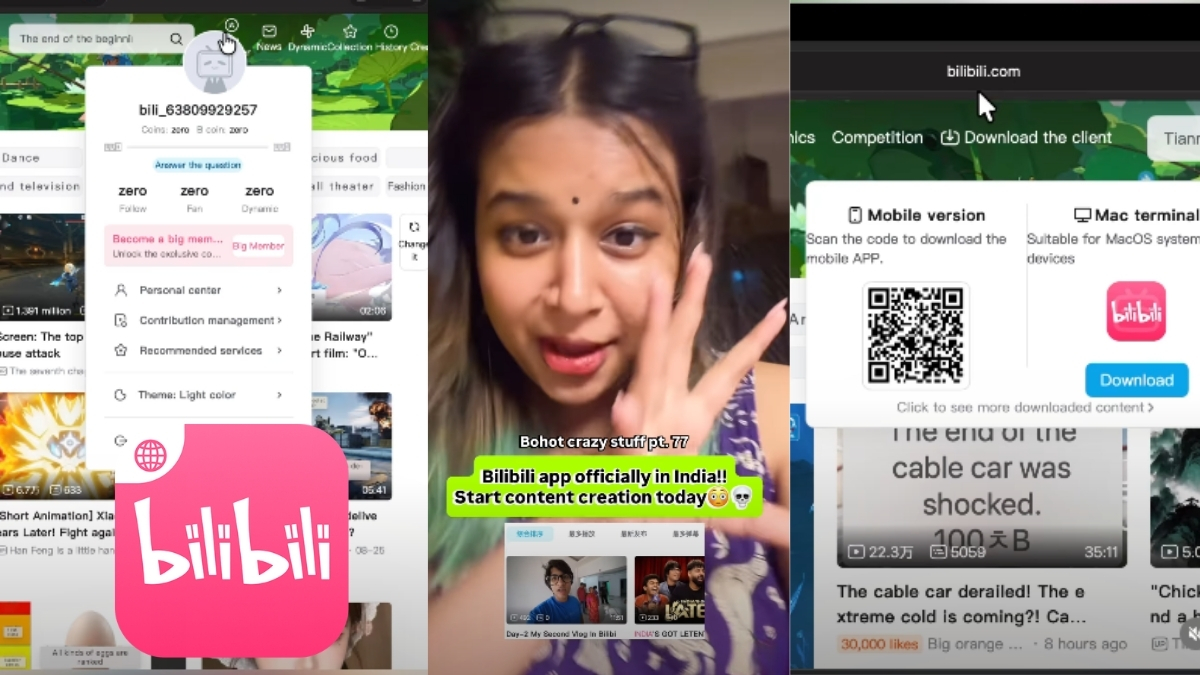
India’s creator economy is no longer confined to Instagram and YouTube. As creators look for new audiences and additional ways to distribute their work, some are beginning to explore platforms outside the usual social media ecosystem. One of them is Radhika Goel, known online as @radhikahustles. With around 139,000 Instagram followers, Radhika has built her presence around AI tools, websites, technology and practical digital resources. Her content often focuses on useful platforms and opportunities that can help people work, create or navigate the internet differently. Her latest tutorial points towards one such opportunity: Bilibili, China’s major video-sharing platform.
Also Read: China’s Bilibili Goes Global, Taking Aim at YouTube and Gen Z
Radhika Goel Is Showing Indian Creators How To Get Started
In a recent video, Radhika explains how Indian users can begin posting videos on Bilibili. Her approach is deliberately simple. She walks viewers through the process of finding the platform and locating the upload option, presenting it as another avenue for creators interested in reaching audiences outside India’s dominant social platforms.
The video fits neatly into the kind of content Radhika already creates. Rather than focusing on entertainment alone, her Instagram page revolves around discovering useful technology, AI tools and online resources.
Her Bilibili post therefore becomes less about one Chinese platform and more about a question increasingly relevant to creators: why depend on one ecosystem when content can potentially travel across several?
Bilibili Already Has an International Audience
Bilibili is primarily associated with China’s digital entertainment ecosystem. However, content connected to India is already appearing on the platform.
Recent Bilibili uploads include India-focused vlogs and lifestyle content, showing that Indian subjects can attract viewers on the platform.
For Indian creators, that creates an interesting possibility.
Content that already exists for Instagram or YouTube could potentially be adapted for another audience instead of remaining tied to one platform’s algorithm.
That does not mean every creator will automatically find an audience there. It also does not establish that Indian creators can immediately access every Bilibili monetisation programme.
But the opportunity to experiment with another distribution channel is itself significant.
The Bigger Opportunity Is Beyond Uploading
Radhika’s video is particularly interesting because it arrives at a time when creators are increasingly treating their content like a digital business.
A creator may build an Instagram following, use YouTube for longer videos, work with brands for revenue and explore other platforms for additional reach.
Bilibili could potentially become another part of that mix.
The attraction is simple: new platform, new audience and potentially another route to monetisation.
For creators who already have a library of videos, this also raises the possibility of repurposing suitable content instead of constantly producing everything from scratch.
But A New Platform Does Not Mean Easy Money
There is an important distinction between finding a new platform and finding a new income stream.
Radhika’s tutorial demonstrates how creators can explore Bilibili and begin posting. It does not, by itself, establish guaranteed earnings for Indian users.
Creators would still need to understand Bilibili’s eligibility requirements, monetisation policies, audience behaviour and payment systems before treating it as a serious revenue source.
That makes experimentation more realistic than assuming instant income.
Is The Creator Economy Becoming Platform-Agnostic?
Perhaps the more interesting development is what this says about creators themselves.
The next phase of the creator economy may not be about choosing Instagram versus YouTube versus Bilibili.
It could be about building content that can travel across multiple ecosystems.
Radhika Goel’s Bilibili tutorial is a small example of that shift. Her audience came for useful internet discoveries. This time, she is pointing them towards an audience and platform many Indian creators may not have considered.
Whether Bilibili becomes a meaningful opportunity for Indian creators remains to be seen.
But the willingness to look beyond the familiar platforms suggests something important: the creator economy is becoming increasingly global, and creators are starting to follow the audience wherever it is.


‘I Couldn’t Express Myself Properly’: Aman Gandhi Opens Up About His Bigg Boss 20 Eviction

Bharti Singh and Haarsh Limbachiyaa to Launch Their Own Micro-Drama App

ShareChat and Moj Launch ‘Saas, Bahu aur Magic’ Micro-Drama With Glow & Lovely

Sanika Bhadane Gives Farah Khan’s ‘Dhoom Taana’ a Gen-Z Twist and the OG Loves It!

Who Are Priya Sharma and Sid Madiwale? The Indian-Australian Creators Who Joined MrBeast in Ghana

Hungry Mahi Teases New Business Venture After Winning Comedy Cooks

Mayuresh Gujar Hits 500K Followers After Six Years of Creating Content

Ishank Gupta, Sanya Rohillaa and Ahsan Vazir Win Big at Instagram’s Edits Film Festival

Prajakta Koli Becomes the Face of Rubans Accessories

“5 Years of Work Stolen”: Finance Influencer V Harish’s Final Video Before His Death

Food Pharmer’s Cannes Look That Never Walked

Parul Gulati Wears Nish Hair on the Cannes 2025 Red Carpet

Nancy Tyagi’s 700-Hour DIY Gown Turns Heads at Cannes 2025

Navya Nanda’s IIM Ahmedabad Triumph: From Controversy to Campus Joy

Influencer Kareema’s Heartwarming Journey with Suki

Prajakta Koli and Vrishank Khanal’s Wedding

Prajakta Koli’s Haldi and Cocktail Celebrations

Prajakta Koli and Vrishank Khanal’s Pre-Wedding Celebrations

Prajakta Koli x Vrishank Khanal Magical Mehendi

Milind Soman & Ankita’s Maha Kumbh 2025 Experience

YouTube Is Letting Creators See What Works for Their Competitors

YouTube Shorts Changes Repost Rules: What Creators Need To Know About Original Content

Adam Mosseri Reveals Instagram Trial Reels Rule That Could Limit Your Reach

What Is Meta’s New “Muse” AI And Why Are Users Seeing It?

Roopali Agrawal aka Rockonroops Turning Family Life Into Conversations On Fashion, Freedom And Safety

Eloelo Launches Dolphin AI: Will AI Video Tools Change The Future Of Creators And Filmmakers?

Is Orry Getting Married? Close Friends Story Sparks Questions As His Past Wedding Rumours Resurface

Why Is MrBeast Back in India? Is His India Connect Getting Bigger in 2026?

Creator Twinkle Dhoot Shares 10 Trial Reel Formats Creators Should Try
