
Entertainment
From YouTube To Netflix: Why Creator-Led Shows Are Becoming OTT’s New Bet
Curly Tales’ Sunday Brunch is the latest YouTube-born IP to enter Netflix while staying free on YouTube. So, who could be next?

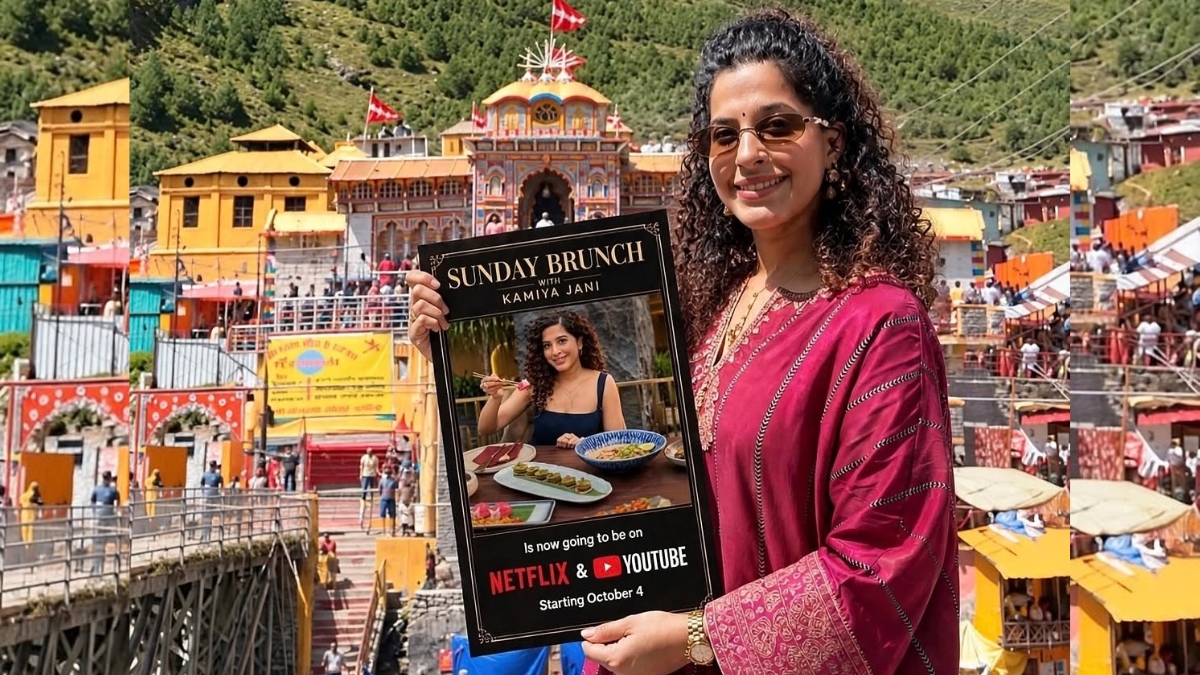
India’s creator economy is now changing that playbook. Curly Tales’ Sunday Brunch with Kamiya Jani is heading to Netflix on October 4, but the show is not leaving YouTube behind. New episodes will continue to be released on both YouTube and Netflix every Sunday at 12 pm. The new season will have 12 episodes. The show has already crossed 300 episodes and 600 million views across platforms, according to Curly Tales. Its guest list has included names such as Virat Kohli, Deepika Padukone, Ajay Devgn, Kajol, Saif Ali Khan and Sachin Tendulkar. And that is exactly what makes the Netflix deal interesting. Netflix is not discovering Sunday Brunch from scratch. It is picking up an IP that has already spent years building an audience.
The Samay Raina Effect
The closest comparison is Samay Raina’s India’s Got Latent.
When Season 2 launched in June, Netflix and Raina chose a very different model from the traditional OTT-exclusive deal. The show premiered simultaneously on YouTube and Netflix, allowing Raina to retain the audience he had already built on YouTube while giving Netflix access to the property.
Netflix later took that model a step further.
In September, an episode featuring Varun Dhawan was released exclusively on Netflix, showing that the arrangement does not have to mean every piece of content is available everywhere.
The numbers also explain why YouTube remains important.
The first episode of India’s Got Latent 2 reportedly received around 45 million views on YouTube in four days, compared with around 2.2 million views on Netflix during the same period.
That gap does not necessarily make the Netflix deal unsuccessful.
It shows something more interesting: Netflix does not necessarily need to replace YouTube.
It can sit alongside it.
Netflix co-CEO Ted Sarandos has described Raina’s show as coming with a “big built-in audience” exactly the kind of established demand that makes creator-led IP attractive to a streaming platform.
Why Sunday Brunch Makes Sense For Netflix
Sunday Brunch is a different proposition from India’s Got Latent.
Raina’s show is built around comedy, talent and unpredictability.
Kamiya Jani‘s format is built around celebrity conversations, food, travel, homes and personality.
But both have something Netflix can use: an established format with an audience already attached to it.
Sunday Brunch has also accumulated years of episodes and recognisable guests.
That gives Netflix something more than a viral creator moment.
It gets a ready-made entertainment property.
For Curly Tales, meanwhile, Netflix adds another distribution layer without forcing the company to give up the platform where the show built its audience.
That is a significant shift for creator-owned IP.
This Is Bigger Than One Netflix Deal
The interesting part is that Netflix is not suddenly discovering creators. It has been working with digital-first talent for years. What is changing is the power equation. Creators who once needed an OTT platform to give their content scale can now walk in with scale already built. YouTube has become the testing ground. A creator launches an idea. The audience responds. The format develops. The creator builds a community. And once the IP proves itself, an OTT platform can step in. That makes the streamer’s bet different. It is no longer: “Will people watch this?”
It becomes: “How much bigger can this already-working property become on our platform?”
Bhuvan Bam Has Already Taken The Other Route
If Samay Raina and Kamiya Jani represent the YouTube + Netflix model, Bhuvan Bam represents another version of the creator-to-OTT journey.
Bam’s Dhindora began as a YouTube-originated series built around the BB Ki Vines universe. Netflix has already announced Dhindora Season 2 for its 2026 slate, with Bam returning to the world of the series.
The difference is important. Dhindora is not simply a creator appearing in an OTT production. It is creator-built IP moving into a larger streaming ecosystem. That is perhaps the clearest sign yet that the line between “YouTube content” and “OTT content” is becoming less useful.
So, Who Could Be Next?
There is no confirmed list of creators Netflix is considering next.
But if the platform continues looking for creator-led properties, there are a few names worth watching based on what they have already built.
Ashish Chanchlani
Ashish Chanchlani has already shown that his audience can support long-form storytelling.
His sci-fi comedy series Ekaki was released independently on YouTube in 2026 rather than being taken to an OTT platform. Chanchlani said he had approached platforms but chose YouTube after creative differences over the project. That makes Ekaki particularly interesting in this conversation.
It is proof that a creator can produce a larger-scale, episodic show outside the traditional OTT system. Suppose a streamer is looking for proven creator-led long-form IP, a successful YouTube series such as Ekaki already comes with one thing an untested OTT pitch does not: audience data. There is, however, no indication that Netflix is currently pursuing Ekaki. It is simply a strong example of the kind of creator-owned property that could attract streaming interest.
Tanmay Bhat
Tanmay Bhat sits in a slightly different category. He has built an audience around comedy, commentary, podcasts, collaborations and internet culture rather than one single fictional universe. He has also already appeared within Netflix’s creator-comedy ecosystem through Comedy Premium League, which brought together creators and comedians including Bhat, Samay Raina and others. The reason to watch him is therefore not one particular existing show. It is the format potential around his personality and network. A creator with a recognisable voice, a large collaborator network and experience across formats can potentially build several kinds of OTT properties. Again, there is no confirmed Netflix deal for a new Tanmay Bhat-led show.
Prajakta Koli
Prajakta Koli is already familiar with the OTT ecosystem through Netflix projects such as Mismatched and Single Papa. Her journey is slightly different because she moved from being a major YouTube creator into acting and scripted streaming content. That makes her an example of another possible route for digital talent: creator first, mainstream entertainment later, and eventually creator-led formats of their own.
Whether that becomes a Netflix-owned creator IP is unknown.
But the audience bridge is already there.
The Creator Does Not Have To Choose Anymore
That may be the biggest takeaway from the Sunday Brunch deal.
A few years ago, getting an OTT deal could mean leaving YouTube behind. Now, the platforms can work together.
YouTube gives creators discovery, community, free access and constant audience feedback. Netflix gives an established property another distribution environment and access to paying subscribers.
The creator does not necessarily have to choose one over the other.
And that is exactly what makes Sunday Brunch different from a traditional OTT acquisition. The show is coming to Netflix without abandoning the platform that made it valuable in the first place.
From Creators To Studios
There is also a much bigger industry shift happening underneath all this. Creators are increasingly behaving like studios. They are developing recurring formats, building production teams, creating characters, launching shows and turning audiences into communities. YouTube CEO Neal Mohan has described creators as the “new stars & studios”, while YouTube itself is building more television-style tools around episodic creator programming. Netflix, meanwhile, is looking at creators as a source of established audiences and new entertainment formats.
So the competition may not simply be Netflix vs YouTube.
It could increasingly become: Who gets to build the next generation of Indian entertainment IP, the streamer, the creator or both together?
Sunday Brunch suggests that, at least for some creator-led shows, the answer does not have to be one or the other.

Creator Twinkle Dhoot Shares 10 Trial Reel Formats Creators Should Try

MESC Partners With KlugKlug To Identify Creators And Build Skilling Programmes

From YouTube To Netflix: Why Creator-Led Shows Are Becoming OTT’s New Bet

YouTube’s Rs 18,000 Crore Impact on India’s GDP in 2025: How Creators At Every Level Are Building

India Plans To Bar Under-18s From Opening Social Media Accounts: What We Know So Far

India’s Creator Economy Needs More Than Views And Followers, Says MIB’s Add’l Secy Prabhat

MrBeast To Appear On Shark Tank, With The World’s Biggest Sharks

India Must Move Beyond Being A Content Consumer To Become A World Leader In Content Creation: Gajendra Singh Shekhawat

OpenAI Scraps GPT-6.1 Astra Rollout Over Safety Concerns

World Heart Day 2026: Dr. Tanmay Kulkarni’s Work In Heart Health And TAVI

Food Pharmer’s Cannes Look That Never Walked

Parul Gulati Wears Nish Hair on the Cannes 2025 Red Carpet

Nancy Tyagi’s 700-Hour DIY Gown Turns Heads at Cannes 2025

Navya Nanda’s IIM Ahmedabad Triumph: From Controversy to Campus Joy

Influencer Kareema’s Heartwarming Journey with Suki

Prajakta Koli and Vrishank Khanal’s Wedding

Prajakta Koli’s Haldi and Cocktail Celebrations

Prajakta Koli and Vrishank Khanal’s Pre-Wedding Celebrations

Prajakta Koli x Vrishank Khanal Magical Mehendi

Milind Soman & Ankita’s Maha Kumbh 2025 Experience

Meta One Launches With Paid AI, Creator Tools And New Features Across Instagram, Facebook And WhatsApp

Adam Mosseri Reveals Instagram Trial Reels Rule That Could Limit Your Reach

ScoutOP Reveals ₹30 Lakh Monthly Income

AI Content Creator Platform Creedom Raises ₹4.1 Crore in Seed Funding

Snoop Dogg Has the Job We All Secretly Want: ₹10 Lakh A Month to Eat Ice Cream

R Udhay Is Helping Creators Level Up Their Content With Editing, AI & Instagram Tips

Is Orry Getting Married? Close Friends Story Sparks Questions As His Past Wedding Rumours Resurface

Is Saurav Joshi Really Entering GTA VI? Here’s What We Found

Visha Khandelwal’s 2-Minute Reel Crosses 500K Views With Just a Personal Story
