
Biz
Microdramas Could Become Bigger Than India’s Film Business By 2030: Story TV CEO
India’s microdrama market is booming, with Story betting on releases, regional languages and female-led stories to drive growth.

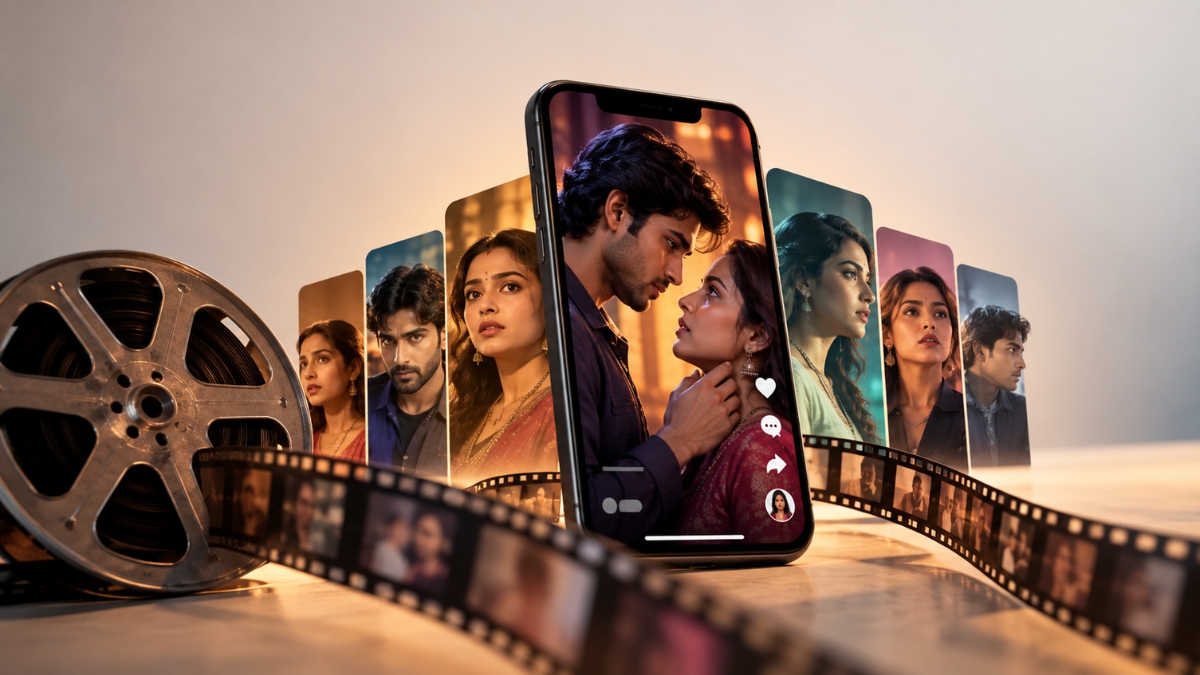
A year ago, microdramas were still something many Indian viewers were discovering. Today, short, vertical fiction has become a growing part of the country’s entertainment landscape, with millions of viewers spending significant time on platforms built around one- or two-minute episodes. Story TV founder and CEO Saurabh Pandey believes the category could become even bigger. At FICCI FRAMES 2026, Pandey said India’s microdrama market is already worth around $600-700 million and could reach $3 billion within the next three to four years. If that happens, the segment could become larger than India’s film industry, which the EY-FICCI report values at around $2.4 billion.
Must Read: After K-Dramas, Are Microdramas India’s Next Obsession?
What Are Microdramas?
Microdramas are serialised shows made up of very short episodes, usually lasting around one or two minutes.
Most are produced vertically for mobile screens, allowing viewers to watch them while scrolling on their phones.
The format sits somewhere between traditional OTT shows and social media videos. Episodes are short, but stories continue across multiple episodes, often using cliffhangers to encourage viewers to keep watching.
The format has already become popular in China and the US. India has now emerged as one of its fastest-growing markets.
India’s Microdrama Market Is Growing Fast
Industry estimates have already pointed towards significant growth.
According to Redseer Strategy Consultants, India’s microdrama market could grow from around $275-280 million in FY26 to between $2.8 billion and $3 billion by FY32.
Pandey, however, believes the market has moved faster than earlier projections suggested.
At FICCI FRAMES 2026, he said India has become the fastest-growing microdrama market, with the format’s downloads reaching a significant share of OTT downloads.
He also estimated that the combined revenues of major microdrama platforms already put the Indian market at around $600-700 million.
Pandey said the segment could become bigger than the country’s entire film business within the next few years.
Viewers Are Spending More Time On Microdramas
The growth is not only visible in downloads.
GSN Aditya, COO of Eloelo, the holding company operating Story TV, told afaqs! that average users now spend between 95 and 100 minutes a day on the platform.
“Users on average spend anywhere between 95 and 100 minutes a day on the platform. That’s almost a long-format content piece,” Aditya told afaqs! in an interview.
The figure is significantly higher than the 82-minute average Story TV had reported around a year earlier.
But Aditya does not believe this growth simply represents viewers abandoning traditional OTT platforms.
Instead, he argues that microdramas are creating additional screen time.
“We’ve unlocked about an hour to two hours of extra screen time because of this format,” he told afaqs!.
Story TV Is Betting On Daily Content
One of the biggest differences between microdramas and traditional streaming is the speed at which new content arrives.
Story TV currently follows a high-frequency release strategy.
According to Aditya, the platform releases around five to six new shows every day.
That is a very different content cycle from traditional streaming platforms, where audiences may wait weeks or months for new shows.
The strategy is also linked to Story TV’s subscription model.
Indians Are Paying For Microdramas
Story TV has moved away from its earlier freemium approach and now operates as a subscription-only platform.
Aditya says the company’s experience over the past year has challenged the assumption that Indian consumers are unwilling to pay for digital entertainment.
“The last year has proven without any doubt that Indians are willing to pay for good-quality content,” he told afaqs!.
The platform’s strategy is to keep subscribers engaged by continuously releasing fresh shows.
For microdramas, that constant flow of new episodes may be as important as the individual shows themselves.
Why Story TV Is Not Adding Ads Yet
Brands have already shown interest in the format.
However, Story TV is currently choosing not to introduce conventional advertising into its viewing experience.
Aditya said the company has received significant interest from brands for integrations but sees advertising as a possible distraction at this stage.
“We believe it will be a distraction at this point in time, though maybe down the road we are open to figuring out how that plays out,” he told afaqs!.
That does not mean brands are staying away from microdramas.
Instead, companies are experimenting with product placements and even creating original branded stories.
Examples include Myntra’s Myntra Mohalla, Zomato’s Chit Chat, Haldiram’s Ab Sab Lenge Panga and JK Super Cement’s Tera Ghar Mera Ghar.
The Stories Are Becoming More Diverse
The early microdrama boom was closely associated with dramatic relationship stories, family conflicts, wealthy protagonists and constant cliffhangers.
Those elements remain important, but Story TV says its content mix has expanded significantly.
Aditya said the platform has moved from around four broad genres a year ago to 34 genres today.
These include reality shows, thrillers, horror, action, slice-of-life stories and shows led by female protagonists.
The platform’s library now includes titles such as Sherni, Laxmi Raj, The Duplicate, Sweet Revenge and No Filter Dadi.
The shift also reflects the growing importance of female viewers.
Women Have Become A Key Audience
Story TV’s audience was initially positioned around viewers aged between 20 and 32.
The platform now says women have emerged as its strongest retention demographic, while its core audience remains within the broader 18-35 age group.
Female-led stories have become an important part of the content strategy.
This is also a sign of how microdramas are moving beyond a single set of predictable storytelling formats.
Regional Languages Could Be The Next Big Growth Driver
Language has emerged as another major opportunity.
Story TV has expanded beyond Hindi into Tamil and Telugu and is now entering markets including Bhojpuri, Kannada and Malayalam.
Pandey said the platform has grown its library to more than 5,000 microdramas across languages.
For a country as linguistically diverse as India, this could be important for taking the format beyond major metros.
Microdramas are already designed around mobile viewing. Adding regional stories could make the format even more accessible to audiences outside India’s largest cities.
Can AI Help India Become A Global Content Hub?
Story TV is also using AI tools to increase the speed at which it can produce content.
The company says its proprietary tools analyse large amounts of data from its existing library, while AI is also being used for elements such as visual backdrops.
The aim is to increase the number of shows the platform can release each month.
Pandey sees a much bigger opportunity in this combination of Indian creative talent and AI-assisted production.
He suggested that entertainment content could eventually become a major export for India, much like IT services became a major part of the country’s global economic identity.
Could Microdramas Really Overtake Films?
The $3 billion projection is still a forecast, not a guaranteed outcome.
Independent market estimates from Redseer and Lumikai indicate strong growth, while some of Story TV’s market-size and market-share figures are based on company projections and annualised run rates rather than audited industry-wide numbers.
But the direction is clear.
Microdramas have moved from being a niche format to a serious digital entertainment category in India.
Viewers are spending significant amounts of time watching them. Platforms are releasing new stories at high speed. Regional languages are expanding the audience. Brands are experimenting with integrations. And consumers are showing a willingness to pay.
Whether microdramas actually become bigger than India’s film business by 2030 remains to be seen.
But the more interesting question may be whether they create an entirely new category of entertainment rather than simply taking viewers away from films and OTT platforms.
For now, India’s microdrama boom suggests that shorter does not necessarily mean smaller.

Kabaddi Champion Sanju Devi’s Quiet Return Home After Winning Asian Games Gold

Microdramas Could Become Bigger Than India’s Film Business By 2030: Story TV CEO

India Is Funding Deep-Tech Startups, But Finding The First Customer Is Still A Challenge

Saloni Kukreja’s Salted Cream Coffee Is The Easy Café-Style Drink To Make At Home

After K-Dramas, Are Microdramas India’s Next Obsession?

Creator and Marketer Janhavi Vedpathak: Breaking Down Why Brands Do What They Do

From A Hotstar Writing Job To Building A Career As A Creator And Comedian: Sharon Verma

What Is Lakshmi-Maxxing? The Viral Wellness Trend Explained

Sam Altman Says World Should Accept ‘Some Bad Things’ From AI, Citing Benefits Of The Technology

YouTube Shorts Changes Repost Rules: What Creators Need To Know About Original Content

Food Pharmer’s Cannes Look That Never Walked

Parul Gulati Wears Nish Hair on the Cannes 2025 Red Carpet

Nancy Tyagi’s 700-Hour DIY Gown Turns Heads at Cannes 2025

Navya Nanda’s IIM Ahmedabad Triumph: From Controversy to Campus Joy

Influencer Kareema’s Heartwarming Journey with Suki

Prajakta Koli and Vrishank Khanal’s Wedding

Prajakta Koli’s Haldi and Cocktail Celebrations

Prajakta Koli and Vrishank Khanal’s Pre-Wedding Celebrations

Prajakta Koli x Vrishank Khanal Magical Mehendi

Milind Soman & Ankita’s Maha Kumbh 2025 Experience

Meta One Launches With Paid AI, Creator Tools And New Features Across Instagram, Facebook And WhatsApp

Adam Mosseri Reveals Instagram Trial Reels Rule That Could Limit Your Reach
YouTube Shorts Changes Repost Rules: What Creators Need To Know About Original Content

ScoutOP Reveals ₹30 Lakh Monthly Income

Snoop Dogg Has the Job We All Secretly Want: ₹10 Lakh A Month to Eat Ice Cream

Technical Guruji’s iPhone 18 Pro Max Giveaway: Nearly 100 Phones And A Big Question About The Cost

Is Saurav Joshi Really Entering GTA VI? Here’s What We Found

Is Orry Getting Married? Close Friends Story Sparks Questions As His Past Wedding Rumours Resurface

Visha Khandelwal’s 2-Minute Reel Crosses 500K Views With Just a Personal Story
