
Lifestyle
Roopali Agrawal aka Rockonroops Turning Family Life Into Conversations On Fashion, Freedom And Safety
From family comedy and lifestyle content to parenting and women’s safety, Roopali Agrawal uses everyday moments to challenge social norms.

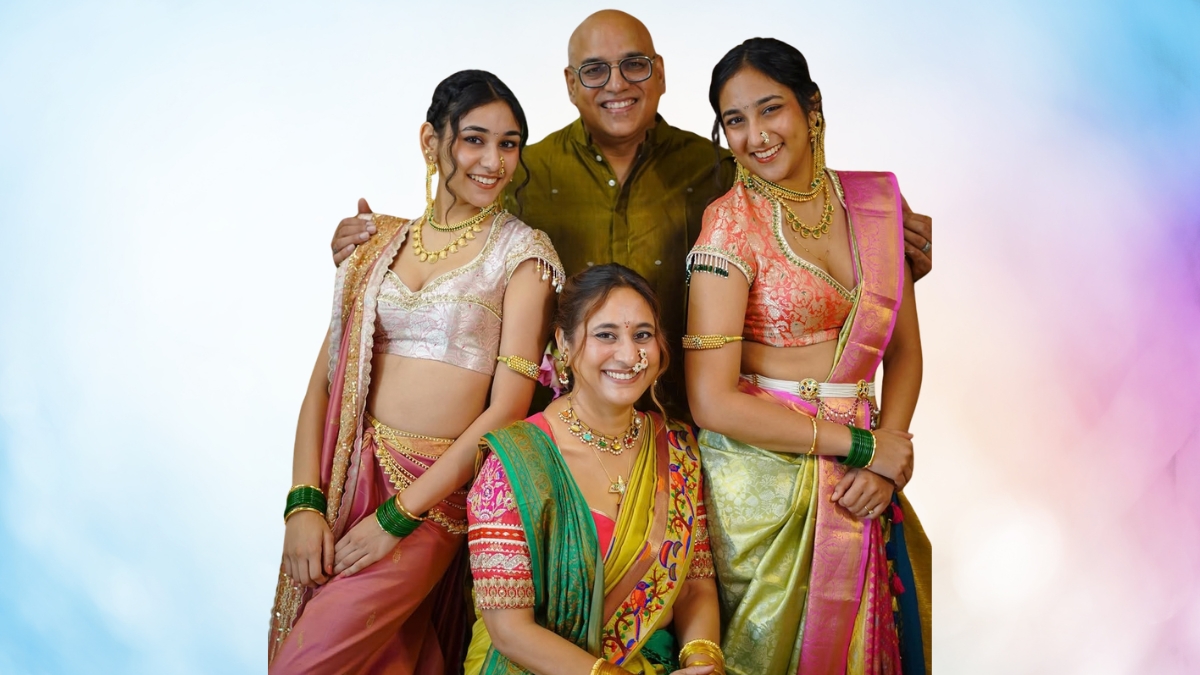
Roopali Agrawal, better known as @rockonroops, has built her online presence around family, lifestyle and humour. Her Instagram feed moves between family time, dance reels, fashion, everyday vlogs, comedy moments, brand collaborations and conversations about life. But one of her recent reels has taken that family-focused content into a much bigger conversation. Featuring Roopali and her daughters, the viral video discusses what girls wear, body confidence, fashion as self-expression, parenting and women’s safety. At its heart is a question many parents face: How do you prepare your daughters for an unsafe world without making them feel that their freedom is the problem?
Roopali’s answer is summed up in one line from the reel:
“There’s a difference between guiding our daughters and controlling them.”
Who Is Roopali Agrawal aka Rockonroops?
Roopali Agrawal is a Noida-based family and lifestyle creator, architect, makeup artist and entrepreneur. Her Instagram account @rockonroops has around 154,000 followers, while her profile says she is “quietly touching 10M+” people every month.
Her content covers several areas rather than fitting neatly into one creator niche.
There are family moments, lifestyle vlogs, comedy, dance, fashion, DIY and upcycling, along with posts built around parenting, relationships, life lessons and social expectations.
Her husband Parag Agrawal and daughters Kuhu and Kisha regularly appear in her content, making the family itself an important part of the @rockonroops identity.
The family has become known for its coordinated dance videos, humour and everyday interactions, but Roopali’s content often goes beyond entertainment.
She Has Had Several Careers Before Becoming A Creator
Content creation was not Roopali’s first career.
She studied architecture but moved away from the profession after marriage and later built a large direct-selling network with Mary Kay before moving into bridal and wedding makeup in Delhi-NCR.
She eventually found another professional outlet through content creation.
Roopali had already built an Instagram following of more than 150,000 when her original account was permanently suspended. Instead of walking away from social media, she started again with @rockonroops.
The new account grew around her family, humour, fashion, cultural celebrations and everyday life.
Alongside content, she also became an entrepreneur. Roopali is the founder of Chaabi, a brand focused on handcrafted sarees and pure silver jewellery.
Her Content Is Not Just About Family Fun
The appeal of @rockonroops comes partly from its variety.
Roopali can post a funny family interaction one day and a lifestyle video the next. Her content also includes fashion and DIY ideas, dance, advertising-led comedy moments and conversations around experiences that many families can relate to.
Her daughters are part of that creative world too.
That makes the recent reel particularly interesting because the conversation about clothing and safety comes directly through the relationship between a mother and her daughters.
“Why Do You Even Think That It’s Our Decision?”
The viral reel begins with a question Roopali says she is asked frequently:
“How can you allow your girls to wear such clothes?”
Her response challenges the assumption behind the question.
“Why do you even think that it’s our decision?”
Roopali explains that she grew up in Bandra, Mumbai, where she saw girls wearing what they liked. She wanted her daughters to develop the same confidence about their bodies and their clothing.
She says that if her daughters wanted to wear shorts or crop tops, she never saw it as something she needed to control.
For her, clothing should not become a measure of a girl’s character.
Her Daughter Shares A Childhood Experience
The reel then becomes more personal.
One of Roopali’s daughters recalls an incident from when she was in prep school. For a costume activity, she chose to dress up as Priyanka Chopra, whom she admired.
She wore a crop top, shorts and colourful strands in her hair.
At school, however, some children and teachers questioned what she was wearing and told her that she did not look nice.
She returned home and told her parents what had happened.
Their response was completely different.
They told her that she looked good and reassured her that she looked “absolutely stunning”.
The experience stayed with her.
The lesson she took from it was that confidence has to come from within, regardless of what other people say.
Roopali Encourages Her Daughters To Experiment
The daughters also reveal that Roopali is often more adventurous with fashion than they are.
If one of them feels nervous about wearing something, she encourages her to try something more fun and more personal.
That attitude has continued as they have grown older.
Both daughters are now studying at NIFT, where they have developed a deeper understanding of fashion as a form of expression.
The reel therefore connects their upbringing with their present interests.
For this family, fashion is not simply about following trends. It is also about identity, creativity and confidence.
“Clothes Don’t Define Characters”
One of the strongest messages in the reel is the statement:
“Clothes don’t define characters.”
That idea runs through the entire conversation.
Roopali’s daughters talk about wearing bikinis on beaches and question why bikinis can still attract judgment on Indian beaches despite being normal beachwear.
At the same time, the family acknowledges that clothing can be adapted to an occasion or environment.
That is where the conversation moves towards safety.
Freedom Does Not Mean Ignoring Safety
Roopali makes it clear that her approach to clothing does not mean she ignores the realities her daughters may face.
The family says they provide safety advice when the girls travel, particularly when using metros or cabs in Delhi.
They discuss taking practical precautions, including carrying a shirt or cover-up when travelling.
But Roopali draws an important distinction.
The safety advice is about the situation they are entering, not about telling her daughters that certain clothes make them responsible for what happens to them.
“There’s a difference between guiding our daughters and controlling them.”
That line has become the central idea of the reel.
Why This Conversation Matters Now
The discussion lands differently because it comes against the broader backdrop of continuing concerns around women’s safety in India.
For many parents, especially parents raising daughters, safety can become a constant calculation.
What should a child know before travelling alone?
How should she respond to an uncomfortable situation?
What precautions should she take?
And how much of that conversation should actually involve her clothes?
Roopali’s reel argues for separating those questions.
Parents can teach children about safety and situational awareness without making clothing a measure of character or turning protection into control.
Her Family Content Makes The Message More Relatable
This is also where Roopali’s larger creator identity matters.
Had the same argument appeared as a formal lecture about women’s safety, it might have reached a very different audience.
Instead, it comes through a mother talking to her daughters about something as everyday as getting dressed.
That fits naturally into the kind of content Roopali already makes.
Her audience has seen the family joke together, dance together, spend time together and share everyday experiences.
The viral reel simply takes that familiar family dynamic into a more serious conversation.
Breaking Stereotypes Through Everyday Content
Roopali’s content repeatedly moves between entertainment and observations about everyday life.
She does not restrict herself to one version of family content.
She can be a mother, entrepreneur, lifestyle creator, fashion enthusiast and comedian within the same digital space.
Her daughters are also not presented simply as supporting characters in her content. They participate in conversations, fashion and creative expression.
That helps explain why the recent reel feels consistent with her larger body of work.
It is still family content.
It is still a conversation between a mother and her daughters.
But the subject is much bigger.
From A Creator Rebuilding Her Platform To A Family Voice
Roopali’s journey also adds another layer to the story.
She has moved through architecture, direct selling, makeup artistry, entrepreneurship and content creation, rebuilding her online community after losing her original Instagram account.
Today, @rockonroops has become a space where she brings together her family, professional experiences and personal views.
Her content can be funny and light-hearted, but it can also question ideas around parenting, women, fashion and social expectations.
The recent reel is perhaps one of the clearest examples of that combination.
The Bigger Message
The conversation ultimately isn’t about whether daughters should wear crop tops, shorts or bikinis.
It is about who gets to make that decision and about raising girls who feel comfortable in their bodies while understanding how to navigate different situations.
It is about giving children practical safety advice without teaching them that their appearance determines how other people will treat them.
And it is about allowing daughters to develop their own identities rather than making them constantly seek permission to express themselves.
For Roopali Agrawal, the message is straightforward:
Guide your daughters. Teach them about safety. Give them context. But don’t confuse protection with control.
That message, coming from a creator who has built her platform around family life, makes the viral reel more than another social media moment.
It is a glimpse into the parenting philosophy behind @rockonroops and a reminder that sometimes the most important conversations can begin with something as simple as asking a daughter what she wants to wear.

Ranveer Allahbadia’s Birthday Note For Juhi Bhatt Is Winning The Internet

Roopali Agrawal aka Rockonroops Turning Family Life Into Conversations On Fashion, Freedom And Safety

Navya Naveli Nanda Has A New Bet: Building India’s Next Big Tech Companies

Inside Idiotic Media’s BBD Playbook: How 1,600+ Creators Delivered 458M+ Views for Flipkart

Mastermind Review: When A Murder Confession Is Just The Beginning

Kabaddi Champion Sanju Devi’s Quiet Return Home After Winning Asian Games Gold

Microdramas Could Become Bigger Than India’s Film Business By 2030: Story TV CEO

India Is Funding Deep-Tech Startups, But Finding The First Customer Is Still A Challenge

Saloni Kukreja’s Salted Cream Coffee Is The Easy Café-Style Drink To Make At Home

After K-Dramas, Are Microdramas India’s Next Obsession?

Food Pharmer’s Cannes Look That Never Walked

Parul Gulati Wears Nish Hair on the Cannes 2025 Red Carpet

Nancy Tyagi’s 700-Hour DIY Gown Turns Heads at Cannes 2025

Navya Nanda’s IIM Ahmedabad Triumph: From Controversy to Campus Joy

Influencer Kareema’s Heartwarming Journey with Suki

Prajakta Koli and Vrishank Khanal’s Wedding

Prajakta Koli’s Haldi and Cocktail Celebrations

Prajakta Koli and Vrishank Khanal’s Pre-Wedding Celebrations

Prajakta Koli x Vrishank Khanal Magical Mehendi

Milind Soman & Ankita’s Maha Kumbh 2025 Experience

Meta One Launches With Paid AI, Creator Tools And New Features Across Instagram, Facebook And WhatsApp

Adam Mosseri Reveals Instagram Trial Reels Rule That Could Limit Your Reach

YouTube Shorts Changes Repost Rules: What Creators Need To Know About Original Content

ScoutOP Reveals ₹30 Lakh Monthly Income

Snoop Dogg Has the Job We All Secretly Want: ₹10 Lakh A Month to Eat Ice Cream

Technical Guruji’s iPhone 18 Pro Max Giveaway: Nearly 100 Phones And A Big Question About The Cost

Is Saurav Joshi Really Entering GTA VI? Here’s What We Found

Is Orry Getting Married? Close Friends Story Sparks Questions As His Past Wedding Rumours Resurface

Visha Khandelwal’s 2-Minute Reel Crosses 500K Views With Just a Personal Story
