
News
Why Meta’s Content Restrictions Are Raising Questions in India?
With over 5.4 million content restrictions recorded in India in the first half of 2026, questions around digital expression, regulatory compliance and platform accountability are gaining attention.

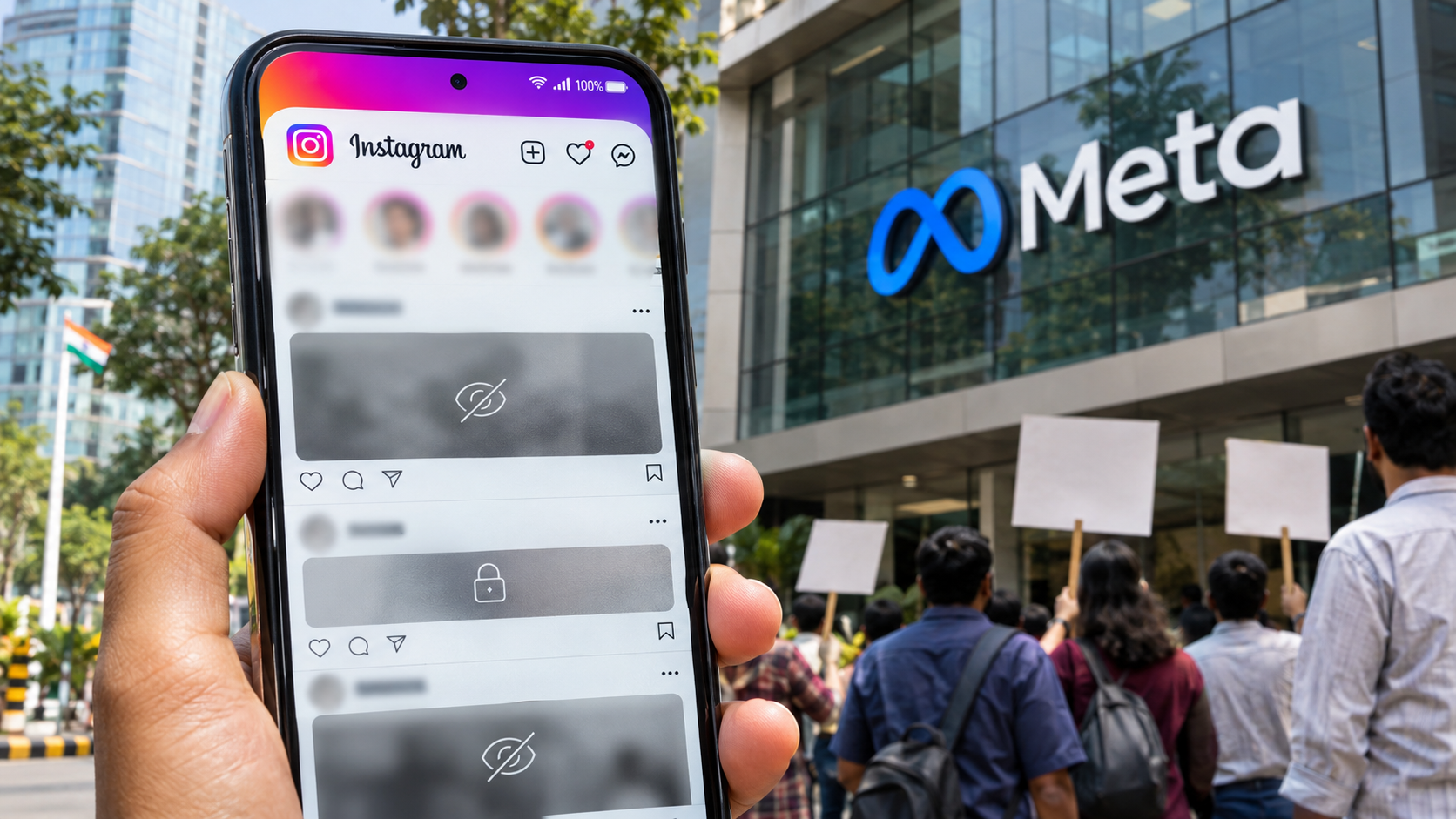
Protests outside Meta’s offices in Mumbai, Hyderabad and Gurugram on November 20 have brought the debate over social media content moderation back into focus.
Members of the Indian Youth Congress (IYC) demonstrated against restrictions imposed on Instagram accounts associated with its leaders. The demonstrations witnessed confrontations with security personnel and police, alongside reported incidents of property damage.
According to Reuters, two accounts were subsequently restored. However, the organisation alleged that several other accounts belonging to journalists, influencers and creators critical of the government remained restricted.
Meta declined to comment on the protests.
A Significant Rise in Content Restrictions
The developments come amid a sharp increase in content restrictions across Meta’s platforms in India.
According to Meta’s transparency disclosures, over 5.44 million content items were restricted under local laws between January and June 2026. This is in contrast to approximately 41,400 in the preceding six months.
This represents a nearly 131-fold increase, placing India second globally, behind Indonesia.
However, these figures do not exclusively represent political content or account suspensions.
Meta has attributed a substantial proportion of these restrictions to legal compliance obligations. These include the automated identification of identical copies of previously restricted content.
What Has Changed in India’s Digital Regulations?
Amendments to India’s Information Technology Rules, effective February 20, 2026, reduced the time available for platforms to comply with qualifying content takedown orders. The deadline was cut from 36 hours to three hours.
The government maintains that these measures are intended to address unlawful content and strengthen online safety.
Meanwhile, digital rights advocates have raised concerns about automated moderation, transparency and the availability of effective appeals.
On November 19, the Delhi High Court sought responses from Meta and the Centre following a petition by legal news platform LiveLaw. This petition challenged automated content restrictions and associated regulations.
The matter remains pending.
What Does This Mean for Content Creators?
For creators, social media accounts are increasingly more than spaces for expression. They are professional portfolios, distribution channels, sources of income and communities built over years.
An unexpected restriction can disrupt audience engagement, monetisation and ongoing brand partnerships.
As The Reelstars previously reported, unexpected account suspensions can leave creators navigating considerable uncertainty.
While platforms must comply with applicable laws and maintain user safety, creators also have a legitimate interest in understanding why their content is restricted. They also need to know how they can challenge such decisions.
The ongoing developments highlight a broader challenge for India’s creator economy. This challenge is balancing regulatory compliance, responsible content moderation and transparent mechanisms that protect legitimate digital expression.










Why Meta’s Content Restrictions Are Raising Questions in India?

From Ad Breaks to Storylines: Are Brands Entering the Microdrama Universe?

Rajat Dalal Warns Avinash Mishra To Stay Away From Eisha Singh Amid Breakup Row

GTA 6 Takes Over Global Streaming As CarryMinati And Mythpat Make It To The Top

Why Brands Are Looking Beyond Follower Counts?

Indian Creators Bring Their Own Spotlight To The Earthshot Prize 2026 In Mumbai

Snapchat Launches Easy Lens CLI: Now Create AR Lenses With AI, No Coding Needed

Payal Gaming Present Esports Organisation of the Year Award at Esports Awards 2026

Instagram Finally Lets You Edit Stories After Posting: Here’s What’s New for Creators

Chennai Techie Dies After Alleged Assault at Delhi Influencer’s Home

Food Pharmer’s Cannes Look That Never Walked

Parul Gulati Wears Nish Hair on the Cannes 2025 Red Carpet

Nancy Tyagi’s 700-Hour DIY Gown Turns Heads at Cannes 2025

Navya Nanda’s IIM Ahmedabad Triumph: From Controversy to Campus Joy

Influencer Kareema’s Heartwarming Journey with Suki

Prajakta Koli and Vrishank Khanal’s Wedding

Prajakta Koli’s Haldi and Cocktail Celebrations

Prajakta Koli and Vrishank Khanal’s Pre-Wedding Celebrations

Prajakta Koli x Vrishank Khanal Magical Mehendi

Milind Soman & Ankita’s Maha Kumbh 2025 Experience

Instagram Edits Adds Halloween Effects, 13 Text Animations and New Editing Tools

Samay Raina, Prajakta Kohli & over 60 other influencers got awarded at InfluencEX Awards

Instagram Is Testing 90-Minute Videos. Will YouTube Have Its New Rival?

Why Indian Models Are Going Viral With This Trend

Rizz Master Brings India’s First Vertical Dating Show to JioHotstar’s Tadka

Gangstar Mirage City’s First Major Update Adds a Halloween Takeover, Player-Run Businesses and 50-Player Syndicate System

From Reels to 90-Minute Videos: Is Instagram changing Its Creator Playbook?

She Went Viral on India’s Got Latent, But There’s More to Prachi Patil

From Fashion to Football: Bhavitha Mandava & Muhammed Riswan Among 25 Instagram Rings 2026 Winners
