
Biz
Mumbai’s ‘Flex-Free’ Plan: Can QR Codes Clean Up a Rs 4,000-Crore OOH Market?
Mumbai wants to curb illegal ads with QR codes, faster enforcement and penalties, putting compliance back at the centre of outdoor advertising.

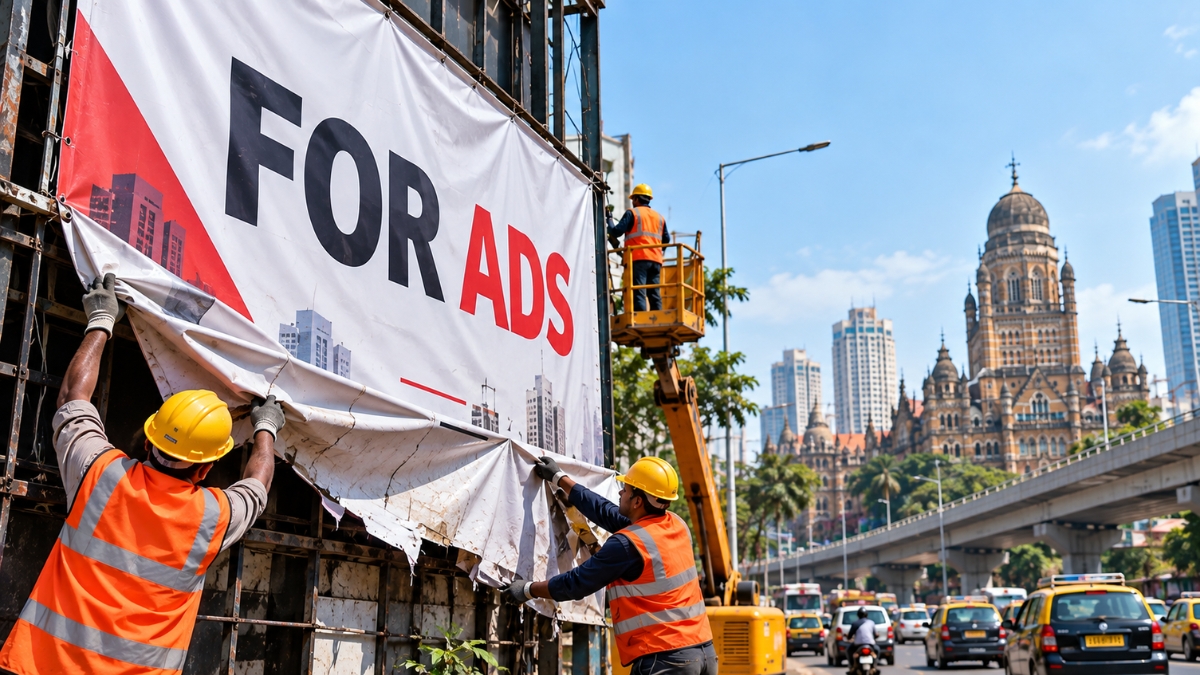
Mumbai is taking another shot at cleaning up its streets and this time, the focus is not just on aesthetics. Mayor Ritu Tawde has proposed a year-long “Flex-Free Mumbai” campaign against illegal flex banners, posters and outdoor advertisements. The plan could also have a wider impact on Mumbai’s Rs 4,000-crore-plus outdoor advertising market, where organised players are pushing for better compliance and a level playing field. The proposal comes nearly a year after the BMC introduced its new outdoor advertising guidelines.
So, what exactly is Mumbai planning?
Tawde has written to BMC Commissioner Ashwini Bhide seeking strict action against unauthorised advertisements.
The campaign carries the slogan “Shadu Bappa for 10 days, Flex-Free Mumbai for 365 days”, signalling that the crackdown should continue beyond the festive season.
The proposal calls for complaints against illegal flexes, banners, posters and stickers to be acted upon within 72 hours.
It also calls for political, social and commercial organisations to face the same rules.
That could make enforcement more important than ever for businesses that depend on outdoor advertising.
The QR code could change how outdoor ads work.
One of the most interesting parts of the plan is the proposed QR code system.
Every authorised outdoor advertisement would carry details such as:
- Permission number
- Validity period
- Printer or agency details
- QR code
A person could scan the QR code and check whether the advertisement has the required permission.
No QR code could mean the banner is unauthorised and open to removal.
For advertisers and agencies, this could make compliance easier to check before a campaign goes live.
For the city, it could create a simple digital trail for outdoor advertising.
What happens to repeat offenders?
The proposal also targets businesses that repeatedly put up illegal banners.
Printers, contractors and agencies involved in repeat violations could face penalties and blacklisting.
The BMC could also remove unauthorised material and process seized PVC flexes through its Solid Waste Management Department for recycling.
That matters because illegal flex advertising is not only a regulatory issue.
It also adds to the city’s plastic and PVC waste problem.
Why should the advertising industry care?
Mumbai’s outdoor advertising market is already a major business.
According to the Pitch Madison Advertising Report 2026, India’s OOH advertising market is worth more than Rs 4,000 crore in annual ad spending. The market is also expected to grow by around 5% in 2026.
And OOH is no longer just about roadside hoardings.
The business now includes:
Airports | Metro networks | Transit media | Malls | Street furniture | Digital OOH | Premium billboards
As brands spend more on these formats, measurement, permissions and compliance become more important.
This is where illegal advertising creates a business problem.
Organised OOH companies invest in technology, premium locations, measurement and compliance. Illegal inventory can compete with them without carrying the same costs.
Industry representatives have also raised concerns about unpaid advertising placed by political groups through local operators.
Mumbai already tried a major cleanup.
This is not the city’s first crackdown.
In 2024, the BMC launched a major drive to remove illegal outdoor advertisements after the Ghatkopar hoarding collapse killed 22 people.
The incident pushed public safety and advertising regulation higher on the civic agenda.
The BMC later introduced the Advertising Guidelines–2025, which came into effect on November 27 last year.
The guidelines tightened rules around hoarding sizes, locations, digital displays and permissions.
They also state that temporary advertisements such as banners need written permission.
So, Mumbai already has a rulebook.
The bigger question now is whether the city can enforce it consistently.
What this means for brands and agencies
For brands, agencies and OOH companies, the proposed system could bring one simple change: more accountability before an ad goes up.
A QR-based permission system could help advertisers verify approvals before spending money on a campaign.
It could also help agencies prove that their inventory is compliant.
For the wider OOH industry, the bigger opportunity could be a more transparent market where legal inventory competes on location, audience and performance rather than simply availability.
But the success of the plan will depend on execution.
Mumbai can create QR codes, rules and penalties. The real test will be whether illegal ads actually disappear within the promised timelines.
For a Rs 4,000-crore-plus industry, that could determine whether “Flex-Free Mumbai” becomes another civic campaign or a serious push towards a cleaner and more accountable OOH market.

Kavya Karnatac’s AI Wedding Prep Sparks Backlash Over Her AI Workshop Promotion

Mumbai’s ‘Flex-Free’ Plan: Can QR Codes Clean Up a Rs 4,000-Crore OOH Market?

Dhruv Rathee Joins Bengaluru Protest: Why The YouTuber’s Entry Has Put CJP’s Vote Row In Focus

Karnataka Wants AI To Talk, Listen And Help: ElevenLabs Deal Brings Voice AI To Public Services

What Is Meta’s New “Muse” AI And Why Are Users Seeing It?

Anurag Dobhal Arrested In Dehradun: What We Know About The Alleged Assault Case

Who Was Mad Sandhu? The Punjabi Creator Who Built A Beauty, Fashion And LGBTQ+ Voice Online

Ranveer Allahbadia’s Birthday Note For Juhi Bhatt Is Winning The Internet

Roopali Agrawal aka Rockonroops Turning Family Life Into Conversations On Fashion, Freedom And Safety

Navya Naveli Nanda Has A New Bet: Building India’s Next Big Tech Companies

Food Pharmer’s Cannes Look That Never Walked

Parul Gulati Wears Nish Hair on the Cannes 2025 Red Carpet

Nancy Tyagi’s 700-Hour DIY Gown Turns Heads at Cannes 2025

Navya Nanda’s IIM Ahmedabad Triumph: From Controversy to Campus Joy

Influencer Kareema’s Heartwarming Journey with Suki

Prajakta Koli and Vrishank Khanal’s Wedding

Prajakta Koli’s Haldi and Cocktail Celebrations

Prajakta Koli and Vrishank Khanal’s Pre-Wedding Celebrations

Prajakta Koli x Vrishank Khanal Magical Mehendi

Milind Soman & Ankita’s Maha Kumbh 2025 Experience

Meta One Launches With Paid AI, Creator Tools And New Features Across Instagram, Facebook And WhatsApp

YouTube Shorts Changes Repost Rules: What Creators Need To Know About Original Content

Adam Mosseri Reveals Instagram Trial Reels Rule That Could Limit Your Reach

Snoop Dogg Has the Job We All Secretly Want: ₹10 Lakh A Month to Eat Ice Cream

Technical Guruji’s iPhone 18 Pro Max Giveaway: Nearly 100 Phones And A Big Question About The Cost

Is Saurav Joshi Really Entering GTA VI? Here’s What We Found
Roopali Agrawal aka Rockonroops Turning Family Life Into Conversations On Fashion, Freedom And Safety

Is Orry Getting Married? Close Friends Story Sparks Questions As His Past Wedding Rumours Resurface

The Traitors 2 Reunion Was Full Of Kalesh, Confrontations And Long-Pending Answers
