
Lifestyle
Creator Twinkle Dhoot Shares 10 Trial Reel Formats Creators Should Try
Twinkle Dhoot’s Trial Reel picks spotlight 10 formats as storytelling, tutorials and rankings gain traction on Instagram.

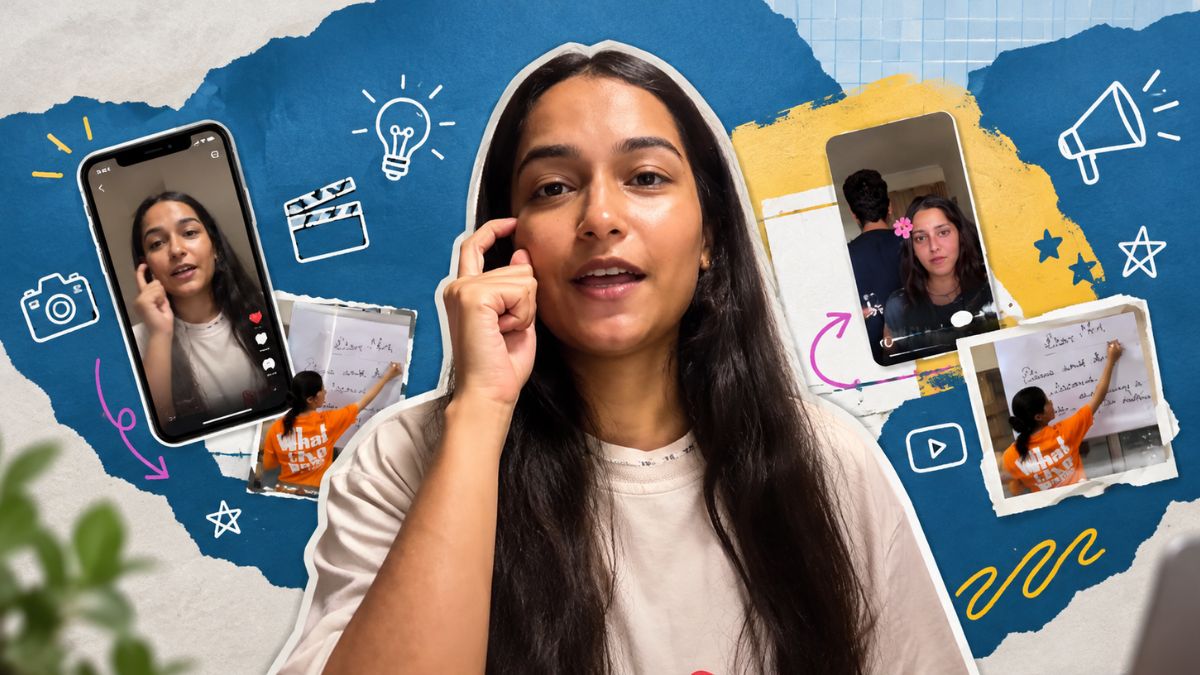
Content creator and social media strategist Twinkle Dhoot has shared 10 Trial Reel formats she believes creators should be watching, covering everything from yapping and storytelling to rankings, tutorials and behind-the-scenes videos. If you’re interested in learning about 10 Trial Reel Formats, her list comes at a time when Instagram is increasingly encouraging creators to experiment with different formats rather than staying locked into one content style.
Instagram introduced Trial Reels to let creators show a Reel to non-followers first and assess metrics such as views, likes, comments and shares before deciding whether to share it with their existing audience. In fact, Instagram said in 2025 that after trying Trial Reels, 40% of creators began posting Reels more often, while 80% of those creators saw increased reach from non-followers. The analysis covered more than 400,000 creators and Instagram noted that performance is not guaranteed. That makes Twinkle’s list less about chasing one viral trend and more about identifying repeatable formats creators can plug different topics into.
Twinkle Dhoot’s 10 Trial Reel Formats
1. Yapping Videos
Twinkle’s first pick is the increasingly popular “yapping” format, with creator Shree Rakheja, aka @shreescrashin, as her example. The appeal is fairly simple: instead of building a heavily edited concept, creators let personality, opinions and conversational delivery carry the Reel. Shree’s recent content has also demonstrated how conversational videos can turn everyday observations into highly discussable social content. Her Reel about a Delhi-NCR food outlet using the term “GLP-1 friendly” for its menu, for instance, was picked up by Hindustan Times after sparking discussion online.
Why it works: The format feels closer to listening to a friend talk than watching a traditional “content piece.” It can also be adapted to commentary, pop culture, lifestyle or niche expertise.
2. Storytelling Videos
For storytelling, Twinkle points to Tarini Thakur (@tarinily), describing the format through warmth, nostalgia and personality. Tarini has built her online identity around storytelling, lifestyle and wellness content, while also creating recurring short-form series. Her content demonstrates an important shift in creator storytelling: the story itself becomes the hook, rather than relying entirely on a trending audio or visual gimmick. Her recent Reels continue to generate significant reach, with third-party tracking showing multiple posts crossing the million-view mark.
The takeaway: Storytelling doesn’t necessarily mean dramatic life events. Everyday experiences, memories, recommendations and personal observations can become content when there is a clear narrative.
3. Ranking Videos
Twinkle’s third pick is ranking content, represented by creator and creator-economy entrepreneur Viraj Sheth. The format works because it gives viewers an immediate structure: something is being compared, ordered or judged. Instead of simply explaining five things, the creator creates a reason to stay until the end, viewers want to know what lands at number one. Viraj’s current Instagram presence also sits heavily within the creator-economy conversation, making ranking and commentary formats particularly suited to his niche.
Why creators can use it: Almost any niche can be ranked; restaurants, creator tools, movies, fashion pieces, editing apps, marketing campaigns or even personal experiences.
4. Green Screen Videos
For green-screen content, Twinkle highlights Andrew and Silvia, calling the format relatively untapped in India. Green screen gives creators a simple way to place themselves alongside screenshots, news stories, posts, websites or visual references while explaining or reacting to them. And this isn’t a completely new Instagram capability. Instagram has supported green-screen and split-screen Remix layouts for years, allowing creators to build commentary around existing content. The format continues to appear in current Reels trend roundups too, including newer variations such as creators using a phone screen as a green-screen backdrop.
The bigger opportunity: The tool isn’t necessarily the trend. The creator’s interpretation of what appears behind them is what makes the format useful.
5. Split-Screen Videos
Twinkle recommends Jhill Mil Dhoot (@jhillmildhoot) for split-screen videos, particularly because she experiments with both vertical and horizontal layouts. Split-screen content is essentially a visual shortcut for showing two pieces of information simultaneously.
That could mean:
- Two people reacting to each other
- Before vs. after
- Expectation vs. reality
- Two locations
- Two sides of a story
- Creator + reference material
Instagram itself has long supported horizontal and vertical split-screen Remix layouts, making this a native visual language of the platform.
Why it matters now: When attention is limited, the second visual layer can add context without forcing the creator to explain everything verbally.
6. Canva Presentation Videos
Twinkle’s pick here is Mohammed Hussain, aka @officiallysane, known for his presentation-style videos where he creates elaborate decks to convince his wife about something. The format turns something that normally belongs in a boardroom or classroom into entertainment. Instead of simply saying “I want to do this”, the creator builds a presentation around it; creating a storyline, visual jokes and a payoff. That fits into a broader creator trend where ordinary formats are being repackaged as entertainment. Hussain has also built his creator identity around humorous personal storytelling, with recent content continuing to turn real-life moments into shareable narratives.
7. Whiteboard Videos
Twinkle also highlights Srishti Nautiyal (@its_srishti_nautiyal) for whiteboard videos. Like presentations, whiteboard content turns explanation into a visual experience. The creator can literally draw the story as it unfolds, making the audience wait for the next part of the visual. This format works particularly well for educational creators, marketers, finance explainers, storytellers and anyone who needs to simplify a complicated idea. And with Reels increasingly functioning as a discovery platform in India, explainers have room to travel beyond an established follower base. Meta’s 2026 India research found that 89% of surveyed Gen Z users engage with Reels daily, while creator engagement on Reels was nearly 60% higher than on other surveyed short-form video platforms.
8. How-To Tutorials
For tutorials, Twinkle points to Steven Wommack, calling him the “king of tutorials.” Tutorial content has one obvious advantage: the viewer knows exactly what they are going to get. Whether it is editing, photography, cooking, beauty, fitness or technology, the content promises an outcome. This also gives tutorial creators a natural reason to save or share a Reel. And Instagram’s current creator ecosystem is increasingly built around discovery, not just follower consumption. Meta’s India data shows Reels functioning as a major destination for creator discovery and information across categories.
9. Reaction + BTS Videos
Twinkle’s ninth pick is Ishani Mitra (@ishanimitraa), who she credits with bringing the reaction-plus-BTS format to India and owning it. This format works because it combines reaction + context. Instead of simply showing a final piece of content, creators reveal what happened around it; the reaction, the process, the moment behind the moment. It also gives the audience two reasons to watch: “What happened?” and “How did this happen?”
10. BTS With The Final Result
Finally, Twinkle highlights AK Photonix (@ak_photonix) for a format built around a very clear payoff: BTS first, final result later. The creator opens with the making of the shot before revealing the polished cinematic result. That structure creates a natural curiosity loop. The viewer sees something being made and has to stay to see what it becomes. It is particularly useful for photographers, filmmakers, designers, makeup artists, artists and other visual creators because the transformation itself becomes the content.









Creator Twinkle Dhoot Shares 10 Trial Reel Formats Creators Should Try

India’s Creator Economy Needs More Than Views And Followers, Says MIB’s Add’l Secy Prabhat

MrBeast To Appear On Shark Tank, With The World’s Biggest Sharks

India Must Move Beyond Being A Content Consumer To Become A World Leader In Content Creation: Gajendra Singh Shekhawat

OpenAI Scraps GPT-6.1 Astra Rollout Over Safety Concerns

World Heart Day 2026: Dr. Tanmay Kulkarni’s Work In Heart Health And TAVI

75-Year-Old Creator Diva Dadi Makes Netflix Debut In Lust Stories 3

Government Sent Nearly 1.95 Lakh Blocking Orders To Social Media Platforms In Five Months

Ria Mehta: How A 22-Year-Old Is Building Nishorama For Gen Z

Tech Burner’s Layers Launches Anarc 2: What’s New In The Rs 6,999 Smartwatch

Food Pharmer’s Cannes Look That Never Walked

Parul Gulati Wears Nish Hair on the Cannes 2025 Red Carpet

Nancy Tyagi’s 700-Hour DIY Gown Turns Heads at Cannes 2025

Navya Nanda’s IIM Ahmedabad Triumph: From Controversy to Campus Joy

Influencer Kareema’s Heartwarming Journey with Suki

Prajakta Koli and Vrishank Khanal’s Wedding

Prajakta Koli’s Haldi and Cocktail Celebrations

Prajakta Koli and Vrishank Khanal’s Pre-Wedding Celebrations

Prajakta Koli x Vrishank Khanal Magical Mehendi

Milind Soman & Ankita’s Maha Kumbh 2025 Experience

Meta One Launches With Paid AI, Creator Tools And New Features Across Instagram, Facebook And WhatsApp

Adam Mosseri Reveals Instagram Trial Reels Rule That Could Limit Your Reach

ScoutOP Reveals ₹30 Lakh Monthly Income

AI Content Creator Platform Creedom Raises ₹4.1 Crore in Seed Funding

Snoop Dogg Has the Job We All Secretly Want: ₹10 Lakh A Month to Eat Ice Cream

R Udhay Is Helping Creators Level Up Their Content With Editing, AI & Instagram Tips

Internet Famous Golden Retriever Tucker Budzyn Diagnosed With Lymphoma

Is Saurav Joshi Really Entering GTA VI? Here’s What We Found

Is Orry Getting Married? Close Friends Story Sparks Questions As His Past Wedding Rumours Resurface
