
Health
How Three Indian Teenagers Created A Tamarind-Based Solution To Fight Microplastics In Water
Three Indian students won The Earth Prize 2026 for developing a low-cost tamarind solution for water cleaning.

How Did Three Indian Teenagers Win Global Recognition?
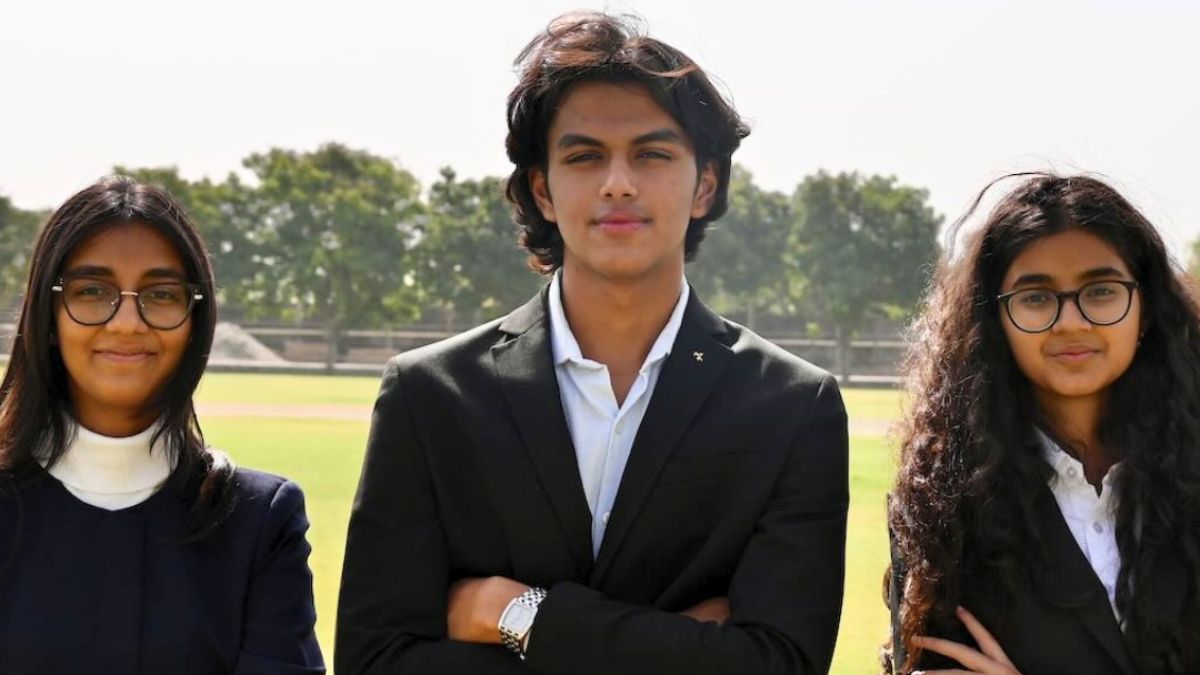
At a time when environmental conversations often feel complicated and overwhelming, three Indian teenagers are proving that meaningful innovation can begin with something extremely simple. Sixteen-year-olds Vivaan Chhawchharia, Ariana Agarwal, and Avyana Mehta have been named the Asia winners of The Earth Prize 2026 for developing “Plas-Stick,” a biodegradable solution designed to help remove microplastics from water using tamarind seed waste. What makes their achievement stand out is not just the science behind the project, but the intention behind it. Instead of building an expensive or highly technical filtration system, the students focused on creating something practical, affordable, and useful for communities with limited resources.
Their story is now gaining attention online because it feels like a hopeful reminder that younger generations are not just talking about environmental problems anymore. They are actively trying to solve them.
What Is Plas-Stick And How Does It Work?
According to the students, Plas-Stick uses tamarind seed waste to create a biodegradable powder. When added to contaminated water, the powder reportedly attracts microplastic particles and combines them into larger clumps. Users can then remove these clumps with a handheld magnet.
The simplicity of the idea is one of the biggest reasons the project has impressed people globally. Unlike industrial filtration systems, Plas-Stick stays low-cost and accessible. It does not require expensive equipment or advanced infrastructure. The students designed it for rural and low-resource communities. They wanted it to work where advanced purification systems are unavailable.
The project also highlights how agricultural waste and locally available materials can potentially become part of environmental innovation.
What Inspired The Students To Build This Solution?
The idea came after the students visited rural communities without advanced filtration systems. Families stored drinking water in large shared containers. During one visit, they saw a child drinking from one container. The moment made them think about invisible plastic contamination in daily life.
That observation became the starting point for the project.
Instead of treating the issue as only a classroom science experiment, the students approached it as a real-world problem affecting ordinary people. Their goal was to create something that could realistically help communities where access to clean drinking water infrastructure remains limited.
That practical and human-centred thinking is one reason the story is connecting strongly with audiences online.
Why Are Microplastics Becoming Such A Serious Concern?
Microplastics are extremely tiny plastic fragments usually measuring less than five millimetres in size. They are formed through the breakdown of larger plastic materials, synthetic clothing fibres, industrial waste, and packaging products.
Over the last few years, researchers have increasingly detected microplastics in drinking water, seafood, human blood, lungs, placentas, and even brain tissue. Scientists are still studying the long-term health impact of these particles, but many experts already consider microplastic pollution one of the biggest emerging environmental concerns globally.
What makes the issue especially worrying is that these particles are often invisible to the naked eye, meaning people may consume them regularly without even realising it. That larger global concern gives projects like Plas-Stick even greater importance.
Did The Students Work With Scientists?
While developing the project, the students also collaborated with experts from the Indian Institute of Technology Guwahati. The collaboration reportedly helped strengthen the scientific development of the solution while giving the team guidance around testing and research processes.
The students have also used the project to spread awareness around water pollution and microplastics. Reports suggest their demonstrations and educational programmes have already reached thousands of students and teachers. That outreach effort has become another important part of their journey because the project is not only about invention, but also about awareness and environmental responsibility.
Also read: This Mother’s Day, Meet Janak Palta: The 78-Year-Old “Mother of Sustainability” Living Without Waste or Electricity Bills.
What Is The Earth Prize?
The Earth Prize is considered one of the world’s largest environmental competitions and idea incubators for teenagers between the ages of 13 and 19.
Founded during the global climate movement period in 2019, the initiative supports youth-led sustainability projects through mentorship, funding opportunities, and educational support.
According to official information, the competition has reached students across more than 169 countries and territories.
As Asia winners, the three Indian students collectively received a regional grant of $12,500 to continue developing their project.
Several viral posts online incorrectly claimed that each student individually received $125,000. However, official information from The Earth Prize clarified that the grant amount was awarded collectively to the team.
Can Plas-Stick Be Used Commercially Right Now?
Not immediately.
Although the project has received international recognition, Plas-Stick is still in the development stage and has not yet undergone large-scale independent scientific validation. Experts would still need to study: long-term effectiveness, water safety standards, scalability, commercial feasibility and regulatory approvals before the solution could be deployed on a wider scale.
Even so, environmental experts and internet users are already viewing the project as a powerful example of how young innovators can contribute meaningful ideas to major global challenges.
Why Is This Story Resonating So Strongly Online?
One reason this story feels important to many people is that it reflects a very different side of internet culture.
At a time when social media often promotes trends, controversies, and short-lived viral moments, stories like this show that young people also care deeply about science, sustainability, public health, and the planet’s future.
The students did not build a project for internet fame or commercial hype. They simply observed a real problem and tried creating a practical solution around it. And perhaps that is why their journey feels so inspiring.
For many online, this is not just a science innovation story anymore. It feels like a hopeful sign that future generations are already trying to build smarter, cleaner, and more responsible solutions for the world ahead.

Niharika Tiwari Takes Charge in Rise & Fall 2, Eliminates Shehzad Poonawalla and Irina Rudakova

Sania Mistry Deepfake Case: Maharashtra Cyber Acts Against AI-Manipulated Images

YouTube’s Gunjan Soni Says India’s Creator Economy Is Evolving Into a Global Media Powerhouse

Navratri Outfit Inspiration: Creators Who Understood the Festive Assignment

Rowhi Rai Buys Her Own House: How Northeast India’s Creators Are Building Their Own Success Stories

Ashish Chanchlani’s Perfume Business: Can Creator Brands Smell Like Success?

Lilly Singh Is Back to Sketch Comedy, and Her Characters Have Become Creators of Their Own

Anubhav Singh Bassi’s ‘Cheating’ Crossed 100 Million YouTube Views

Meet Saurav Haldar, the Indian Cricket Creator Featured at the ICC Men’s World Cup 2027 Schedule Launch

15–25% of Brand Marketing Budgets Are Moving Towards the Creator Economy

Food Pharmer’s Cannes Look That Never Walked

Parul Gulati Wears Nish Hair on the Cannes 2025 Red Carpet

Nancy Tyagi’s 700-Hour DIY Gown Turns Heads at Cannes 2025

Navya Nanda’s IIM Ahmedabad Triumph: From Controversy to Campus Joy

Influencer Kareema’s Heartwarming Journey with Suki

Prajakta Koli and Vrishank Khanal’s Wedding

Prajakta Koli’s Haldi and Cocktail Celebrations

Prajakta Koli and Vrishank Khanal’s Pre-Wedding Celebrations

Prajakta Koli x Vrishank Khanal Magical Mehendi

Milind Soman & Ankita’s Maha Kumbh 2025 Experience

Meta One Launches With Paid AI, Creator Tools And New Features Across Instagram, Facebook And WhatsApp

YouTube Shorts Changes Repost Rules: What Creators Need To Know About Original Content

YouTube Is Letting Creators See What Works for Their Competitors

Adam Mosseri Reveals Instagram Trial Reels Rule That Could Limit Your Reach

What Is Meta’s New “Muse” AI And Why Are Users Seeing It?

Roopali Agrawal aka Rockonroops Turning Family Life Into Conversations On Fashion, Freedom And Safety

Technical Guruji’s iPhone 18 Pro Max Giveaway: Nearly 100 Phones And A Big Question About The Cost

Eloelo Launches Dolphin AI: Will AI Video Tools Change The Future Of Creators And Filmmakers?

Is Orry Getting Married? Close Friends Story Sparks Questions As His Past Wedding Rumours Resurface
