
News
Doctors Can No Longer Use Patient Reviews and AI Ads to Attract Patients
NMC's new rules restrict patient testimonials, fake reviews and misleading AI promotions while allowing factual health education.

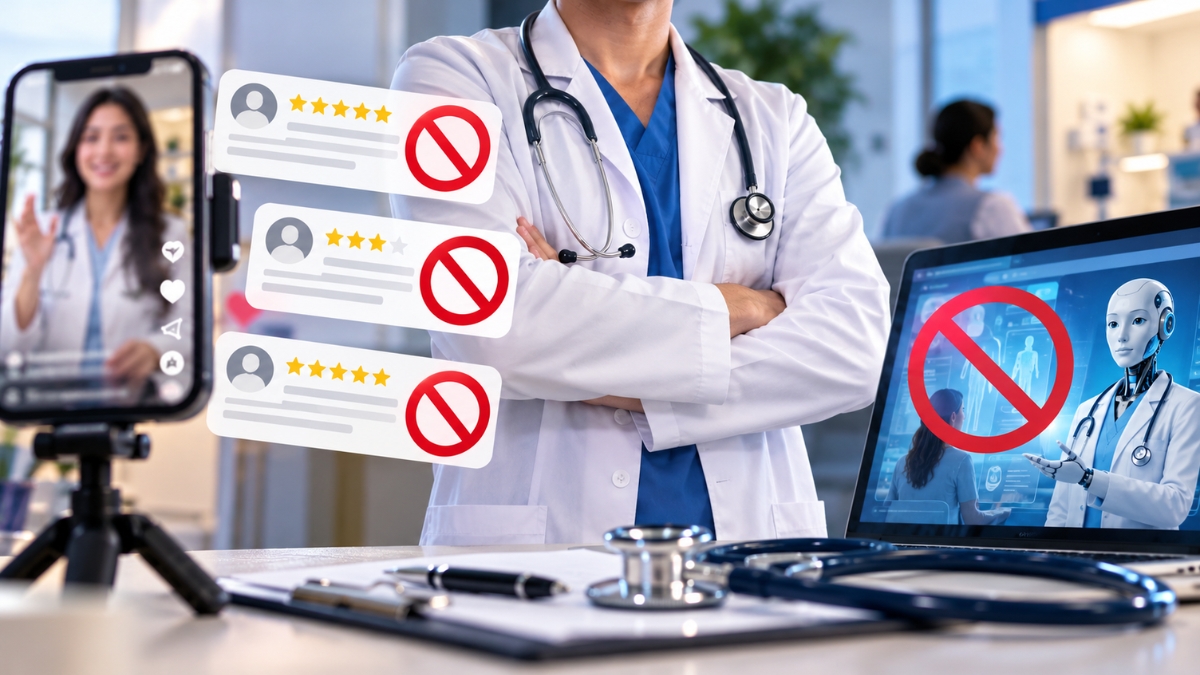
Doctors and hospitals in India can no longer use patient testimonials, fake reviews or misleading promotional claims to attract patients. The National Medical Commission (NMC) introduced new guidelines on 6 October 2026, bringing social media, influencer campaigns and AI-assisted advertising under a clearer ethical framework. The Guidelines on Ethical Advertising and Public Communication by Hospitals/Medical Institutions and Registered Medical Practitioners took effect immediately. They aim to distinguish legitimate health education from commercial promotion that could mislead patients. The rules come as doctors and hospitals increasingly use Instagram, YouTube, websites and other digital platforms to reach prospective patients. They also address practices such as paid reviews, exaggerated success claims and promotional patient stories.
Patient Testimonials and Fake Reviews Are Prohibited
One of the most significant provisions concerns patient feedback used for professional promotion. Doctors and hospitals cannot solicit or publish patient testimonials, endorsements or recommendations to market their services.
The guidelines also prohibit buying or manipulating ratings and reviews. Paid or fake reviews cannot be used to create an inflated impression of a doctor’s expertise or a hospital’s quality.
This affects a common digital marketing practice: displaying patient praise, recovery stories or five-star ratings on clinic websites and social media pages to attract new patients.
Patient consent does not automatically make a prohibited promotional practice acceptable. The guidelines also restrict the use of patient photographs, videos, clinical images and treatment stories for advertising.
The objective is to prevent healthcare marketing from relying on emotional appeals or selective success stories that could influence patients’ decisions without providing a balanced picture.
AI-Generated Medical Promotions Come Under Scrutiny
The NMC guidelines cover AI-generated and AI-assisted promotional communication. This matters as healthcare marketing increasingly uses synthetic videos, digital avatars, AI-generated images and scripts to promote doctors, hospitals and treatments.
AI is not prohibited for every medical communication. The concern is its use in advertising that misleads patients, fabricates testimonials or presents unverified treatment outcomes as established facts.
Doctors and hospitals also cannot make unsupported claims that their services are superior to others. Promises of guaranteed outcomes and promotions that encourage unnecessary investigations or procedures are prohibited.
For healthcare providers, using an agency or influencer does not automatically remove responsibility for promotional content they commission, authorise or knowingly permit.
Can Doctors Still Use Instagram and YouTube?
Yes. The guidelines do not impose a blanket ban on doctors using social media.
Doctors can continue sharing factual health information, public-health messages, academic discussions and educational content. The key distinction is whether the communication informs the public or becomes a disguised advertisement designed to solicit patients.
For example, a doctor explaining the symptoms of diabetes or describing general preventive measures can serve a public education purpose. A post using fabricated patient stories or guaranteed-cure claims to persuade viewers to book an appointment would raise different concerns.
Doctors publishing content through electronic media must also disclose their name, qualifications, registration status and relevant medical register number. Hospitals must provide the required details of doctors associated with their posts.
What Does This Mean for Influencers and Healthcare Brands?
The new rules have implications for influencer partnerships and digital marketing agencies working with healthcare providers.
An influencer cannot make misleading medical claims simply because a hospital or doctor has commissioned the content. Likewise, a healthcare provider cannot assume that outsourcing a campaign removes its ethical responsibilities.
Agencies and creators working on medical promotions will need to pay closer attention to the claims they publish, the patient material they use and the professional details they display.
The precise responsibilities of each party depend on the nature of the content and the applicable provisions. The guidelines do not mean that every health-related collaboration or educational partnership is automatically prohibited.
What Happens If the Rules Are Violated?
The guidelines establish expectations for ethical advertising and public communication by registered medical practitioners and healthcare institutions. Violations may lead to corrective or disciplinary action under the applicable framework.
Doctors and hospitals should review their websites, social media posts, testimonials, patient images, advertising contracts and influencer campaigns to identify material that may conflict with the new rules.
The wider message is clear: healthcare communication must remain factual, verifiable and professional. Patients should be able to evaluate medical services without being influenced by fabricated reviews, exaggerated promises or promotional stories presented as proof of treatment success.
The NMC’s approach does not prevent doctors from educating the public online. It seeks to draw a firmer line between responsible health information and marketing that could exploit patients’ trust or vulnerability.

Indian Creator Maya Gupta Meets MrBeast After 365-Day Challenge, Receives $10,000 for Charity

Doctors Can No Longer Use Patient Reviews and AI Ads to Attract Patients

More Than 5 Lakh Followers? SEBI’s New Rules Could Classify Influencers as Celebrities

YouTube Is Letting Creators See What Works for Their Competitors

How an Online Prank Forced a Madurai Influencer to Leave Home

Call-Out Review: When Dance Meets Daily Soap Drama

Top Female Mental Health Creators in India To Follow On World Mental Health Day

From Air Force Officer to Travel Creator: Amit Mehta’s Journey of Exploring India

Exclusive: YouTube Money Is Not Enough: Indrajit Lahiri on 10 Years of Foodka and Building a Business Beyond Content

Bhuvan Bam Explores Dubai’s Beautyworld Event as SARKAR Looks Beyond the Studio

Food Pharmer’s Cannes Look That Never Walked

Parul Gulati Wears Nish Hair on the Cannes 2025 Red Carpet

Nancy Tyagi’s 700-Hour DIY Gown Turns Heads at Cannes 2025

Navya Nanda’s IIM Ahmedabad Triumph: From Controversy to Campus Joy

Influencer Kareema’s Heartwarming Journey with Suki

Prajakta Koli and Vrishank Khanal’s Wedding

Prajakta Koli’s Haldi and Cocktail Celebrations

Prajakta Koli and Vrishank Khanal’s Pre-Wedding Celebrations

Prajakta Koli x Vrishank Khanal Magical Mehendi

Milind Soman & Ankita’s Maha Kumbh 2025 Experience

Meta One Launches With Paid AI, Creator Tools And New Features Across Instagram, Facebook And WhatsApp

YouTube Shorts Changes Repost Rules: What Creators Need To Know About Original Content

Adam Mosseri Reveals Instagram Trial Reels Rule That Could Limit Your Reach

What Is Meta’s New “Muse” AI And Why Are Users Seeing It?

Roopali Agrawal aka Rockonroops Turning Family Life Into Conversations On Fashion, Freedom And Safety

Technical Guruji’s iPhone 18 Pro Max Giveaway: Nearly 100 Phones And A Big Question About The Cost

Eloelo Launches Dolphin AI: Will AI Video Tools Change The Future Of Creators And Filmmakers?

Is Orry Getting Married? Close Friends Story Sparks Questions As His Past Wedding Rumours Resurface

Why Is MrBeast Back in India? Is His India Connect Getting Bigger in 2026?
