
Tech
Meta’s $17.1 Billion Settlement: Could India Follow the US Playbook on Social Media?
Meta's US child-safety settlement is raising questions in India about screen limits, age checks, parental controls and platform accountability.

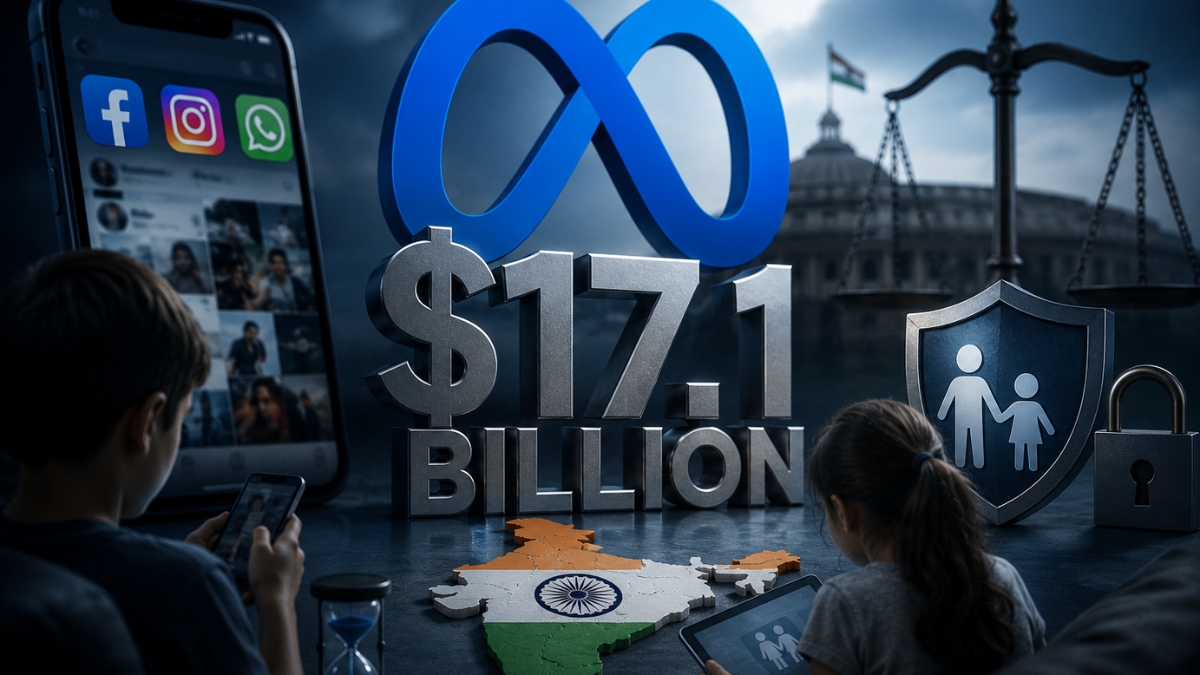
Meta’s massive US settlement over children’s social media use is attracting attention in India. The deal could influence how Indian policymakers approach social media access for minors. It also raises a larger question. Should platforms carry more responsibility for children’s online habits? The settlement follows allegations that Meta designed Facebook and Instagram to encourage compulsive use among children and teenagers. Meta has not admitted wrongdoing. However, the agreement could force significant changes to how minors use its platforms.
What Has Meta Agreed To?
Under the agreement, users below 18 would face a default two-hour daily limit across Instagram and Facebook. Parents could override that limit. Meta would also block access between midnight and 6 am by default. Notifications would remain muted during school hours. The agreement also includes stronger age-assurance systems. Other measures would restrict certain features for minors. These include like counts and filters linked to cosmetic procedures. An independent auditor would oversee compliance. The significance goes beyond the financial settlement. The agreement puts product design itself under greater scrutiny.
Why India Is Watching Closely
India is already considering stronger protections for children online.
Government discussions have reportedly explored different rules for children aged 8-12, 12-16 and 16-18. That approach would recognise that an eight-year-old and a 17-year-old have different levels of maturity.
Possible measures include daily usage windows, night-time restrictions and parental consent. The US settlement gives Indian policymakers something more concrete to study. It shows how such safeguards could work through enforceable requirements rather than voluntary platform controls.
The Bigger Question: Who Is Responsible?
For years, responsibility for children’s social media use has often rested with parents and users. The settlement challenges that approach. If platforms design products that encourage prolonged engagement, regulators can ask whether companies should also carry responsibility.
This could become particularly important as recommendation algorithms compete aggressively for attention. The debate is no longer only about what children watch. It is also about how platforms are designed to keep them watching.
The Arturo Béjar Factor
Former Facebook engineering director and Instagram consultant Arturo Béjar became an important witness in the case. Béjar worked on safety and wellbeing features. He told the court that meaningful safety changes were difficult without strong support from senior leadership. He also argued that some existing tools were ineffective. Features such as “Take a Break” and “Quiet Mode” could simply be ignored by users. His testimony brought another issue into focus. Are safety features enough if the underlying product continues encouraging engagement?
Why An Old US Law Matters
Interestingly, part of the US case relied on COPPA. The Children’s Online Privacy Protection Act became law in 1998. That was before Facebook, Instagram, YouTube, Snapchat and TikTok existed. The law gave regulators a clearer legal route around children’s personal information.
This matters because proving that social media directly causes specific mental-health outcomes can involve difficult questions of causation.
Privacy violations can offer a more straightforward legal question.
Did the platform collect children’s information without meeting legally required parental-consent obligations? That distinction could also matter when other countries develop their own regulations.
India’s Potential Approach
India appears to be considering a graded approach rather than simply banning social media for everyone below 18. The discussions reportedly include different restrictions for different age groups. Younger children could face tighter controls. Older teenagers could receive greater autonomy, combined with safeguards. This model could potentially balance child protection with teenagers’ increasing digital independence. But implementation remains the difficult part. Age verification needs to work without creating excessive data collection. Parental controls need to be practical. Time limits need meaningful enforcement and restrictions need to cover the platforms children actually use.
Could One Meta Settlement Change the Industry?
Meta’s settlement could also have consequences beyond Meta. Part of the agreement reportedly depends on comparable safeguards being adopted by other major platforms. Meta has already urged competitors such as TikTok and YouTube to follow similar standards. That argument carries particular relevance in India. Restricting Instagram alone may not achieve much if teenagers simply move to another platform. A meaningful framework would therefore need to consider the wider social media ecosystem.
The Real Test Is Accountability
The most important takeaway from the settlement may not be the $17.1 billion figure. It is the shift towards asking platforms to change how their products work. India now has an opportunity to study that approach before finalising its own framework. The challenge will be finding the balance. Children need protection from potentially harmful digital environments. Teenagers also need access to information, communities and online opportunities. The question for Indian policymakers is therefore not simply whether children should use social media.
It is how much responsibility platforms should carry for the way children use it.



‘I Couldn’t Express Myself Properly’: Aman Gandhi Opens Up About His Bigg Boss 20 Eviction

Bharti Singh and Haarsh Limbachiyaa to Launch Their Own Micro-Drama App

ShareChat and Moj Launch ‘Saas, Bahu aur Magic’ Micro-Drama With Glow & Lovely

Sanika Bhadane Gives Farah Khan’s ‘Dhoom Taana’ a Gen-Z Twist and the OG Loves It!

Who Are Priya Sharma and Sid Madiwale? The Indian-Australian Creators Who Joined MrBeast in Ghana

Hungry Mahi Teases New Business Venture After Winning Comedy Cooks

Mayuresh Gujar Hits 500K Followers After Six Years of Creating Content

Ishank Gupta, Sanya Rohillaa and Ahsan Vazir Win Big at Instagram’s Edits Film Festival

Prajakta Koli Becomes the Face of Rubans Accessories

“5 Years of Work Stolen”: Finance Influencer V Harish’s Final Video Before His Death

Food Pharmer’s Cannes Look That Never Walked

Parul Gulati Wears Nish Hair on the Cannes 2025 Red Carpet

Nancy Tyagi’s 700-Hour DIY Gown Turns Heads at Cannes 2025

Navya Nanda’s IIM Ahmedabad Triumph: From Controversy to Campus Joy

Influencer Kareema’s Heartwarming Journey with Suki

Prajakta Koli and Vrishank Khanal’s Wedding

Prajakta Koli’s Haldi and Cocktail Celebrations

Prajakta Koli and Vrishank Khanal’s Pre-Wedding Celebrations

Prajakta Koli x Vrishank Khanal Magical Mehendi

Milind Soman & Ankita’s Maha Kumbh 2025 Experience

YouTube Is Letting Creators See What Works for Their Competitors

YouTube Shorts Changes Repost Rules: What Creators Need To Know About Original Content

Adam Mosseri Reveals Instagram Trial Reels Rule That Could Limit Your Reach

What Is Meta’s New “Muse” AI And Why Are Users Seeing It?

Roopali Agrawal aka Rockonroops Turning Family Life Into Conversations On Fashion, Freedom And Safety

Eloelo Launches Dolphin AI: Will AI Video Tools Change The Future Of Creators And Filmmakers?

Is Orry Getting Married? Close Friends Story Sparks Questions As His Past Wedding Rumours Resurface

Why Is MrBeast Back in India? Is His India Connect Getting Bigger in 2026?

Creator Twinkle Dhoot Shares 10 Trial Reel Formats Creators Should Try
