
Lifestyle
Top Female Mental Health Creators in India To Follow On World Mental Health Day
Meet five Indian mental health creators discussing therapy, relationships, parenting, trauma and emotional well-being.

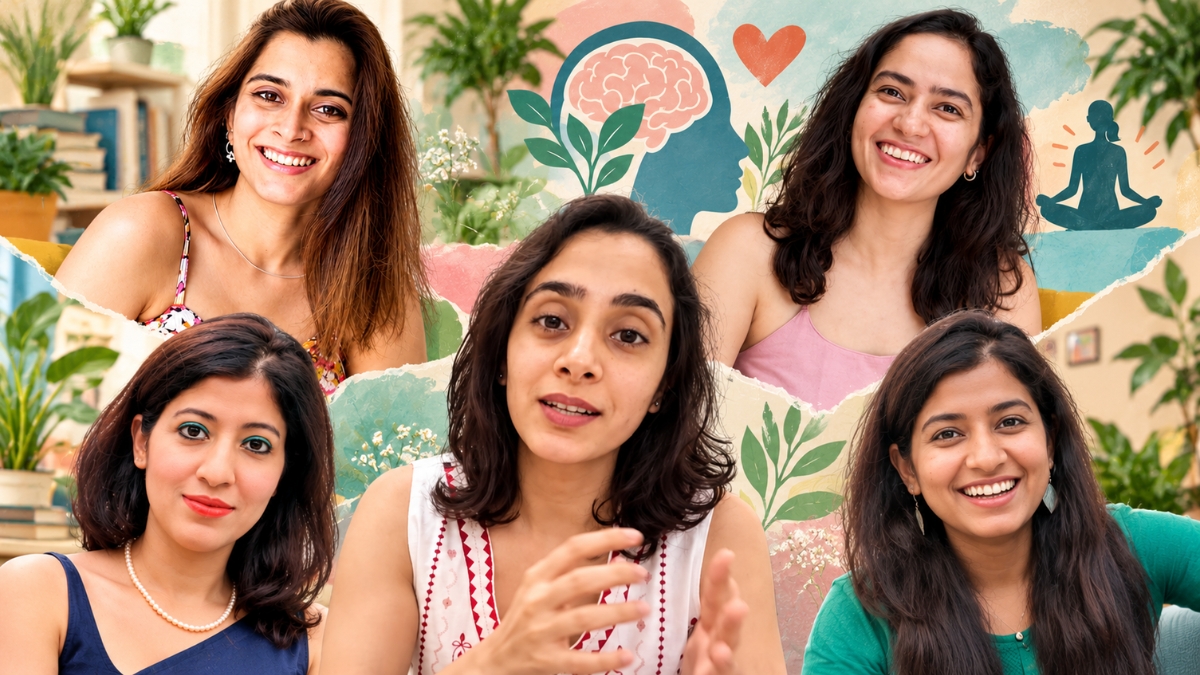
Mental health conversations are becoming more visible in India, with social media offering people new ways to understand emotional well-being. Psychologists, therapists and mental health educators use digital platforms to explain complex subjects in accessible language. However, mental health content is not a substitute for professional assessment or therapy. It is important to consider a creator’s qualifications, the evidence behind their advice and whether they encourage people to seek professional support when needed. Here are five mental health professionals and creators to know, based on their areas of work, public profiles and online content.
1. Divija Bhasin (@thefriendlycouch): Making Therapy More Relatable
Instagram: @thefriendlycouch | Website: The Friendly Couch
Image source: The Friendly Couch’s official website
Divija Bhasin is a counselling psychologist and the founder of The Friendly Couch, a mental health platform focused on awareness and access to professional support. Her academic background includes a BA in Psychology Honours from Ambedkar University Delhi, an MSc in Applied Clinical Psychology from the University of Bath in the UK, and an MA in Clinical Psychology from Amity University, Noida.
Bhasin has spoken about how witnessing people close to her struggle with mental health influenced her interest in psychology. She began creating short videos to reach a wider audience, discussing subjects such as culture, parenting, gender and education through a mental health lens.
Her content aims to make psychological concepts easier to understand and challenge the stigma surrounding therapy. The Friendly Couch has also developed a network of therapists to connect people with professional support. Its stated approach recognises that different people have different needs and may require different forms of therapy.
What to expect: Accessible mental health explainers, discussions about social attitudes and guidance on finding professional help.
2. Dr Meghna Singhal (@thetherapistmommy): Psychology Meets Parenting
Instagram: @thetherapistmommy | Website: The Therapist Mommy
Dr Meghna Singhal is a clinical psychologist and trauma-informed psychotherapist whose work focuses on children, adolescents and parenting. She holds a doctorate in clinical psychology from NIMHANS and completed postdoctoral work in parenting at the University of Queensland, Australia.
Her content explores the emotional challenges of raising children, managing behaviour and building healthier relationships within families. She also addresses the pressures parents face while balancing their children’s needs with their own emotional well-being.
Singhal’s work extends beyond social media. She has developed parenting programmes and training for professionals, conducted workshops and written research-based articles on parenting. Her professional background informs her emphasis on emotional intelligence, connection and evidence-based approaches rather than relying solely on punishment to manage children’s behaviour.
What to expect: Parenting advice, child and adolescent mental health, emotional regulation and strategies for building stronger parent-child relationships.
3. Urveez Kakalia (@imperfect_psychotherapy): Exploring Anxiety, Relationships and More
Instagram: @imperfect_psychotherapy | Website: ImPerfect
Urveez Kakalia is a counselling psychologist and psychotherapist who founded ImPerfect, a mental health organisation focused on reducing the stigma associated with seeking counselling. Her professional profile lists a BA in Psychology and an MA in Counselling Psychology from SNDT Women’s University, Mumbai.
Her work covers a broad range of concerns, including anxiety, depression, stress, relationship difficulties, anger and emotional challenges. ImPerfect also provides information about therapy and mental health support for concerns involving sexuality, self-esteem, family relationships and personal development.
Beyond addressing common mental health questions, Kakalia’s content includes topics such as insomnia, art therapy and LGBTQIA+ experiences. She also shares resources for people interested in psychology and therapeutic practice. Her organisation uses different therapeutic approaches depending on the needs of the individual.
What to expect: Discussions about anxiety, work stress, relationships, sexuality, emotional well-being and psychotherapy.
4. Anitha Dubal (@themindbodycounselling): Understanding the Connection Between Mind and Body
Instagram: @themindbodycounselling| Website: The Mind Body Counselling Center
Anitha Dubal is a counselling psychologist and therapist whose work focuses on trauma, relationships and the connection between emotional experiences and the body. Her practice, formerly known as The Mind Body Foundation – Counselling Center, was established in 2019. It adopted the name The Mind Body Counselling Center in October 2025.
Dubal takes a trauma-informed approach and works with concerns such as anxiety, depression, overthinking, low self-esteem, relationship difficulties and complex post-traumatic stress disorder (CPTSD).
Her work includes somatic therapy, which explores bodily sensations and nervous system responses alongside emotional experiences. She also draws on attachment theory and relational approaches to examine how earlier relationships can influence a person’s relationship with themselves and others.
This approach distinguishes her content from general motivational advice. It encourages people to consider how their experiences, emotions and relationships may be connected, while exploring these concerns within a therapeutic setting.
What to expect: Trauma awareness, emotional regulation, relationship patterns, self-esteem and the mind-body connection.
5. Saumya Garg (@saumyagarg): Making Mental Health Conversations More Accessible
Instagram: @saumyagarg | YouTube: Inside Out With Saumya | Podcast: Listen on Spotify
Saumya Garg is a psychologist and psychotherapist associated with Inside Out Mental Wellbeing. Her professional profiles list a background in psychology at the Tata Institute of Social Sciences and training in areas including cognitive behavioural therapy, queer-affirmative therapy and rational emotive behaviour therapy.
Garg’s work spans therapy, podcasts and online educational content. Her Inside Out With Saumya podcast brings together conversations on mental health and related subjects, including yoga, music and nutrition. The format allows her to explore emotional well-being through different perspectives rather than limiting discussions to conventional psychology topics.
Her wider work also includes conversations around body image and the experiences of people navigating self-esteem and social expectations. Her public profiles feature community initiatives and group spaces focused on body image, alongside opportunities to access therapy.
Her approach highlights the importance of making room for honest conversations about experiences people may find difficult to discuss openly.
What to expect: Podcast conversations, emotional well-being, body image, relationships and accessible discussions about mental health.
Why These Voices Matter
These five creators approach mental health from different angles. Divija Bhasin focuses on making therapy more approachable, while Dr Meghna Singhal centres much of her work on parenting and child development. Urveez Kakalia covers a broad range of psychological concerns, Anitha Dubal explores trauma and the mind-body connection, and Saumya Garg uses podcasts and community initiatives to encourage wider conversations.
Their work can help audiences discover relevant information, recognise concerns and learn more about professional support. However, social media content should not be treated as a diagnosis or a replacement for individualised care.
The larger need is for mental health conversations that are accessible, responsible and grounded in professional knowledge. Following qualified professionals can be a useful starting point, but anyone experiencing persistent distress should consider seeking help from an appropriate mental health professional.

Top Female Mental Health Creators in India To Follow On World Mental Health Day

From Air Force Officer to Travel Creator: Amit Mehta’s Journey of Exploring India

Exclusive: YouTube Money Is Not Enough: Indrajit Lahiri on 10 Years of Foodka and Building a Business Beyond Content

Bhuvan Bam Explores Dubai’s Beautyworld Event as SARKAR Looks Beyond the Studio

Eloelo Launches Dolphin AI: Will AI Video Tools Change The Future Of Creators And Filmmakers?

Surat Influencer Simran Patel Arrested Over Gandhi Reel: What We Know About Her Content

Why CRED Cast Rakhi Sawant To Explain Loan Stacking: Any Marketing Strategy?

Sufi Motiwala Turns 23, Celebrates Birthday After Recalling Near-Fatal Sea-Link Accident

OpenAI Releases 722 Maths Papers: Could AI Be Closing In On Longstanding Mathematical Mysteries?

India’s Internet Is 10 Times Faster Than In 2022. What Does That Mean For Everyday Life?

Food Pharmer’s Cannes Look That Never Walked

Parul Gulati Wears Nish Hair on the Cannes 2025 Red Carpet

Nancy Tyagi’s 700-Hour DIY Gown Turns Heads at Cannes 2025

Navya Nanda’s IIM Ahmedabad Triumph: From Controversy to Campus Joy

Influencer Kareema’s Heartwarming Journey with Suki

Prajakta Koli and Vrishank Khanal’s Wedding

Prajakta Koli’s Haldi and Cocktail Celebrations

Prajakta Koli and Vrishank Khanal’s Pre-Wedding Celebrations

Prajakta Koli x Vrishank Khanal Magical Mehendi

Milind Soman & Ankita’s Maha Kumbh 2025 Experience

Meta One Launches With Paid AI, Creator Tools And New Features Across Instagram, Facebook And WhatsApp

YouTube Shorts Changes Repost Rules: What Creators Need To Know About Original Content

Adam Mosseri Reveals Instagram Trial Reels Rule That Could Limit Your Reach

Roopali Agrawal aka Rockonroops Turning Family Life Into Conversations On Fashion, Freedom And Safety

What Is Meta’s New “Muse” AI And Why Are Users Seeing It?

Technical Guruji’s iPhone 18 Pro Max Giveaway: Nearly 100 Phones And A Big Question About The Cost

Is Orry Getting Married? Close Friends Story Sparks Questions As His Past Wedding Rumours Resurface

The Traitors 2 Reunion Was Full Of Kalesh, Confrontations And Long-Pending Answers

Why Is MrBeast Back in India? Is His India Connect Getting Bigger in 2026?
