
Fashion
National Handloom Day 2026: How India’s Oldest Creators Are Finding New Audiences
From rural looms to global fashion platforms, India's 35 lakh handloom workers are blending heritage with innovation.

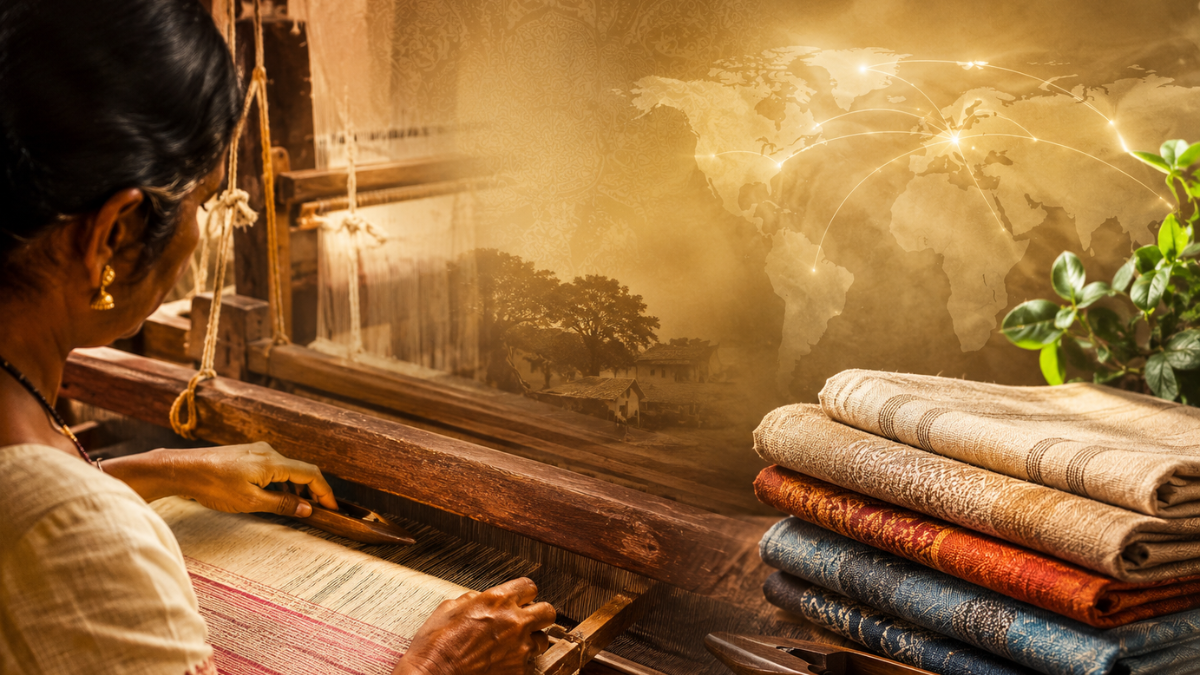
India’s 35.22 lakh handloom workers, most of them women, are proving that tradition and the creator economy can grow together through design, digital platforms and global markets. Every year on 7 August, India celebrates National Handloom Day, honouring one of the country’s oldest creative communities. The day commemorates the launch of the Swadeshi Movement in 1905 while recognising the contribution of millions of weavers who continue to preserve India’s textile heritage. But in 2026, the story goes far beyond tradition.
India’s handloom sector is quietly undergoing one of its biggest transformations. Designers, digital platforms, government initiatives and global buyers are helping centuries-old weaving traditions reach audiences that once seemed impossible. For creators, entrepreneurs and storytellers, this evolution offers an important lesson: heritage can become modern without losing its identity.
India’s Largest Creative Community Isn’t on Social Media
When people think of creators today, they often picture YouTubers, Instagram influencers or filmmakers.
Yet one of India’s biggest creator communities has existed for centuries.
According to the Fourth All India Handloom Census, India has 35.22 lakh handloom weavers and allied workers, spread across 31.45 lakh households. Nearly 28.20 lakh handlooms operate across the country, with almost 90% located in rural India.
Perhaps the most remarkable statistic is this:
More than 72% of India’s handloom workforce consists of women, making handloom one of the country’s largest women-led creative industries.
Tradition Is Becoming a Modern Brand
For years, handloom struggled against mass-produced textiles and changing consumer preferences.
Today, that narrative is changing. Instead of remaining confined to local markets, Indian handlooms are appearing at fashion weeks, beauty pageants, cinema showcases and design exhibitions.

Collections like Vishwa Sutra, unveiled at the 61st Femina Miss India, reimagined 30 Indian handloom traditions through international design inspirations. At IFFI Goa, handloom sarees became part of a cinematic runway celebrating Indian cinema across generations. Meanwhile, initiatives like Breathing Threads showcased traditional weaves through contemporary fashion. Rather than replacing heritage, designers are expanding where these textiles belong.
Digital Platforms Are Giving Weavers New Markets
Technology has become one of the biggest growth drivers for India’s weaving community. Government-backed digital platforms now allow verified artisans to sell directly to buyers without depending entirely on traditional intermediaries. Around 1.50 lakh weavers and handloom entities have joined the Government e-Marketplace (GeM), while the Indiahandmade platform onboarded 4,186 weavers and artisans between 2023-24 and June 2026. Authenticity has also become a major focus. More than 29,400 Handloom Mark registrations have been issued, while the India Handloom Brand now covers 184 product categories, assuring buyers of quality, authenticity and environmentally responsible production.
Government Support Is Becoming More Targeted
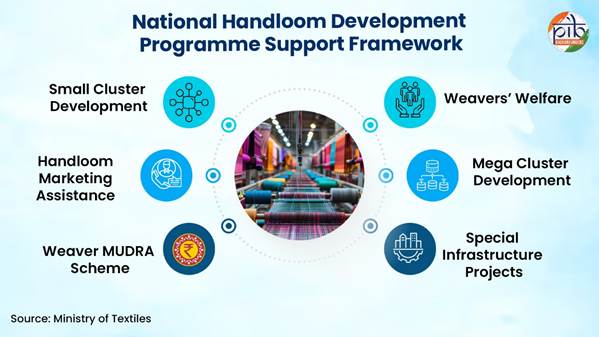
Behind the scenes, policy support has expanded significantly. The National Handloom Development Programme (NHDP) continues to fund better infrastructure, design support, technology upgrades and marketing initiatives for weaving clusters across India. Since 2021, 357 clusters have been sanctioned under the Small Cluster Development Programme.
The results are measurable. Workshed improvements increased average daily production by 53% while raising average daily earnings by 42%. Electronic jacquards improved productivity for 96% of beneficiaries, with monthly incomes rising from ₹9,600 to ₹15,000 on average.
Access to finance has also improved through concessional loans, welfare schemes and scholarships for weavers’ children. Between 2021 and June 2026, more than 40,000 loans worth over ₹280 crore were sanctioned under the Weaver MUDRA Scheme.
Exports Continue to Grow
Indian handlooms are no longer appealing only to domestic consumers.
During 2025-26, handloom exports reached approximately ₹1,330.96 crore, with major markets including the United States, UAE, France, the United Kingdom and Spain.
This growing international demand reflects changing consumer preferences towards sustainable, handcrafted and culturally rooted products.
The Creator Economy Has Room for Heritage
The rise of creators has often been associated with cameras, algorithms and viral content. National Handloom Day reminds us that creativity existed long before social media. Today’s digital platforms are not replacing traditional craftsmanship. Instead, they are helping it find new audiences. Whether through Instagram storytelling, designer collaborations, e-commerce platforms or global fashion showcases, India’s weaving traditions are entering conversations that younger generations increasingly value.
A Story Still Being Woven
National Handloom Day is more than a celebration of textiles. It recognises millions of artisans who continue to preserve regional identities while adapting to modern markets. India’s oldest creators are proving that heritage does not need to stay in museums. It can evolve, travel the world and inspire new generations without losing the stories woven into every thread.




MrBeast Unveils Nearly $10 Million Ghana Village To Help Children Affected By Child Labour

Meta Launches Edits Film Festival to Spotlight India’s Emerging Creators

AnyMind Group Launches AnyCreator Stream In India To Help Creators Grow And Monetise Live Streaming Audiences

Samay Raina, Medha Shankr React to December Wedding Rumours With Hilarious Replies

Meta One Launches With Paid AI, Creator Tools And New Features Across Instagram, Facebook And WhatsApp

Khushi Jain And Rohan Sharma Share What They Wish They Knew Before Becoming Creators

Siddhesh Lokare Takes His Social-Impact Stories To The Stage With Musical Show ‘APAAR’

Meet Pragya Tewari, The Creator Opening Up About The Struggles Behind Content Creation

MrBeast Says His Next YouTube Video Cost $10 Million And Took More Than 1,000 Hours

Innovative Nani: Meet the 70-Year-Old Tech Creator Making Gadgets Fun for Gen Z

Food Pharmer’s Cannes Look That Never Walked

Parul Gulati Wears Nish Hair on the Cannes 2025 Red Carpet

Nancy Tyagi’s 700-Hour DIY Gown Turns Heads at Cannes 2025

Navya Nanda’s IIM Ahmedabad Triumph: From Controversy to Campus Joy

Influencer Kareema’s Heartwarming Journey with Suki

Prajakta Koli and Vrishank Khanal’s Wedding

Prajakta Koli’s Haldi and Cocktail Celebrations

Prajakta Koli and Vrishank Khanal’s Pre-Wedding Celebrations

Prajakta Koli x Vrishank Khanal Magical Mehendi

Milind Soman & Ankita’s Maha Kumbh 2025 Experience
Meta One Launches With Paid AI, Creator Tools And New Features Across Instagram, Facebook And WhatsApp

Could Bilibili Be the Next Creator Opportunity for Indians?

China’s Bilibili Goes Global, Taking Aim at YouTube and Gen Z

A YouTuber Begged For A Day And Earned ₹4000. Here’s What Happened

AI Content Creator Platform Creedom Raises ₹4.1 Crore in Seed Funding

R Udhay Is Helping Creators Level Up Their Content With Editing, AI & Instagram Tips

Poonam Singh Is Turning Everyday Gen-Z Chaos Into Relatable Content

ScoutOP Reveals ₹30 Lakh Monthly Income

Internet Famous Golden Retriever Tucker Budzyn Diagnosed With Lymphoma
