
Brand Studio
Why Indrajit Lahiri’s Foodka Conversation Is About Much More Than Bengali Food
From food and culture to career pivots, partnerships, business and identity, Indrajit Lahiri’s Foodka's journey goes beyond food!!

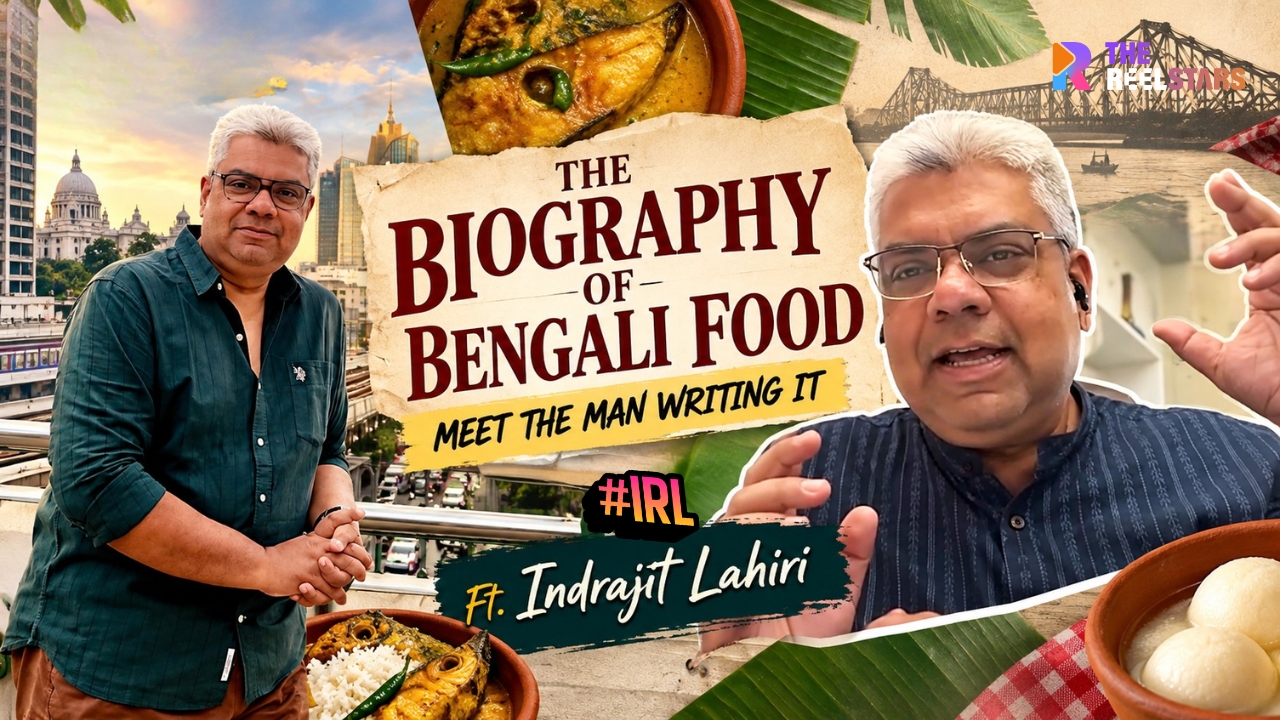
Food can tell you where a person comes from. But, as Indrajit Lahiri explains in his exclusive conversation with IRL by The Reelstars, it can also tell you how people live, what they value, how communities evolve and how stories survive across generations. Best known as the founder, creator and host of Foodka, Lahiri has spent years documenting food through the people and stories behind it. But his conversation with The Reelstars is not simply another interview about Bengali cuisine. It moves between food, entrepreneurship, content creation, family, partnerships, identity, business and the realities of changing direction and that is what makes this conversation relevant even if you have never eaten a Bengali meal.
It starts with a career that looked nothing like Foodka.
Before cameras, food stories and content creation, Lahiri had a very different professional life.
He worked with Hewlett-Packard before leaving the corporate world to start his own IT firm, and he continues to work with the company. He also studied Hospitality Management at IHM Bhubaneswar and Economics at the University of Calcutta.
His decision to leave his job was also deeply personal.
Travelling extensively for work meant he often saw his young son only while he was sleeping. That experience pushed him to think differently about work, time and family. He eventually started his own venture, giving himself more control over his time.
It is a familiar dilemma for anyone who has questioned whether professional success is worth missing parts of life.
You might also like: Exclusive: From Kolkata’s Streets to London’s Cultural Stage: How Indrajit Lahiri Became the Voice of Bengali Food Culture
Before Foodka, there was storytelling.
Lahiri says he was always an avid reader and someone who enjoyed listening to people’s stories.
His first storytelling outlet was an old-school WordPress blog, where he collected and published different stories. Foodka eventually became an extension of that instinct, only this time through video.
That philosophy also explains why Foodka was never designed simply as a restaurant-review platform.
Lahiri says the focus is on who makes the food, why they make it and who they make it for rather than simply deciding whether something tastes good or bad.
That idea makes the conversation relevant far beyond food creators. It is a lesson in storytelling itself: sometimes the most interesting part of a subject is the human being behind it.
What happens when a successful partnership changes?
One of the most personal parts of the conversation comes when Lahiri discusses his former Foodka partner and co-host Mir Afsar Ali.
Instead of reducing their separation to a simple professional split, Lahiri uses a Sholay reference to explain how two people with different strengths eventually had to take different paths.
He describes Mir as the show-business personality who could instantly connect with an audience, while he saw himself as the person handling the research, administration and more serious side of the operation.
The important part is what came next.
Lahiri says they remain friends, but their professional directions changed because they could not do what the other person did best.
For anyone who has built something with a friend, co-founder, colleague or creative partner, this section offers a very real look at what happens when a successful collaboration reaches a turning point.
Then there is the food itself and the stereotypes around it.
If you think Bengali food is simply fish, rice and sweets, Lahiri wants to challenge that idea.
He points to the depth of Bengali vegetarian cuisine, the variety of sweets and the structured progression of a traditional Bengali meal. He argues that Bengali cuisine has a highly defined course structure, moving from bitter preparations to dal, vegetables, non-vegetarian dishes and desserts.
And then comes one of the conversation’s most unexpected food discussions:
Why is eating fish considered vegetarian in parts of eastern India?
Lahiri explains it through geography rather than simply labels. Bengal, Odisha and other eastern regions have historically had abundant access to rivers and fish, shaping local food habits over centuries.
It is a small example of a much larger point: food traditions make more sense when you understand the geography, history and communities that created them.
He also questions the idea of “authentic” food.
Another fascinating part of the interview explores what happens when regional cuisine travels.
Lahiri points out that recipes change because ingredients, water and local conditions change. He argues that even the idea of an “authentic” recipe is not frozen in time because food itself keeps evolving.
His conclusion is simple: “Change is probably the only constant in food.” And that thought extends well beyond cuisine. It applies to creators, businesses, cultures and careers too.
The creator economy conversation is surprisingly practical.
Lahiri is also refreshingly candid about the business side of content creation.
When asked what needs to change commercially, he argues that creators and food platforms cannot depend entirely on platform advertising revenue. He points towards collaborations, retail opportunities and other revenue streams as important parts of building a sustainable business.
That makes this conversation particularly relevant for today’s creators.
The glamour of food content can hide the less glamorous work behind it: production, business development, partnerships, sustainability and figuring out how a platform survives when algorithms and revenue models change.
So, why should you watch this conversation?
Because you don’t need to be Bengali to understand what Indrajit Lahiri is talking about. You only need to be interested in people, work, culture, ambition and change.
His story moves from corporate life to entrepreneurship, from writing to video, from food to cultural storytelling, from a successful partnership to an unexpected professional reset, and from regional food stories to questions about building a sustainable creator business.
And beneath all of it is one recurring idea: stories become more powerful when you understand the people behind them.
That is also what makes this episode of IRL by The Reelstars different.
It is not just an interview with the man behind Foodka.
It is a conversation about how careers change, how partnerships evolve, how businesses survive, how cultures travel and why the stories behind what we consume can matter just as much as the thing itself.
Watch the full exclusive conversation with Indrajit Lahiri on IRL by The Reelstars, now on YouTube.











Why Indrajit Lahiri’s Foodka Conversation Is About Much More Than Bengali Food

Dolly Singh Steps Into A New World With Sanjay Mishra In ‘Arjun Bewakoof’

What Is Kusha Kapila Up To? From An Instagram Microdrama To A Netflix Treasure Hunt

World Vegetarian Day: 5 Indian Creators Making Vegetarian And Plant-Based Food Interesting

Why Aishwarya Mohanraj Says, ‘I’m Scared I Might Have A Girl Child’

International Music Day: 5 Indian Music Creators To Follow On Instagram

Creator Twinkle Dhoot Shares 10 Trial Reel Formats Creators Should Try

MESC Partners With KlugKlug To Identify Creators And Build Skilling Programmes

From YouTube To Netflix: Why Creator-Led Shows Are Becoming OTT’s New Bet

YouTube’s Rs 18,000 Crore Impact on India’s GDP in 2025: How Creators At Every Level Are Building

Food Pharmer’s Cannes Look That Never Walked

Parul Gulati Wears Nish Hair on the Cannes 2025 Red Carpet

Nancy Tyagi’s 700-Hour DIY Gown Turns Heads at Cannes 2025

Navya Nanda’s IIM Ahmedabad Triumph: From Controversy to Campus Joy

Influencer Kareema’s Heartwarming Journey with Suki

Prajakta Koli and Vrishank Khanal’s Wedding

Prajakta Koli’s Haldi and Cocktail Celebrations

Prajakta Koli and Vrishank Khanal’s Pre-Wedding Celebrations

Prajakta Koli x Vrishank Khanal Magical Mehendi

Milind Soman & Ankita’s Maha Kumbh 2025 Experience

Meta One Launches With Paid AI, Creator Tools And New Features Across Instagram, Facebook And WhatsApp

Adam Mosseri Reveals Instagram Trial Reels Rule That Could Limit Your Reach

ScoutOP Reveals ₹30 Lakh Monthly Income

AI Content Creator Platform Creedom Raises ₹4.1 Crore in Seed Funding

Snoop Dogg Has the Job We All Secretly Want: ₹10 Lakh A Month to Eat Ice Cream

R Udhay Is Helping Creators Level Up Their Content With Editing, AI & Instagram Tips

Is Orry Getting Married? Close Friends Story Sparks Questions As His Past Wedding Rumours Resurface

Is Saurav Joshi Really Entering GTA VI? Here’s What We Found

Visha Khandelwal’s 2-Minute Reel Crosses 500K Views With Just a Personal Story
