
Tech
Eloelo Launches Dolphin AI: Will AI Video Tools Change The Future Of Creators And Filmmakers?
Eloelo's Dolphin AI promises end-to-end video creation, raising questions about originality, creative jobs and human storytelling.

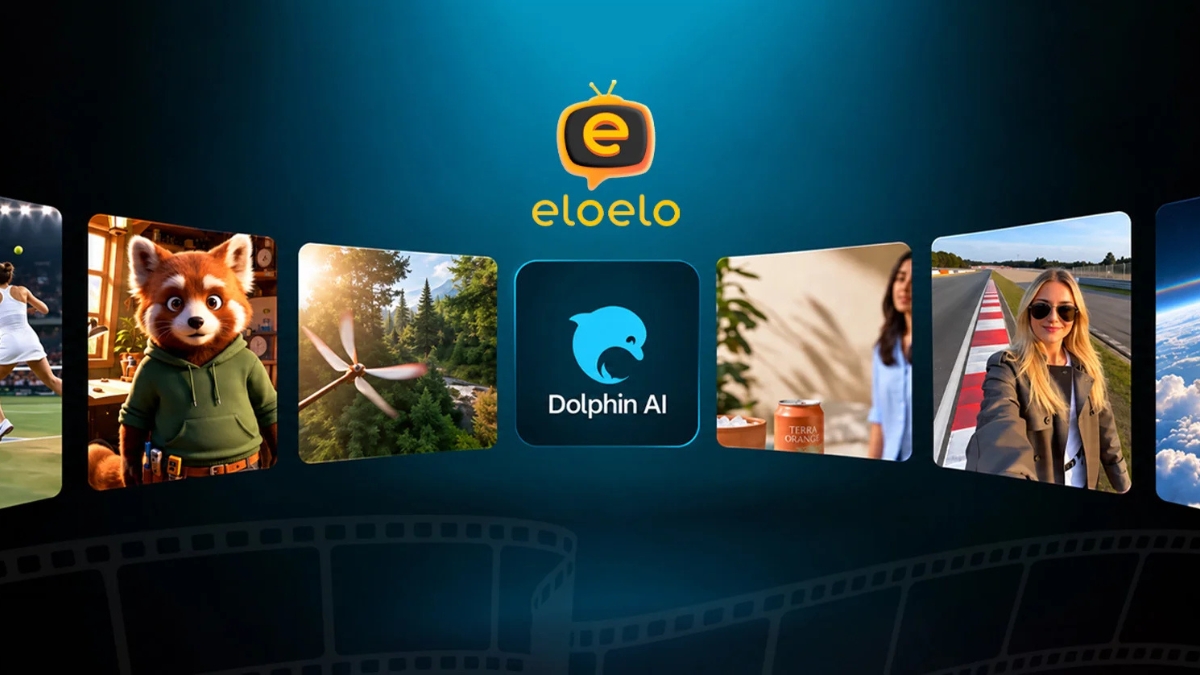
Bengaluru-based entertainment and technology company Eloelo Group has launched Dolphin AI, a video generation and editing studio designed to manage production from start to finish. The company aims to help India move beyond consuming digital content and become a major exporter of it. Founder and CEO Saurabh Pandey unveiled the platform during his keynote address at FICCI FRAMES 2026 in Mumbai. He described a future where artificial intelligence could enable the production of what he called “infinite content”.
What Is Dolphin AI’s Target?
Dolphin AI targets a growing challenge in generative video. AI tools can produce impressive short clips, but maintaining consistent characters, settings and visual details across longer productions remains difficult.
According to Eloelo, Dolphin AI addresses this problem through multi-shot planning and continuity technology. The company says the system can preserve characters, voices, clothing, props, locations and visual styles across multiple shots.
The launch adds another entrant to the expanding AI video creation market. It also raises a larger question for the creative industry: as producing videos becomes easier, what happens to the value of original human work?
How Dolphin AI Works
Dolphin AI offers several tools intended to simplify video production.
Its Chat-to-generate feature allows users to describe an idea or script in plain language. The platform then manages the generation workflow.
Templates offer ready-made formats for advertisements, avatars, podcasts, lip-sync videos, tutorials and social media content. A Playground feature gives professionals control over models, references and individual shots.
The platform also includes an editor for cutting, merging and rearranging clips. Users can add voice, music and sound effects within the workflow.
Eloelo says its continuity technology allows creators to reuse references across shots. This could help address a common problem with AI-generated videos, where characters or visual details change between scenes.
The company is targeting professional solo creators, independent creators and teams working across advertising, product videos, microdramas, podcasts, films, user-generated content, animation and AI avatars.
If the technology performs as intended, it could reduce the effort required for certain production tasks. However, the actual benefits will depend on output quality, editing requirements and how well the platform handles complex projects.
Can AI Make India A Bigger Content Exporter?
Eloelo is positioning Dolphin AI as part of India’s wider creative economy opportunity.
The company cites estimates that the creative economy contributes around 2.5% of India’s gross domestic product. It also puts the country’s creator economy at roughly 80 million people.
AI video tools could allow smaller teams to produce more content without requiring the resources of a traditional production house. Independent creators could experiment with formats, while businesses could generate product videos and advertisements with fewer production steps.
For Indian studios, AI could also offer new ways to create content for international audiences. Production teams may be able to test visual concepts, develop multilingual versions and create variations for different platforms.
However, exporting more content does not automatically mean exporting better or more original work. Global success will still depend on storytelling, cultural understanding, quality and audience demand.
What Happens To Original Work By Creators And Filmmakers?
The growth of AI video tools raises questions that go beyond production speed. It challenges how the industry values original ideas, creative skills and the labour involved in making content.
For video creators, tools such as Dolphin AI could reduce the time needed to generate visuals, build scenes and edit footage. This may help independent creators produce content that previously required larger budgets or specialist teams.
But the same capabilities could also increase competition. When more people can generate polished-looking videos, creators may find it harder to stand out. Audiences could face a growing volume of similar-looking content, making originality and trust more important.
For videographers and cinematographers, AI-generated scenes could provide alternatives to some conventional shoots. Certain conceptual visuals, backgrounds or promotional sequences may not require a physical production. Yet live events, documentary footage, interviews and real-world reporting still depend on capturing actual people and events.
The impact on filmmakers could be more complex. AI may help with storyboarding, visual development, animation and selected post-production tasks. It could also allow independent filmmakers to explore ambitious visual ideas on smaller budgets.
At the same time, generating a scene is not the same as directing a film. Narrative structure, performance, pacing, visual judgement and emotional depth remain central to filmmaking. AI can assist with elements of that process, but its presence does not guarantee a compelling story.
Article writers and screenwriters face related questions. AI-generated visuals may help turn scripts into storyboards or promotional videos. However, a visual production tool does not replace the reporting, research, interviews and editorial judgement behind original journalism. Nor does it automatically reproduce the lived experience and personal perspective that can shape a distinctive piece of writing.
The concern, therefore, is not simply whether AI will replace creative professionals. It is how it could change the work they do, the rates they can charge and the expectations clients place on them.
Who Owns The Work, And Where Does Originality Fit In?
Another issue is how AI-generated content is created and presented.
Creators and filmmakers will need clarity around the rights attached to generated visuals, music, voices and other assets. Questions about training data, consent, copyright and the use of recognisable likenesses also remain important to the wider AI industry.
The information provided about Dolphin AI does not establish how the platform handles every one of these issues. Its launch announcement focuses on production capabilities and continuity, rather than providing a complete account of its rights or data policies.
Disclosure is another consideration. When a video uses synthetic scenes, AI-generated voices or recreated imagery, audiences may need context to understand what they are watching, particularly in news, documentary and educational content.
The distinction between using AI as a production assistant and presenting synthetic material as real footage matters. For journalists and documentary filmmakers, that distinction is especially significant because credibility depends on accurately representing real events.
As AI production tools become more accessible, creative businesses may need clearer processes for checking generated material, securing permissions and explaining how content was made.
Will AI Democratise Video Production Or Flood The Market?
Dolphin AI presents a potential opportunity for people who want to create videos without managing every stage of a traditional production process.
A solo creator could develop an advertisement, a small business could test product videos, and an independent team could experiment with a short drama. These possibilities may lower some barriers to entry.
However, easier production also means more competition for audience attention. A greater supply of content does not guarantee greater demand, better earnings or stronger careers for creators.
The value of creative work may increasingly depend on factors that AI tools cannot provide on their own: original ideas, strong reporting, distinctive perspectives, audience relationships and editorial judgement.
For production companies, the challenge may be deciding which tasks to automate and where human expertise remains essential. For freelancers, adapting to new tools could create opportunities, but it may also require them to compete in a market where some services become cheaper or easier to reproduce.
Dolphin AI’s long-term impact will depend on how creators use it, how well the technology performs and whether audiences value the resulting work.
Eloelo wants to help India become a major exporter of content. AI could support that ambition by making some forms of production more accessible and efficient.
But producing more videos is only one part of building a strong creative economy. Protecting originality, sustaining creative livelihoods and earning audience trust will remain equally important.

From Air Force Officer to Travel Creator: Amit Mehta’s Journey of Exploring India

Exclusive: YouTube Money Is Not Enough: Indrajit Lahiri on 10 Years of Foodka and Building a Business Beyond Content

Bhuvan Bam Explores Dubai’s Beautyworld Event as SARKAR Looks Beyond the Studio

Eloelo Launches Dolphin AI: Will AI Video Tools Change The Future Of Creators And Filmmakers?

Surat Influencer Simran Patel Arrested Over Gandhi Reel: What We Know About Her Content

Why CRED Cast Rakhi Sawant To Explain Loan Stacking: Any Marketing Strategy?

Sufi Motiwala Turns 23, Celebrates Birthday After Recalling Near-Fatal Sea-Link Accident

OpenAI Releases 722 Maths Papers: Could AI Be Closing In On Longstanding Mathematical Mysteries?

India’s Internet Is 10 Times Faster Than In 2022. What Does That Mean For Everyday Life?

Creator-Actor Mahhi Vij’s Instagram Account Reportedly Disabled, Team Yet To React

Food Pharmer’s Cannes Look That Never Walked

Parul Gulati Wears Nish Hair on the Cannes 2025 Red Carpet

Nancy Tyagi’s 700-Hour DIY Gown Turns Heads at Cannes 2025

Navya Nanda’s IIM Ahmedabad Triumph: From Controversy to Campus Joy

Influencer Kareema’s Heartwarming Journey with Suki

Prajakta Koli and Vrishank Khanal’s Wedding

Prajakta Koli’s Haldi and Cocktail Celebrations

Prajakta Koli and Vrishank Khanal’s Pre-Wedding Celebrations

Prajakta Koli x Vrishank Khanal Magical Mehendi

Milind Soman & Ankita’s Maha Kumbh 2025 Experience

Meta One Launches With Paid AI, Creator Tools And New Features Across Instagram, Facebook And WhatsApp

YouTube Shorts Changes Repost Rules: What Creators Need To Know About Original Content

Adam Mosseri Reveals Instagram Trial Reels Rule That Could Limit Your Reach

Roopali Agrawal aka Rockonroops Turning Family Life Into Conversations On Fashion, Freedom And Safety

Technical Guruji’s iPhone 18 Pro Max Giveaway: Nearly 100 Phones And A Big Question About The Cost

Is Orry Getting Married? Close Friends Story Sparks Questions As His Past Wedding Rumours Resurface

What Is Meta’s New “Muse” AI And Why Are Users Seeing It?

The Traitors 2 Reunion Was Full Of Kalesh, Confrontations And Long-Pending Answers

Why Is MrBeast Back in India? Is His India Connect Getting Bigger in 2026?
